
You wake up, test your blood sugar, and feel confused. Maybe you ate a healthy dinner, avoided dessert, and thought you had done everything right — yet your morning reading is higher than expected.
If this sounds familiar, you are not alone.
Many people over 50 notice that their fasting blood sugar seems stubbornly high in the morning. In some cases, this may happen because of something called the dawn phenomenon — a normal process where your body releases hormones before waking to prepare you for the day ahead.
The good news is that a high morning reading does not automatically mean you have done something wrong. Understanding why it happens can help you make simple changes that support healthier blood sugar levels over time.
Quick Summary
- Morning blood sugar can be high even if you ate a healthy dinner the night before.
- Before you wake, hormones signal your liver to release stored glucose for energy.
- If you have insulin resistance, that extra glucose can lead to a higher fasting blood sugar reading.
- After age 50, changes in muscle mass, sleep, stress, and visceral fat can make morning blood sugar spikes more noticeable.
- Simple lifestyle habits, such as regular activity, quality sleep, and balanced evening meals, can help improve fasting blood sugar over time.
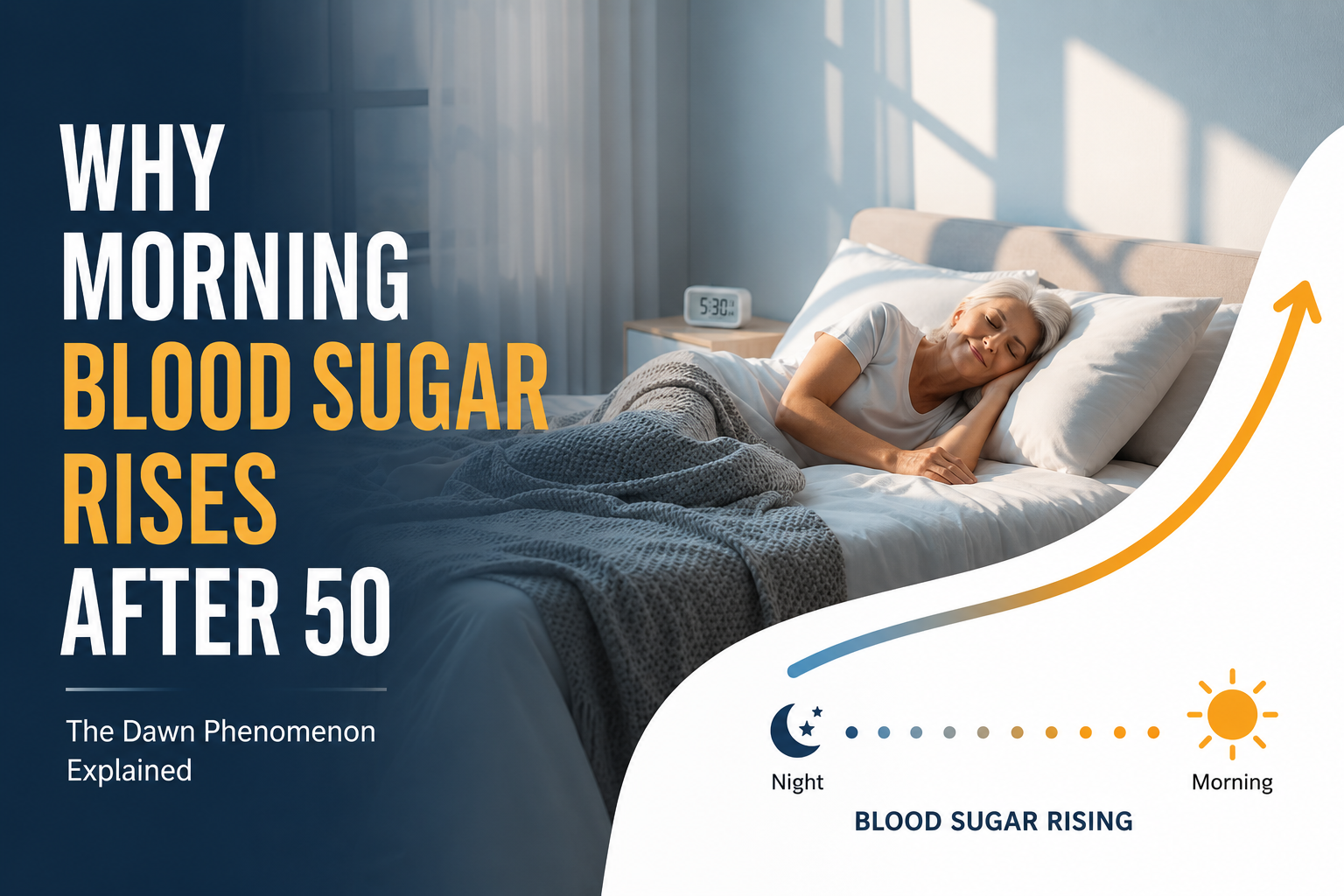
Why Does Blood Sugar Rise Before You Wake Up?
Your body stays active while you sleep. During the early morning hours—typically between about 3 a.m. and 8 a.m.—it naturally releases several hormones to help prepare you for the day ahead.
These hormones include:
- Cortisol
- Growth hormone
- Adrenaline
- Glucagon
Together, these hormones signal your liver to release some of its stored glucose into the bloodstream. This provides your body with the energy it needs to wake up, move, and start the day.
If you have good insulin sensitivity, your body quickly moves that glucose into your cells, so your blood sugar usually stays within a healthy range.
However, if you have insulin resistance, your cells do not respond as effectively to insulin. As a result, more glucose remains in the bloodstream, leading to a higher fasting blood sugar reading when you wake up.
What Is the Dawn Phenomenon?
The **dawn phenomenon** is a natural rise in blood sugar that occurs during the early morning hours, usually before you wake up. It is your body's normal way of preparing for the day by releasing hormones that increase the amount of glucose available for energy.
For people with good insulin sensitivity, insulin quickly moves that glucose into the body's cells, so blood sugar levels remain stable. However, if you have **insulin resistance**, your cells do not respond as effectively to insulin. As a result, more glucose stays in the bloodstream, leading to a higher fasting blood sugar reading in the morning.
The dawn phenomenon is common and does not automatically mean you have diabetes or that your condition is getting worse. However, if your fasting blood sugar is consistently elevated, it is worth discussing your readings with your healthcare provider to determine whether your treatment or lifestyle plan needs adjusting.
Why Is It More Common After 50?
Morning blood sugar spikes can become more noticeable as you get older. Several natural changes that occur with aging can make it more difficult for your body to regulate blood sugar overnight.
These include:
Loss of muscle mass
Muscle tissue helps remove glucose from the bloodstream. As we age, muscle mass naturally declines, especially if we do not do regular strength training. With less muscle available to use glucose, fasting blood sugar levels can gradually rise.
Increased insulin resistance
Many people become more insulin resistant over time. When your cells respond less effectively to insulin, glucose stays in the bloodstream longer instead of moving into your cells to be used for energy.
Increased visceral fat
Visceral fat—the fat stored deep around the abdominal organs—produces inflammatory substances that can worsen insulin resistance. This makes it more difficult for your body to regulate blood sugar effectively.
Changes in sleep patterns
Many adults experience lighter sleep, shorter sleep duration, or more frequent waking as they get older. Poor sleep can affect hormones involved in blood sugar regulation, making morning blood sugar levels more likely to rise.

Other Reasons Your Morning Blood Sugar May Be High
Although the dawn phenomenon is a common reason for high morning blood sugar, it is not the only possible explanation. Other factors can also contribute to an elevated fasting reading.
| Possible Cause | Why It Matters |
|---|---|
| Late-night snacks | Glucose may remain elevated overnight |
| Poor sleep | Can reduce insulin sensitivity and affect hormones that regulate blood sugar. |
| Stress | May increase cortisol levels, encouraging the liver to release more glucose. |
| Illness | The body's stress response can temporarily raise blood sugar levels. |
| Certain Medications | Some medications, such as steroids, can increase blood sugar. |
Simple Ways to Improve Morning Blood Sugar Naturally
While you cannot completely stop the dawn phenomenon, healthy lifestyle habits can help improve insulin sensitivity and reduce high fasting blood sugar over time.
1. Eat a balanced dinner
Include protein, healthy fats, and fiber with your evening meal. A balanced dinner can help slow digestion, improve overnight blood sugar stability, and reduce large glucose swings.
2. Move after dinner
A 10–20 minute walk after your evening meal encourages your muscles to use glucose for energy, which can help lower blood sugar before bedtime.
3. Prioritize good sleep
Poor sleep can disrupt hormones involved in blood sugar regulation and make insulin resistance worse. Aim for 7–9 hours of quality sleep whenever possible.
4. Manage stress
Chronic stress increases cortisol levels, which can encourage the liver to release more glucose. Simple activities such as walking, deep breathing, meditation, or spending time outdoors can help lower stress over time.
5. Build muscle with strength training
Resistance exercise helps increase muscle mass and improve insulin sensitivity. Over time, stronger muscles become more effective at removing glucose from the bloodstream, helping support healthier fasting blood sugar levels.
Bottom Line
Seeing a high morning blood sugar reading can be frustrating, especially when you feel like you are making healthy choices. However, a higher fasting reading does not always mean you have done something wrong.
The dawn phenomenon is a normal biological process that can become more noticeable after age 50, particularly if you have insulin resistance, poor sleep, increased stress, or excess visceral fat.
Instead of focusing on a single blood sugar reading, look for patterns over time. Healthy habits such as eating balanced meals, staying active, building muscle, managing stress, and getting enough sleep can all help support healthier fasting blood sugar levels.
Remember, lasting improvements rarely happen overnight. Small, consistent lifestyle changes often have the greatest impact on your long-term health.
Medical Disclaimer: This article is for educational purposes only and is not intended as medical advice. Always consult your qualified healthcare provider before making significant changes to your diet, supplements, lifestyle, or treatment plan.
Frequently Asked Questions
Why is my blood sugar high even if I do not eat before bed?
Blood sugar can rise before you wake because early-morning hormones signal your liver to release stored glucose. This is known as the dawn phenomenon and can occur even when you have not eaten during the night.
Can poor sleep increase morning blood sugar?
Yes. Poor or disrupted sleep can affect hormones involved in metabolism and reduce insulin sensitivity. Over time, this can contribute to higher fasting blood sugar levels.
Can walking help lower fasting blood sugar?
Regular physical activity helps your muscles use glucose more effectively and can improve insulin sensitivity. Even a short walk after dinner can support healthier overnight and morning blood sugar levels.
Is the dawn phenomenon dangerous?
The dawn phenomenon is a normal biological response and is not dangerous by itself. However, consistently high fasting blood sugar readings can indicate that your body is having difficulty regulating glucose and should be discussed with your healthcare provider.
Can insulin resistance cause high morning blood sugar?
Yes. When you have insulin resistance, your cells do not respond effectively to insulin. This allows more of the glucose released by your liver overnight to remain in the bloodstream, resulting in a higher morning reading.
What is a normal fasting blood sugar after 50?
The standard fasting blood sugar ranges are generally the same for adults of all ages. A laboratory fasting glucose below 100 mg/dL (5.6 mmol/L) is considered normal, while 100–125 mg/dL (5.6–6.9 mmol/L) falls within the prediabetes range. A result of 126 mg/dL (7.0 mmol/L) or higher can indicate diabetes, but diagnosis normally requires confirmation by a healthcare provider.
Can stress hormones raise blood sugar in the morning?
Yes. Hormones such as cortisol and adrenaline naturally rise before waking and can signal your liver to release glucose. Stress can increase these hormone levels further, making morning blood sugar elevations more noticeable, particularly when insulin resistance is present.
The dawn phenomenon involves an early-morning hormone surge, and it can produce a more noticeable glucose rise in people whose blood sugar is already harder to regulate.
Continue Learning
What Causes Insulin Resistance After 50?
Learn why insulin resistance becomes more common with age and what you can do about it.
How to Lower HbA1c Naturally After 50
Discover practical lifestyle habits that can help improve long-term blood sugar control.
Visceral Fat After 50: Why It Matters
Find out how hidden belly fat affects insulin sensitivity, inflammation, and overall metabolic health.