Many people believe that metabolism slows down after 50 simply because of age. While aging does play a role, changes in muscle mass, activity levels, hormones, and lifestyle can all influence how much energy your body uses.
One factor you can do something about is muscle loss. As we get older, we naturally tend to lose muscle unless we regularly challenge it. Strength training can help preserve — and even rebuild — muscle, supporting metabolism while also helping you stay strong, active, and independent.
And you do not need to become a bodybuilder or spend hours in the gym. Even simple resistance exercises performed consistently can make a meaningful difference.
Quick Summary
- Muscle mass naturally declines with age if it is not regularly challenged.
- Losing muscle can contribute to lower daily energy expenditure.
- Strength training helps preserve and build muscle tissue.
- Maintaining muscle supports metabolism and healthy body composition.
- Strength training also supports bone health, balance, blood sugar control, and independence.
- For most adults, strength training at least two days per week can provide significant health benefits.
Why Metabolism Slows Down After 50
Many people notice that maintaining a healthy weight becomes more difficult after 50, even when their eating habits have not changed significantly. Aging itself does not suddenly cause metabolism to slow, but several changes that often occur with age can affect how much energy your body uses.
One important factor is muscle loss. Beginning around middle age, adults gradually lose muscle unless they take steps to maintain it. Because muscle requires energy to maintain and supports an active lifestyle, losing muscle can contribute to lower daily energy expenditure over time.
Other factors can play a role too, including hormonal changes, reduced physical activity, poor sleep, and spending more time sitting. Together, these changes can affect body composition and make weight management more challenging.
The encouraging part is that muscle loss is something you can actively address. Regular strength training can help preserve — and potentially rebuild — muscle, while supporting strength, mobility, and metabolic health as you age.
Continue learning: Why Your Metabolism Slows Down After 50
How Strength Training Supports Metabolism
Strength training challenges your muscles, encouraging them to adapt and become stronger over time. Regular resistance exercise can help preserve existing muscle and build new muscle — particularly important as we get older.
Muscle does require energy to maintain, but the metabolic benefits of strength training go beyond simply burning more calories. Maintaining muscle helps support healthy body composition, physical activity, and the way your body uses glucose for energy.
Strength training can also improve insulin sensitivity, helping your muscles take up glucose from the bloodstream more effectively. This can support healthier blood sugar control as well as overall metabolic health.
There is also a temporary increase in energy use after exercise as your body recovers and repairs muscle tissue. However, the greatest long-term benefit comes from consistently maintaining strong, active muscle rather than relying on a short-lived calorie-burning effect.
For adults over 50, this makes strength training about much more than building muscle. It can help protect against age-related muscle loss while supporting metabolism, mobility, and long-term health.
Other Benefits Beyond Metabolism
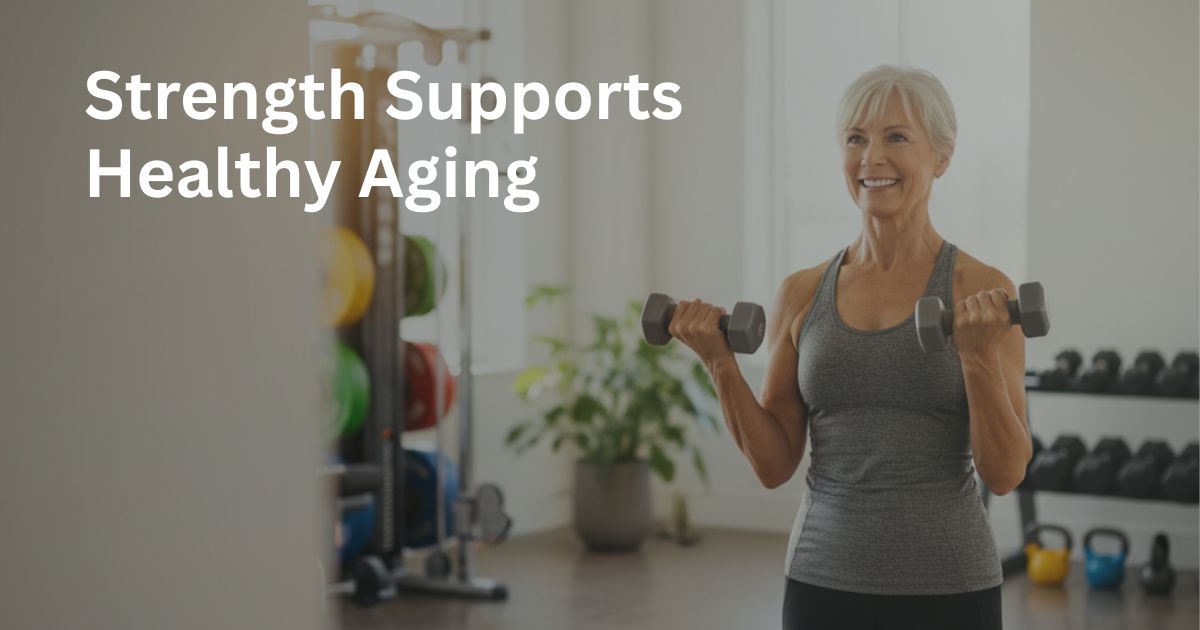
Strength training offers benefits that go well beyond metabolism. Maintaining strong muscles can support your bones, balance, mobility, blood sugar control, and ability to stay independent as you get older.
Stronger Bones
Bone density naturally tends to decline with age, particularly in women after menopause. Strength training places controlled stress on bones, which helps stimulate the processes involved in maintaining bone strength. Over time, resistance exercise can help support bone density and reduce the risk of age-related bone loss.
Better Balance and Mobility
Strong muscles make everyday movement easier. They help support your joints, improve stability, and make activities such as climbing stairs, carrying groceries, and getting up from a chair less demanding.
Maintaining strength can also support better balance and mobility — both increasingly important for staying active and reducing the risk of falls as you age.
Improved Blood Sugar Control
Your muscles are an important destination for glucose from the bloodstream. During and after exercise, working muscles can take up and use more glucose for energy.
Regular strength training can also improve insulin sensitivity, helping your body manage blood sugar more effectively. This makes resistance exercise particularly valuable for supporting metabolic health after 50.
Greater Independence as You Age
Perhaps one of the most important benefits of strength training is simply being able to keep doing the things you want to do.
Maintaining strength can make everyday tasks easier, support mobility, and help preserve independence as you get older. The goal is not just stronger muscles — it is a stronger, more capable life.
That last sentence is the one I especially like:
“The goal is not just stronger muscles — it is a stronger, more capable life.”
Do You Need a Gym Membership?
Not at all. A gym can provide useful equipment and guidance, but you can get many of the benefits of strength training without ever setting foot in one.
There are plenty of ways to challenge your muscles at home or in your community, including:
- Resistance bands
- Light dumbbells
- Body-weight exercises
- Home exercise programs
- Community fitness classes
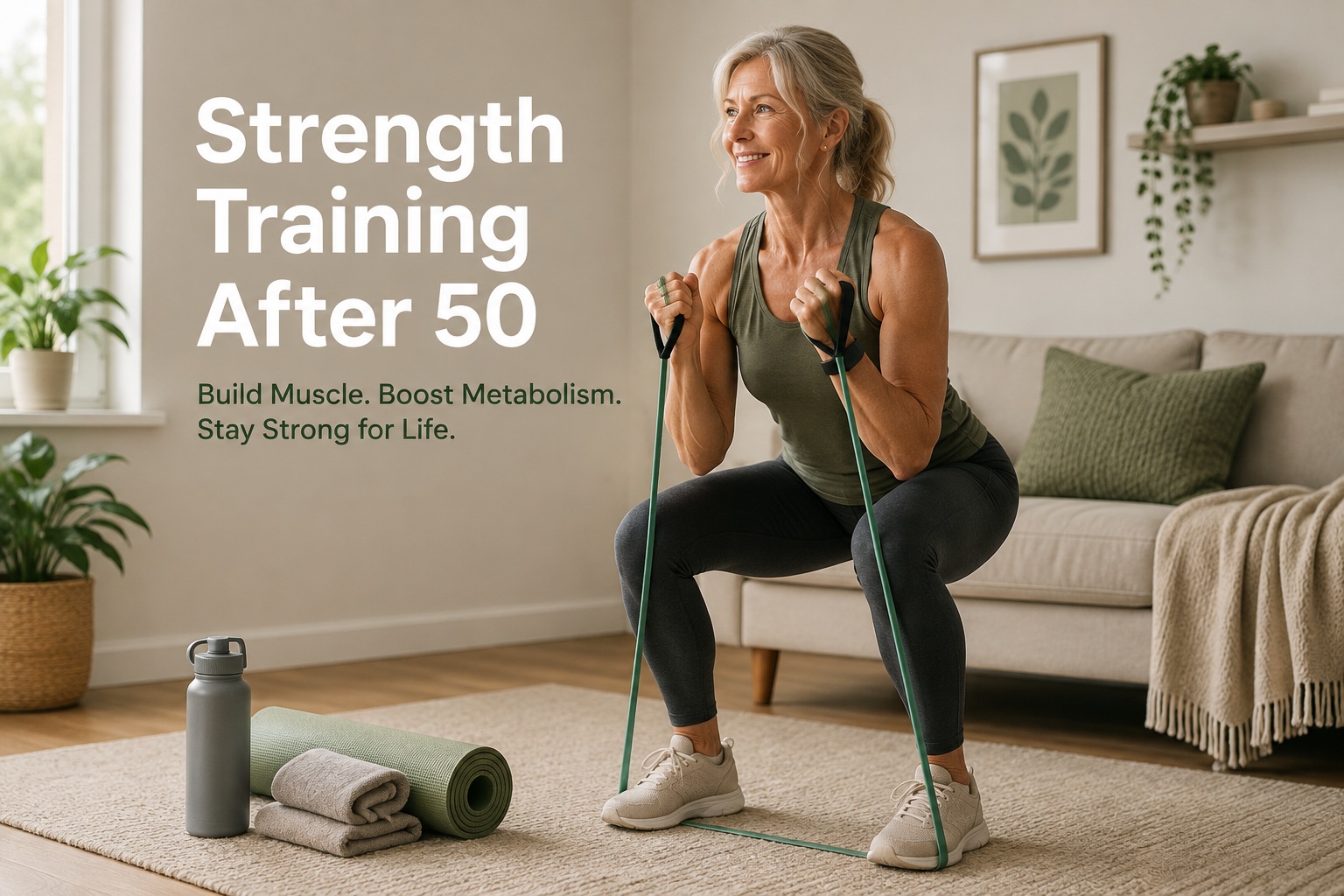
If you are just getting started, simple exercises such as chair squats, wall push-ups, step-ups, and resistance-band movements can be enough to begin building strength.
The important thing is to challenge your muscles gradually and consistently. As exercises become easier, you can slowly increase the resistance, repetitions, or difficulty so your muscles continue to adapt.
You do not need the perfect workout or expensive equipment. The best strength-training program is one you can do safely, progress over time, and stick with.
How Much Strength Training Do You Need?
Most health guidelines recommend muscle-strengthening activities on at least two days each week, working the major muscle groups. For many adults over 50, two or three strength-training sessions per week can be a practical and sustainable routine.
Your workouts do not need to be long or complicated. What matters most is regularly challenging your muscles with an appropriate level of resistance and gradually progressing as you become stronger.
Recovery matters too. Allowing muscles time to recover between challenging sessions helps them repair and adapt. You can still walk, stay active, or exercise other parts of your body on the days between strength workouts.
If you are new to strength training, start gradually and focus on good technique rather than lifting heavy weights. Consistency and gradual progression are more important than how much weight you can lift.
Common Mistakes to Avoid
Strength training is remarkably adaptable, but a few common mistakes can make it harder to progress — or increase the risk of injury.
Doing Too Much Too Soon
It can be tempting to do too much when you first start, especially if you are feeling motivated. But suddenly increasing the weight, repetitions, or number of workouts can lead to excessive soreness and increase the risk of injury.
Start gradually and give your body time to adapt. You can increase the challenge as your strength and confidence improve.
Focusing Only on Cardio
Walking, cycling, swimming, and other aerobic activities are excellent for cardiovascular health, but they do not provide all the benefits of resistance training.
A well-rounded exercise routine includes both aerobic activity and muscle-strengthening exercise. They complement each other rather than compete.
Ignoring Recovery
More exercise is not always better. Your muscles need adequate recovery after challenging strength-training sessions so they can repair and adapt.
Sleep, good nutrition, and allowing sufficient recovery between workouts all contribute to progress.
Not Eating Enough Protein
Protein provides the amino acids your body needs to maintain and repair muscle tissue. This becomes particularly important as you get older and are trying to preserve or build muscle.
Including a source of protein with meals throughout the day can help support your strength-training efforts.
Giving Up Too Early
Changes in muscle size and body composition can take time, but other improvements often appear sooner. You may notice that everyday activities feel easier, you can lift more weight, your balance improves, or you simply feel more capable.
Progress is not only what you see in the mirror. Consistency over time is what makes strength training work.
Bottom Line
Strength training is one of the most valuable forms of exercise after 50. Preserving and building muscle can support metabolism, improve insulin sensitivity, strengthen bones, protect mobility, and make everyday activities easier.
You do not need a gym, heavy weights, or long workouts to benefit. Start with exercises that suit your current ability, challenge your muscles gradually, and focus on consistency rather than perfection.
The goal is not simply to burn more calories or build bigger muscles. It is to stay strong, capable, and independent as you age.
Medical Disclaimer: This article is for educational purposes only and is not intended as medical advice. Always consult your qualified healthcare provider before making significant changes to your diet, supplements, lifestyle, or treatment plan
Frequently Asked Questions
Can strength training really boost metabolism after 50?
Strength training can support a healthy metabolism after 50, primarily by helping preserve and build muscle. Muscle requires energy to maintain, but the benefits go beyond calorie burning. Regular strength training can also support healthy body composition, physical activity, and insulin sensitivity.
How often should adults over 50 do strength training?
Most health guidelines recommend muscle-strengthening activities on at least two days each week. For many adults over 50, two or three sessions per week can provide a practical routine while allowing adequate time for recovery.
Do I need heavy weights to benefit from strength training?
No. Resistance bands, light dumbbells, body-weight exercises, and gym machines can all be effective. What matters is that the exercise challenges your muscles appropriately. As you become stronger, gradually increasing the resistance or difficulty helps your muscles continue to adapt.
Is walking enough to maintain muscle after 50?
Walking provides many health benefits and is excellent for staying active, but it does not fully replace strength training. Resistance exercise provides a more direct challenge to your muscles, so combining regular walking or other aerobic activity with strength training can provide broader health benefits.
Can strength training help improve blood sugar after 50?
Yes. Working muscles use glucose for energy, and regular strength training can improve insulin sensitivity. Over time, this can help your body manage blood sugar more effectively while also supporting muscle mass and overall metabolic health.