We rarely think about our bones until something goes wrong. Unlike muscles, which we can see and feel becoming stronger or weaker, changes within our bones happen quietly, often over many years.
You can feel healthy and remain physically active while gradually losing bone density. For many people, the first warning is a fracture following a relatively minor fall.
Yet our bones are not simply a rigid framework that holds us upright. They are living tissue, constantly responding to physical activity, nutrition, and hormonal changes.
Understanding how to support this remarkable capacity for adaptation can help protect our mobility, confidence, and independence as we age.
Quick Summary
-
Bones are living tissue that undergoes continuous renewal.
-
Aging and hormonal changes can accelerate bone loss.
-
Osteopenia and osteoporosis often develop without noticeable symptoms.
-
Calcium, vitamin D, and protein are essential for skeletal health.
-
Bone density testing can identify problems before a fracture occurs.
-
Appropriate exercise, nutrition, and medical treatment can help protect bone strength.
Your Bones Are Alive — and Constantly Changing
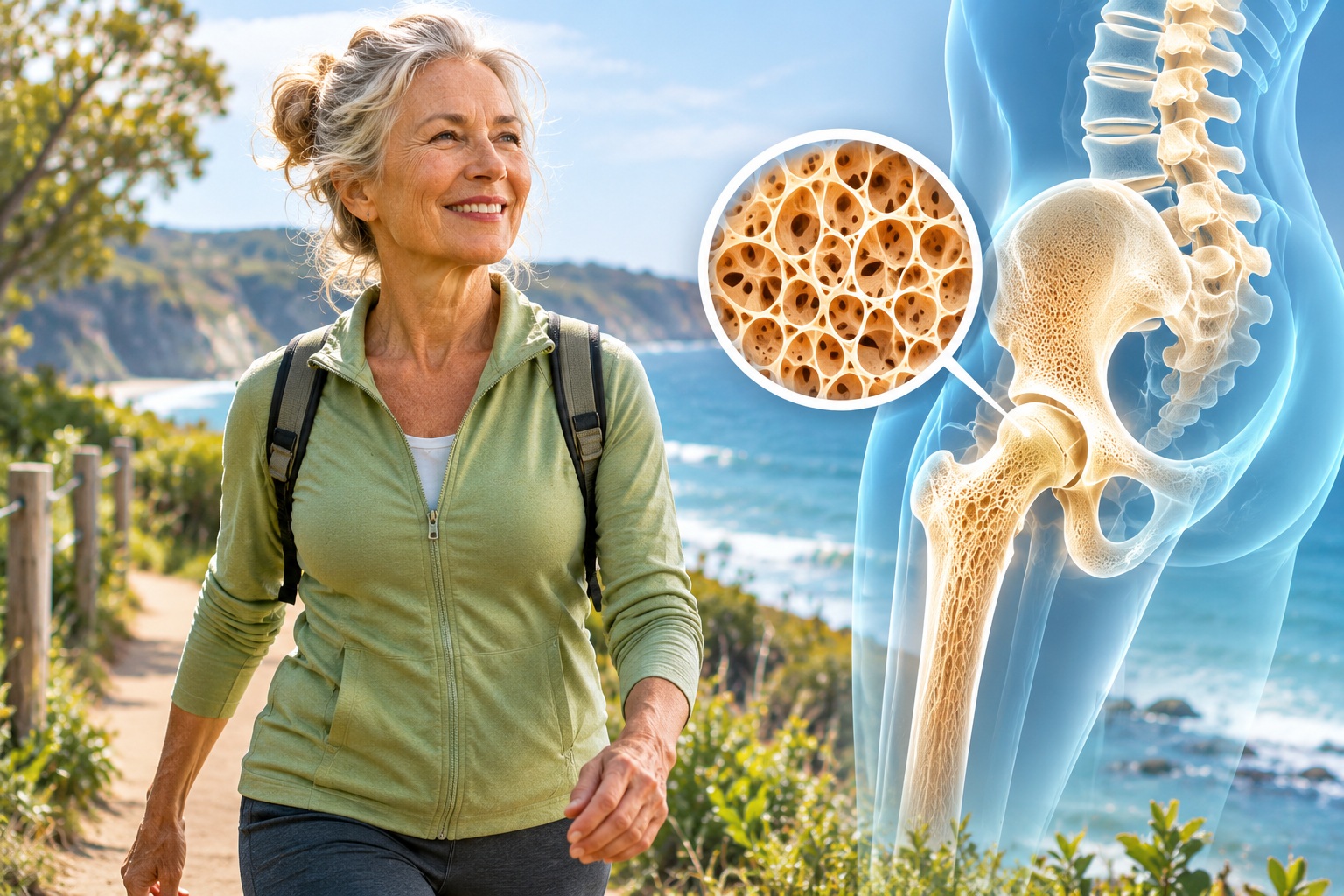
Throughout life, your body removes older bone tissue and replaces it with new tissue through a process known as bone remodeling.
This process repairs microscopic damage, helps the skeleton adapt to physical demands, and regulates mineral reserves.
Three specialized types of cells play important roles.
Osteoclasts — The Demolition Team
Osteoclasts break down and remove older or damaged bone tissue. This essential process, known as bone resorption, releases minerals such as calcium into the bloodstream.
Osteoblasts — The Construction Team
Osteoblasts produce new bone tissue by creating a collagen framework that gradually becomes mineralized with calcium and phosphate.
Osteocytes — The Communication Network
Embedded within bone, osteocytes detect mechanical forces and help coordinate the activity of osteoclasts and osteoblasts.
During childhood and early adulthood, bone formation generally exceeds bone breakdown. As we age, this balance can shift, causing bones to lose density and structural integrity.
Fortunately, bone cells remain responsive throughout life. How we move and nourish our bodies continues to matter, even in our 70s, 80s, and beyond.
Why Bone Loss Accelerates After 50
Several biological and lifestyle changes influence skeletal health during the second half of life.
Hormonal Changes in Women
Estrogen helps regulate bone remodeling and limit excessive bone breakdown. Declining estrogen levels during and after menopause can accelerate bone loss.
Early menopause and medical treatments that reduce estrogen levels may further increase this risk.
Hormonal Changes in Men
Men generally develop greater peak bone mass and experience more gradual bone loss. However, declining testosterone and estrogen levels can compromise skeletal health.
Osteoporosis is not exclusively a women's condition.
Declining Muscle Mass and Physical Activity
Muscle contractions generate forces that stimulate bone remodeling. When muscles weaken and physical activity declines, bones may receive less of this valuable mechanical stimulation.
Maintaining muscle strength is therefore an important part of protecting skeletal health.
Changes in Nutrition and Nutrient Absorption
Older adults may consume less food, absorb calcium less efficiently, and produce less vitamin D through sunlight exposure.
Inadequate protein intake can also compromise muscle and skeletal health, making nutritional quality increasingly important.
Medical Conditions and Medications
Certain conditions and treatments can accelerate bone loss, including:
-
Long-term corticosteroid use.
-
Overactive thyroid conditions.
-
Digestive disorders that impair nutrient absorption.
-
Certain breast and prostate cancer treatments.
-
Prolonged immobility.
-
Chronic inflammatory diseases.
Discuss appropriate bone health monitoring with your healthcare provider if you have any of these risk factors.
Osteopenia and Osteoporosis: Understanding the Difference
Beneath the hard outer layer of bone lies an intricate network of supporting structures known as trabeculae.
As bone loss progresses, these structures can become thinner, less connected, and more vulnerable to damage.
Normal Bone Density
Healthy bone contains a well-organized internal structure that distributes physical forces and helps resist fractures.
Osteopenia
Also known as low bone mass, osteopenia describes bone mineral density below the normal reference range but above the threshold for osteoporosis.
Progression to osteoporosis is not inevitable. Early identification provides an opportunity to take preventive action.
Osteoporosis
Osteoporosis involves compromised bone strength and increased susceptibility to fractures, particularly in the hip, spine, wrist, and upper arm.
A fracture resulting from minor trauma, such as a fall from standing height, is known as a fragility fracture.
People with osteopenia can also experience fragility fractures. Bone density is only one factor influencing overall fracture risk.
Why Osteoporosis Is Often Called a Silent Disease
Bone loss itself generally does not cause noticeable symptoms. Many people remain unaware that their skeleton has become vulnerable until a fracture occurs.
Spinal compression fractures may cause:
-
Sudden or persistent back pain.
-
Gradual loss of height.
-
Increasing curvature of the upper back.
-
Changes in posture.
Some spinal fractures cause few or no symptoms.
Unexplained height loss, new back pain, or a fracture following minor trauma should be discussed with a healthcare professional.
Nutrition: Giving Your Bones the Materials They Need
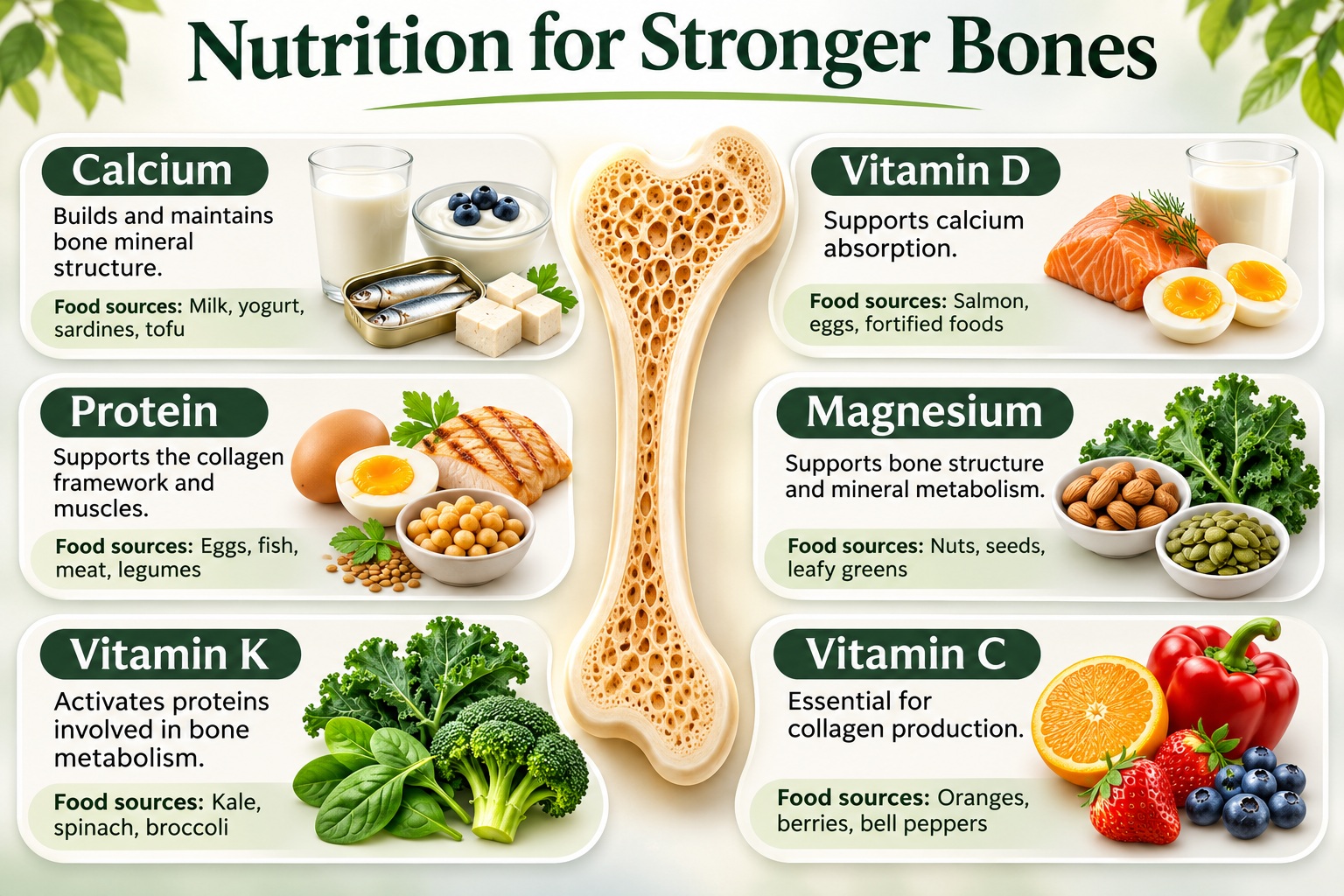
Healthy bone depends on several nutrients working together to support its structure and ongoing renewal.
Calcium — The Mineral Foundation
Approximately 99% of the body's calcium is stored in bones and teeth. Calcium is also essential for muscle contraction and nerve signaling.
When dietary intake is insufficient, the body can draw calcium from skeletal reserves to maintain normal blood calcium levels.
According to the U.S. National Institutes of Health, recommended daily calcium intakes for older adults are:
| Age Group | Recommended Daily Calcium |
|---|---|
| Men aged 51–70 | 1,000 mg |
| Women aged 51-70 | 1,200 mg |
| Men & Women aged 71 & older | 1,200 mg |
Getting Calcium From Food
Calcium is available from a wide variety of animal and plant foods.
| Food | Approximate Calcium Content |
|---|---|
| Cow's milk, 1 cup | 300 mg |
| Calcium-fortified soy milk, 1 cup | 300 mg |
| Plain yogurt, 6 oz (170 g) | 200-300 mg |
| Cheddar cheese, 1 oz (28 g) | 200 mg |
| Canned sardines with bones, 3 oz (85 g) | 325 mg |
| Calcium-set tofu, ½ cup | 250 mg or more |
| Cooked kale, 1 cup | 175 mg |
| Almonds, 1 oz (28 g) | 75mg |
Obtaining calcium from food also provides other valuable nutrients. If you consume plant-based milk, check that it has been fortified with calcium.
Supplements may be appropriate when dietary intake is insufficient. However, excessive supplementation can carry risks and interfere with certain medications. Discuss your individual requirements with your healthcare provider.
Vitamin D — Helping the Body Absorb Calcium
Vitamin D supports calcium absorption and normal bone mineralization.
Sources include:
- Sunlight exposure, following appropriate sun protection guidelines.
- Oily fish, such as salmon and sardines.
- Egg yolks.
- Fortified foods.
- Supplements where appropriate.
U.S. dietary recommendations suggest 600 international units (IU) daily for adults aged 51–70 and 800 IU for adults over 70.
People with vitamin D deficiency or limited sunlight exposure may require individualized advice.
Protein — The Often-Overlooked Nutrient
Bone contains an organic framework made largely of collagen, a structural protein that contributes to its resilience.
Adequate dietary protein also helps maintain the muscles that support and mechanically stimulate our skeleton.
Good sources include eggs, fish, lean meat, dairy products, soy foods, beans, and lentils.
Including protein-rich foods throughout the day can support both muscle and skeletal health. People with kidney disease may require individualized dietary advice.
Other Nutrients That Support Bone Health
-
Magnesium contributes to bone structure and mineral metabolism.
-
Vitamin K helps activate proteins involved in bone metabolism.
-
Vitamin C is essential for collagen production.
-
Phosphorus contributes to the mineral structure of bone.
A varied, nutrient-rich diet provides a broader foundation for skeletal health than focusing exclusively on individual supplements.
Knowing Where You Stand: Bone Density Testing
The most widely used method of measuring bone mineral density is dual-energy X-ray absorptiometry, commonly known as DXA or DEXA.
This painless, low-radiation scan typically measures bone density at the hip and lumbar spine, helping healthcare professionals assess fracture risk and determine whether treatment may be appropriate.
Understanding Your T-Score
For postmenopausal women and men aged 50 or older, DXA results are commonly expressed as a T-score, which compares measured bone mineral density with a young-adult reference population.
| T-Score | Bone Density Classification |
|---|---|
| -1.0 or higher | Normal Bone Density |
| Below −1.0 but above −2.5 | Osteopenia (low bone mass) |
| −2.5 or lower | Osteoporosis |
In some circumstances, osteoporosis may be diagnosed following a fragility fracture even when bone density measurements have not reached the osteoporosis threshold.
Understanding Your Fracture Risk
Healthcare professionals may use FRAX — the Fracture Risk Assessment Tool — to estimate the probability of certain fractures over the next ten years.
FRAX considers factors such as age, previous fractures, parental history of hip fracture, smoking, alcohol consumption, corticosteroid use, and certain medical conditions.
Because it does not directly account for every risk factor, including the frequency of falls, it is best interpreted alongside a clinical assessment.
When Should You Consider Bone Density Testing?
In 2025, the U.S. Preventive Services Task Force recommended osteoporosis screening for women aged 65 and older and younger postmenopausal women at increased risk.
Although evidence for routine population screening in men remains insufficient, other professional organizations recommend testing older men and those with relevant risk factors.
Discuss bone density testing with your healthcare provider if you have:
- A previous fragility fracture.
- A family history of osteoporosis or hip fractures.
- Early menopause.
- Low body weight.
- Long-term corticosteroid use.
- Medical conditions or treatments associated with bone loss.
- Unexplained height loss or changes in spinal posture.
Screening recommendations vary between countries.
Can Bone Loss Be Slowed or Reversed?
A diagnosis of osteopenia or osteoporosis does not mean that further deterioration is inevitable.
Appropriate interventions may help:
-
Slow further bone loss.
-
Maintain or improve bone mineral density.
-
Improve muscle strength and physical function.
-
Reduce the likelihood of falls and fractures.
Although improvements in bone density may not fully restore the original internal architecture of bone, maintaining skeletal strength and reducing fracture risk are meaningful achievements.
In our next article, we will explore how bones respond to physical forces and what scientific research reveals about improving bone density later in life.
When Lifestyle Changes May Not Be Enough
Nutrition and exercise are fundamental to bone health, but they are not always sufficient to manage established osteoporosis.
Treatments That Slow Bone Breakdown
Medications such as bisphosphonates and denosumab reduce excessive bone resorption and can help reduce fracture risk.
Treatments That Stimulate Bone Formation
Medications such as teriparatide and abaloparatide stimulate bone formation. Romosozumab increases bone formation while also reducing bone resorption.
Treatment decisions depend on individual medical history and fracture risk.
Some medications, particularly denosumab, require careful planning when treatment is discontinued. Never discontinue prescribed osteoporosis medication without consulting your healthcare provider.
Lifestyle measures complement medical treatment rather than replace it.
The Bottom Line
Our bones are extraordinary living structures that continue to respond to their environment throughout life.
Understanding bone remodeling, recognizing individual risk factors, obtaining adequate nutrition, and monitoring bone density can help us make informed decisions about our future health.
But protecting our bones is about more than improving a T-score or preventing osteoporosis.
It is about preserving the freedom to live the life we enjoy.
To travel. To explore. To carry our groceries, climb stairs, enjoy a garden, walk along the beach, and remain actively involved in the world around us.
Strong bones are not merely about living longer. They are about retaining the freedom to live well.
Medical Disclaimer: This article is provided for educational and informational purposes only and is not intended to replace professional medical advice, diagnosis, or treatment. Consult a qualified healthcare professional regarding persistent dizziness, falls, balance difficulties, medication-related symptoms, or changes in mobility. Specialized reactive balance and dual-task training may require professional assessment and supervision.
Frequently Asked Questions
What is the difference between osteopenia and osteoporosis?
Osteopenia describes reduced bone mineral density above the diagnostic threshold for osteoporosis. Osteoporosis involves compromised bone strength and increased susceptibility to fractures.
Can you have osteoporosis without knowing it?
Yes. Bone loss generally develops without noticeable symptoms and may remain undetected until a fracture or bone density scan reveals it.
Does osteopenia always develop into osteoporosis?
No. Appropriate nutrition, physical activity, medical monitoring, and treatment where indicated may help slow further bone loss.
Can bone density improve after the age of 60?
Yes. Some older adults achieve measurable improvements through appropriate exercise, nutrition, and medical treatment. Maintaining existing bone density is also valuable.
Can calcium and vitamin D alone prevent osteoporosis?
No. Hormonal changes, physical activity, muscle strength, and medical conditions also influence skeletal health.
Can men develop osteoporosis?
Yes. Men also experience age-related bone loss and should discuss individual risk factors with their healthcare provider.
Does a normal blood calcium level mean my bones are healthy?
Not necessarily. The body can draw calcium from skeletal reserves to maintain normal blood calcium levels. A blood calcium test does not establish whether bone density is normal.
Does everyone with osteopenia need medication?
No. Treatment decisions depend on overall fracture risk, medical history, and bone density.
References
National Institute of Arthritis and Musculoskeletal and Skin Diseases — Osteoporosis
A comprehensive overview of osteoporosis, including its causes, risk factors, symptoms, diagnosis, and treatment options.
National Institutes of Health — Calcium: Fact Sheet for Health Professionals
An evidence-based resource explaining the role of calcium in human health, recommended daily intakes, dietary sources, absorption, and supplementation.
National Institutes of Health — Vitamin D: Fact Sheet for Health Professionals
Explore the importance of vitamin D in calcium absorption and skeletal health, together with recommended intakes, dietary sources, and the consequences of deficiency.
The Clinician's Guide to Prevention and Treatment of Osteoporosis (2022)
Published in Osteoporosis International, this clinical guide by LeBoff and colleagues provides evidence-based recommendations for assessing fracture risk, diagnosing osteoporosis, and selecting appropriate preventive and medical treatments.
U.S. Preventive Services Task Force — Osteoporosis Screening Recommendations (2025)
Learn about current U.S. screening recommendations and which groups may benefit from bone density testing to identify osteoporosis and reduce fracture risk.
International Society for Clinical Densitometry — Official Adult Positions
Professional guidance on bone density testing, interpreting DXA results, and the clinical use of T-scores in assessing skeletal health.
FRAX — Fracture Risk Assessment Tool
An internationally used assessment tool that estimates the ten-year probability of hip fractures and major osteoporotic fractures based on individual clinical risk factors.
Published in the British Journal of Sports Medicine, this consensus statement provides evidence-informed guidance on resistance training, impact exercise, balance, and spinal strengthening for people with osteoporosis.