
Can improving your diet and exercising regularly still leave you wondering why your blood sugar isn't improving?
If you've been trying to lose weight, reduce belly fat, or improve insulin resistance after 50 without seeing the results you expected, you're not alone. Many people focus on carbohydrates, calories, and exercise but overlook an essential mineral that plays an important role in healthy blood sugar regulation.
Magnesium plays an important role in helping your body use insulin effectively. Yet as we get older, many adults don't consume enough magnesium-rich foods, and certain health conditions and medications can further reduce magnesium levels.
If you're wondering whether your symptoms could be related to insulin resistance, you may also find How to Tell If You Have Insulin Resistance (Early Signs Most People Miss) helpful.
The good news is that improving your magnesium intake may help support insulin sensitivity as part of an overall healthy lifestyle.
In this article, you'll learn why magnesium matters, who may benefit most, and practical ways to increase your intake naturally.
Quick Summary
If you've been struggling to improve your blood sugar despite eating well and staying active, magnesium could be one piece of the puzzle. This essential mineral helps support insulin function, glucose metabolism, and overall metabolic health.
In this article, you'll discover:
- Why magnesium is important for insulin sensitivity
- Signs you may not be getting enough magnesium
- The best magnesium-rich foods to include in your diet
- Whether magnesium supplements may be worth considering
- Simple ways to support healthy blood sugar after 50

Why Insulin Resistance Increases After 50
As we age, several changes make insulin resistance more likely:
Hormonal shifts
Declining estrogen (in women) and testosterone (in men) can affect how the body processes glucose.
Loss of muscle mass
Muscle helps absorb glucose. Less muscle = higher blood sugar levels.
Increased inflammation
Chronic low-grade inflammation interferes with insulin signalling.
Nutrient deficiencies
Absorption of key nutrients — including magnesium — often declines with age.
Together, these factors create the perfect environment for insulin resistance to develop.
Magnesium is just one part of the picture. If you're concerned about insulin resistance, The Best Blood Tests for Insulin Resistance: What Your Results Mean explains which tests can help you understand what's happening.
The Role of Magnesium in Blood Sugar Control
Magnesium is involved in over 300 biochemical reactions in the body — many directly linked to blood sugar regulation.
Supports insulin function
Magnesium helps insulin move glucose from the bloodstream into your cells.
Improves insulin sensitivity
Low magnesium levels are strongly associated with increased insulin resistance.
To better understand how insulin resistance develops over time, read our article: Why Insulin Resistance Becomes More Common After 50 (And What You Can Do About It).
Reduces inflammation
Magnesium has anti-inflammatory effects that support metabolic health.
Helps regulate energy production
It plays a role in how your body converts food into usable energy.
Without adequate magnesium, these processes become less efficient — making it harder to maintain stable blood sugar.
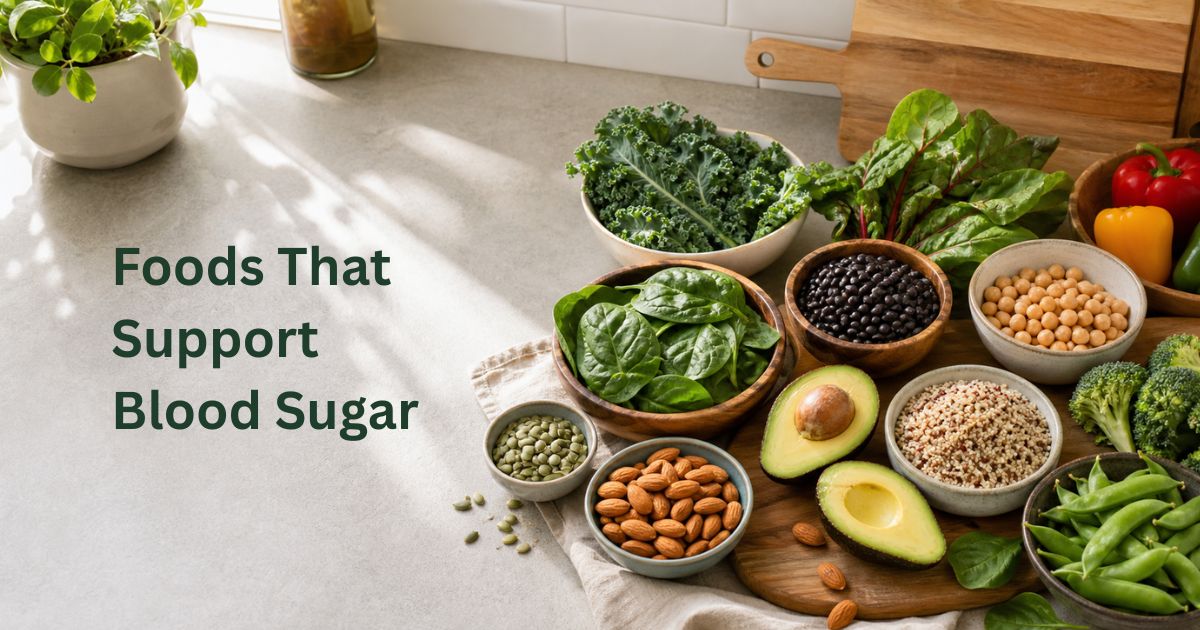
Magnesium-rich foods: leafy greens, nuts, seeds, avocado.
How to Increase Your Magnesium Levels Naturally
Improving your magnesium intake doesn't have to be complicated. Small, consistent changes to your daily routine can help support healthy magnesium levels over time.
Eat More Magnesium-Rich Foods
Many whole foods naturally contain magnesium. Try including more of these in your meals each week:
- Leafy greens such as spinach and kale
- Nuts and seeds, including almonds and pumpkin seeds
- Legumes such as beans and lentils
- Whole grains like oats and quinoa
Even adding one or two of these foods to your meals each day can make a meaningful difference over time.
Consider Magnesium Supplements
If you're unable to get enough magnesium through food alone, a supplement may help. Magnesium glycinate and magnesium citrate are commonly recommended because they're generally well absorbed and well tolerated.
Before starting any supplement, it's a good idea to discuss it with your healthcare provider, especially if you have kidney disease or take prescription medications.
Reduce Factors That Deplete Magnesium
Some everyday habits can gradually reduce your body's magnesium stores. Where possible, try to limit:
- Excess added sugar
- Excess alcohol
- Ongoing unmanaged stress
Supporting good sleep, regular physical activity, and a balanced diet can also help your body maintain healthy magnesium levels.
Building simple daily habits can make healthy eating easier. Our guide to The Best Daily Routine to Improve Insulin Resistance After 50 shows how nutrition, movement, and sleep work together.
Why Magnesium Matters After 50
As we get older, our bodies become less efficient at absorbing and using certain nutrients, including magnesium. At the same time, factors such as medications, chronic stress, and changes in diet can increase the risk of magnesium deficiency.
Although magnesium isn't a magic solution, it plays an important supporting role in healthy blood sugar regulation, muscle function, energy production, and overall metabolic health.
When combined with other healthy habits, magnesium may help support:
- Healthy blood sugar regulation
- Better insulin sensitivity
- Normal muscle and nerve function
- Steady energy production
Rather than looking for a single "superfood" or quick fix, think of magnesium as one piece of a balanced lifestyle that includes nutritious eating, regular movement, quality sleep, and stress management.
Why Magnesium Matters More After 50
As the body becomes less efficient at regulating blood sugar, small deficiencies can have a larger impact.
Magnesium is not a “quick fix” — but it is a foundational piece of metabolic health.
When combined with:
- Balanced nutrition
- Regular movement
- Good sleep
…it can help support better insulin sensitivity and overall wellbeing.
If you're looking at the bigger picture, Why Insulin Resistance Becomes More Common After 50 explains why age-related changes make blood sugar harder to manage
The Bottom Line
If you've been eating well and staying active but still feel like your blood sugar isn't where you'd like it to be, magnesium could be one piece of the puzzle.
While it's not a cure for insulin resistance, getting enough magnesium may help support healthy blood sugar regulation, insulin sensitivity, and overall metabolic health—especially when combined with nutritious eating, regular movement, quality sleep, and stress management.
Small, consistent habits often have the greatest impact over time. Choosing magnesium-rich foods as part of a balanced lifestyle is a simple step that may support better health after 50.
Medical Disclaimer: This article is for educational purposes only and is not intended as medical advice. Always consult your healthcare provider before making significant changes to your diet, supplements, lifestyle, or treatment plan.
Frequently Asked Questions
Can magnesium help with insulin resistance after 50?
Magnesium may help support insulin sensitivity and healthy blood sugar regulation, especially when combined with a balanced diet, regular movement, good sleep, and stress management. It is not a cure, but it may be one useful piece of the metabolic health puzzle.
What are the best magnesium-rich foods for blood sugar support?
Good magnesium-rich foods include leafy greens, almonds, pumpkin seeds, beans, lentils, quinoa, oats, avocado, and dark chocolate in small amounts. These foods also provide fiber and other nutrients that support metabolic health.
Should I take a magnesium supplement for insulin resistance?
Some people may benefit from a magnesium supplement, but it is best to speak with your healthcare provider first, especially if you have kidney problems or take medication. Magnesium glycinate and magnesium citrate are commonly used forms, but the right choice depends on your individual needs.
What are signs that I may be low in magnesium?
Possible signs include muscle cramps, twitching, poor sleep, fatigue, sugar cravings, anxiety, or irritability. These symptoms can have many causes, so they do not prove magnesium deficiency on their own.
Is magnesium more important after 50?
Magnesium can become more important after 50 because aging, medications, stress, diet changes, and metabolic shifts may affect nutrient status. Getting enough magnesium through food can help support blood sugar regulation, muscle function, energy, and overall health.
Continue Learning
Want to keep learning about insulin resistance after 50? These articles explore the causes, symptoms, and daily habits that can help support healthy blood sugar.
Why Insulin Resistance Becomes More Common After 50 (And What You Can Do About It)
Learn why insulin resistance becomes more common with age and the lifestyle habits that can help lower your risk.
How to Tell If You Have Insulin Resistance (Early Signs Most People Miss)
Discover the subtle symptoms that often appear before blood sugar levels become abnormal.
The Best Daily Routine to Improve Insulin Resistance After 50
Explore simple daily habits that work together to support insulin sensitivity and long-term metabolic health.