
If you’ve been trying to improve your blood sugar levels after 50, you may feel like you’re doing everything right—but not seeing the results you expected.
The truth is, it’s often not just what you do… but how consistently you do it.
After 50, your body becomes more sensitive to daily habits. Small things—like when you eat, how you move, and how you structure your day—can have a significant impact on insulin resistance.
The good news? You don’t need extreme diets or complicated routines.
A simple, consistent daily routine can make a meaningful difference.
Quick Summary
- Daily habits become more important after 50 because insulin sensitivity naturally declines.
- A protein-rich breakfast, morning movement, and natural light help set the stage for stable blood sugar.
- Balanced meals, regular activity, and key nutrients like magnesium support healthy insulin function throughout the day.
- A consistent evening routine can improve fasting blood sugar and overnight glucose control.
- Small, sustainable habits practiced consistently often lead to meaningful improvements in energy, cravings, and metabolic health.

Why Daily Habits Matter More After 50
As we age, our bodies become less efficient at regulating blood sugar. One of the main reasons is that insulin sensitivity naturally declines, meaning your cells no longer respond to insulin as effectively.
Over time, this can make it easier for blood sugar levels to stay elevated—even if your diet hasn't changed very much.
Continue Learning: Why Insulin Resistance Becomes More Common After 50
The encouraging news is that small, consistent daily habits can make a meaningful difference.
Simple routines can help:
- Stabilize blood sugar levels
- Improve insulin sensitivity
- Reduce energy crashes
- Support long-term metabolic health
Rather than relying on drastic diets or short-term programs, building healthy habits into your everyday routine is one of the most effective ways to support better blood sugar control after 50.
Morning Routine for Stable Blood Sugar
How you start your morning can influence your blood sugar levels for the rest of the day.
Many people experience higher morning glucose levels because of the dawn phenomenon—a natural rise in hormones before waking that prompts the liver to release stored glucose. This response becomes more noticeable as insulin sensitivity declines with age.
Continue Learning: Why Your Fasting Blood Sugar Is High in the Morning After 50
Simple morning habits that support healthy blood sugar include:
- Eat a protein-rich breakfast.
- Limit sugary foods and drinks first thing in the morning.
- Get outside for natural morning light.
- Take a short walk after breakfast whenever possible.
These simple habits help regulate your body's natural rhythms, improve insulin sensitivity, and reduce blood sugar spikes later in the day.
What to Eat During the Day (And When)
What you eat is important—but when you eat and how you balance your meals can have just as much impact on your blood sugar.
If you've noticed afternoon energy dips, sugar cravings, or feeling hungry soon after eating, unstable blood sugar may be part of the reason.
Continue Learning: The Best Foods for Insulin Resistance After 50
You can also learn how to reduce blood sugar spikes after meals with a few simple eating strategies.
Healthy eating habits that support blood sugar:
- Pair carbohydrates with protein or healthy fats.
- Avoid going long periods without eating.
- Limit highly processed foods whenever possible.
- Eat slowly and mindfully to improve satisfaction and digestion.
These simple habits help reduce blood sugar spikes, support more consistent energy levels, and may improve insulin sensitivity over time.
Movement Habits That Improve Insulin Sensitivity
You don't need intense workouts to improve insulin sensitivity. In fact, regular movement throughout the day is one of the most effective ways to help your muscles use glucose more efficiently.
Continue Learning: Why Belly Fat Is Harder to Lose After 50 — and What You Can Do About It
Simple movement habits that improve insulin sensitivity:
- Take a short walk after meals.
- Include light strength training two or three times a week.
- Stretch regularly or practice gentle mobility exercises.
- Break up long periods of sitting with a few minutes of movement.
The goal isn't to exercise harder—it's to move more consistently. Even five to ten minutes of walking after meals can improve glucose control over time, making daily movement one of the simplest and most sustainable habits you can build.
Key Nutrients That Support Blood Sugar Control
Certain nutrients help your body process glucose more effectively and support healthy insulin function. While no single nutrient is a cure, getting enough of the right ones can make it easier to maintain stable blood sugar over time.
One of the most important—and often overlooked—is magnesium, which plays a key role in insulin sensitivity and glucose metabolism.
Continue Learning: Why Magnesium Matters Much More Than You Think After 50
Key nutrients that support healthy blood sugar:
- Magnesium
- Chromium
- Fiber-rich foods
- Healthy fats
Together, these nutrients help support healthy insulin function, improve blood sugar regulation, and promote more consistent energy levels throughout the day.
Evening Routine to Support Healthy Overnight Blood Sugar
Your evening habits can influence your blood sugar levels long after you've gone to bed. A consistent evening routine can help support more stable overnight glucose levels and healthier fasting blood sugar the next morning.
This is especially important if your HbA1c or fasting blood sugar is elevated, as small changes in your evening routine can have a lasting impact over time.
Continue Learning: How to Lower HbA1c Naturally After 50 (Step-by-Step Guide)
Helpful evening habits that support healthy blood sugar:
- Eat dinner a little earlier whenever possible.
- Avoid late-night snacking.
- Keep evening meals balanced and moderate in size.
- Create a relaxing bedtime routine to support quality sleep.
A good night's sleep and stable overnight blood sugar go hand in hand. Over time, these simple evening habits can make mornings feel easier and support better long-term metabolic health.
Signs Your Routine Is Working
As your daily routine begins to support your metabolism, you'll often notice small improvements before you see major changes in your blood test results.
Continue Learning: How to Tell If You Have Insulin Resistance (Early Signs Most People Miss)
Here are some signs your body is becoming more metabolically balanced:
- More stable energy throughout the day.
- Fewer sugar cravings.
- Better sleep quality.
- Gradual reduction in belly fat.
These improvements often appear weeks before you notice major changes on the scale or in your blood test results. They are encouraging signs that your daily habits are supporting better metabolic health, so consistency matters far more than perfection.
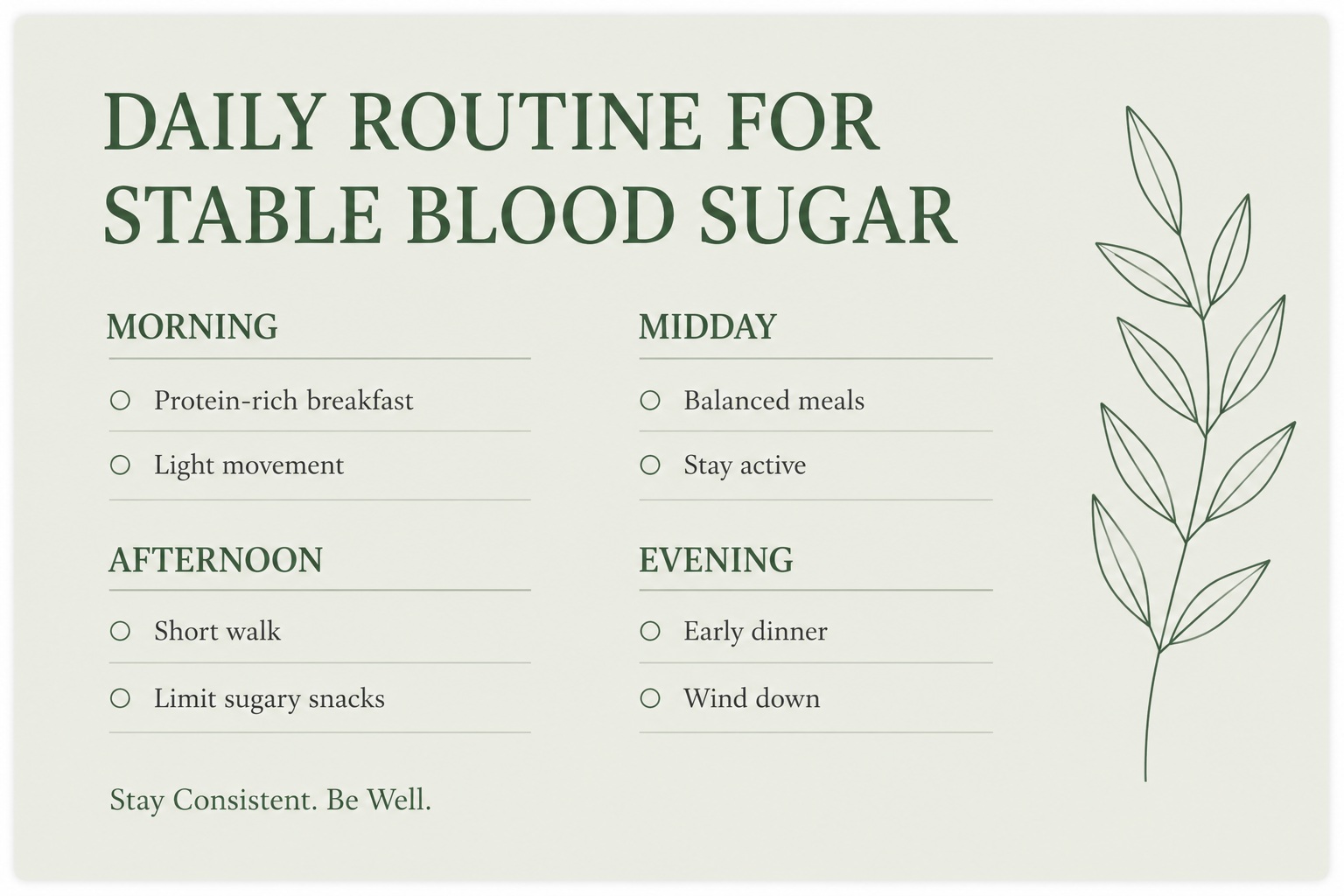
A Simple Daily Routine You Can Follow
Here's an example of how you can put these habits together in a typical day. Remember, you don't need to do everything perfectly—consistency matters far more than perfection.
Morning
- Eat a protein-rich breakfast.
- Get some natural morning light.
- Take a short walk or do some gentle stretching.
Midday
- Build balanced meals with protein, fiber, and healthy fats.
- Stay well hydrated.
- Break up long periods of sitting with regular movement.
Afternoon
- Take a short walk or stay physically active.
- Choose healthy snacks if you're hungry, and limit sugary snacks.
Evening
- Eat dinner a little earlier whenever possible.
- Enjoy a relaxing wind-down routine.
- Aim for a consistent bedtime to support restful sleep.
Over time, these simple habits can work together to improve energy, support healthy insulin sensitivity, and make stable blood sugar easier to maintain.
The Bottom Line
Improving insulin resistance after 50 isn't about following a perfect diet or completely changing your lifestyle overnight. It's about building small, sustainable habits that support your body's natural ability to regulate blood sugar.
A protein-rich breakfast, balanced meals, regular movement, and a consistent evening routine may seem like simple changes, but together they can have a meaningful impact on your energy, metabolism, and long-term health.
The most important step is simply to start. Choose one or two habits you can practice consistently, then build from there. Over time, those small daily actions can lead to lasting improvements in your blood sugar, insulin sensitivity, and overall well-being.
Medical Disclaimer: This article is for educational purposes only and is not intended as medical advice. Always consult your qualified healthcare provider before making significant changes to your diet, supplements, lifestyle, or treatment plan.

Frequently Asked Questions
What is the best daily routine for improving insulin resistance after 50?
The best daily routine includes eating a protein-rich breakfast, choosing balanced meals, staying physically active throughout the day, getting regular movement after meals, and following a consistent evening routine. Small, sustainable habits practiced every day are often more effective than trying to make dramatic lifestyle changes.
Can daily habits really improve insulin resistance?
Yes. Regular exercise, balanced nutrition, good sleep, stress management, and maintaining a healthy weight can all help improve insulin sensitivity over time. While results vary from person to person, consistent healthy habits are one of the most effective ways to support long-term metabolic health.
Does walking after meals help lower blood sugar?
Yes. Taking a short walk after eating helps your muscles use glucose for energy, which may reduce blood sugar spikes after meals. Even 5–10 minutes of light walking can make a meaningful difference when practiced consistently.
Why is a protein-rich breakfast important for blood sugar?
A protein-rich breakfast helps slow digestion, supports steady energy levels, and may reduce blood sugar spikes later in the day. It can also help reduce hunger and cravings between meals.
Which evening habits support healthy fasting blood sugar?
Eating dinner a little earlier, avoiding late-night snacking, keeping evening meals balanced, and following a relaxing bedtime routine may help support healthier overnight glucose levels and improve fasting blood sugar the next morning.
How long does it take to see improvements in insulin resistance?
Some people notice improvements in energy levels, cravings, or sleep within a few weeks of making consistent lifestyle changes. Improvements in blood sugar markers, such as fasting glucose or HbA1c, generally take longer and depend on many factors, including overall health and consistency.
References
National Institute of Diabetes and Digestive and Kidney Diseases (NIDDK)
Insulin Resistance & Prediabetes
Mayo Clinic:
Insulin Resistance: What It Is, Symptoms, Causes, and Treatment
American Diabetes Association
Standards of Care in Diabetes
Cleveland Clinic: Insulin Resistance: What It Is, Causes, Symptoms & Treatment
Continue Learning
Why Insulin Resistance Becomes More Common After 50 (And What You Can Do About It)
Understand why insulin resistance becomes more common with age and the lifestyle changes that can help reverse the trend.
Best Foods for Insulin Resistance After 50 (What to Eat to Stabilize Blood Sugar)
Discover which foods help support healthy blood sugar levels and how to build balanced meals that keep you satisfied.
Why Your Fasting Blood Sugar Is High in the Morning After 50 (And How to Lower It Naturally)
Learn why morning blood sugar can stay high—even when you're eating well—and what you can do to improve it.
How to Lower HbA1c Naturally After 50 (Step-by-Step Guide)
Find out what your HbA1c test measures and the practical habits that can help improve your long-term blood sugar control.