
You may be eating much the same foods and living much the same way, yet suddenly your waistline seems to be changing. Clothes fit differently, weight is easier to gain, and losing it can feel harder than it once did.
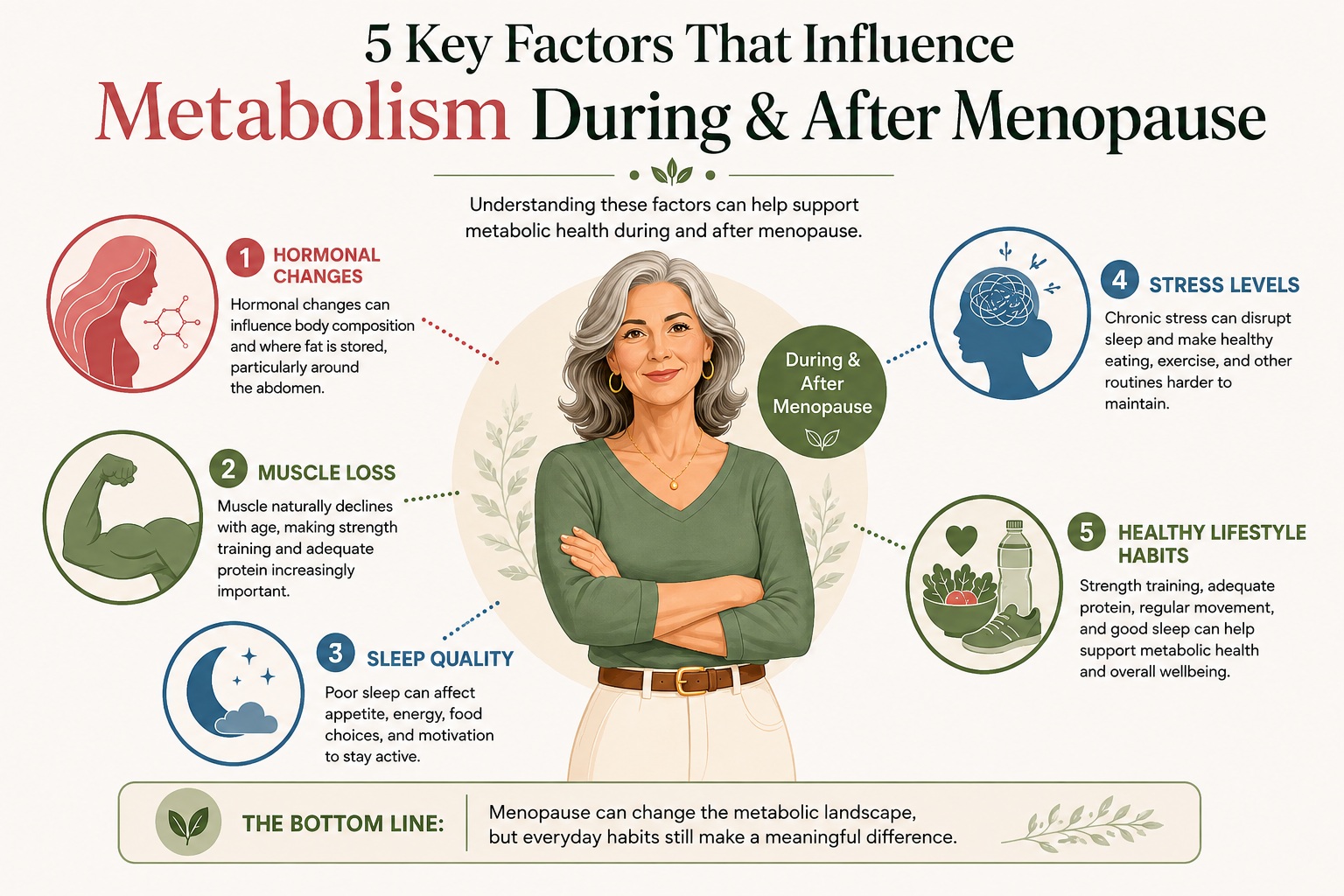
It is easy to blame a “slower metabolism,” but menopause is only part of the story. Falling estrogen levels can influence where fat is stored, while changes in muscle mass, sleep, stress, and physical activity can also affect how your body uses and stores energy.
The encouraging part is that menopause does not mean your metabolism is permanently damaged. Strength training, adequate protein, regular movement, good sleep, and manageable lifestyle changes can all help support metabolic health during and after menopause.
Menopause can change the metabolic landscape—but you still have considerable influence over what happens next.
Quick Summary
-
Menopause can affect body composition, fat distribution, and metabolic health.
-
Declining estrogen levels can contribute to a shift toward more abdominal fat storage.
-
Age-related muscle loss and lower activity levels can reduce daily energy expenditure over time.
-
Sleep disruption and chronic stress can make appetite, activity, and weight management more challenging.
-
Strength training, adequate protein, regular movement, and good sleep can help support metabolic health during and after menopause.

What Happens During Menopause?
Menopause is a natural stage of life that marks the end of menstrual periods. It is officially diagnosed after a woman has gone 12 consecutive months without a menstrual cycle.
The transition typically occurs in three stages:
| Stage | What Happens |
|---|---|
| Perimenopause | Hormone levels fluctuate and menstrual periods often become irregular. |
| Menopause | Reached after 12 consecutive months without a menstrual period. |
| Postmenopause | The years following menopause, when estrogen levels remain lower. |
Does Menopause Actually Slow Metabolism?
It can seem as though metabolism suddenly slows during menopause, especially when weight or waist size begins to change without an obvious change in eating habits. But the explanation is more complicated than menopause simply “slowing metabolism.”
Hormonal changes during the menopausal transition can affect body composition and where fat is stored. At the same time, age-related loss of muscle mass and changes in physical activity can gradually reduce daily energy expenditure.
Menopause can also indirectly affect weight management through changes in sleep, appetite, mood, and energy levels.
Several factors can therefore be working together:
-
Loss of muscle mass
-
Reduced physical activity
-
Changes in fat distribution
-
Changes in appetite
-
Poorer sleep quality
-
Increased stress
For many women, it is this combination of hormonal changes, aging, and lifestyle factors—not a suddenly “broken” metabolism—that makes maintaining weight and muscle more challenging after menopause.
Continue learning: How Hormones Affect Metabolism After 50.
Why Fat Distribution Often Changes After Menopause
One of the most noticeable changes during and after menopause can be a shift in where body fat is stored.
Before menopause, women tend to store more fat around the hips and thighs. As estrogen levels decline, fat distribution often shifts toward the abdomen.
This change can occur even when overall body weight remains relatively stable, which helps explain why clothes may fit differently despite little movement on the scale.
Some abdominal fat is visceral fat, which is stored around the internal organs. Higher levels of visceral fat are associated with an increased risk of insulin resistance, type 2 diabetes, and cardiovascular disease.
For this reason, changes in waist size can sometimes provide useful information about metabolic health that body weight alone does not show.
The Role of Muscle Loss During Midlife
Muscle mass naturally declines with age, a process known as sarcopenia.
During and after menopause, this decline may accelerate if strength training and adequate protein intake are not prioritised.
Muscle tissue is metabolically active, meaning it requires energy to maintain. While muscle does not burn huge numbers of calories at rest, having more lean muscle mass generally supports a healthier metabolism than having less.
Maintaining muscle mass may also help:
- Support healthy body composition
- Improve physical function
- Enhance strength and balance
- Support long-term independence
- Improve glucose management
For this reason, preserving muscle becomes increasingly important after 50.
How Sleep and Stress Can Influence Metabolism During Menopause
Sleep can become more disrupted during the menopausal transition. Hot flashes, night sweats, hormonal changes, anxiety, and frequent waking can all make it harder to get consistent, restorative sleep.
Poor sleep can affect appetite regulation, energy levels, food choices, and motivation to exercise. Over time, these effects can make maintaining healthy habits and managing weight more difficult.
Stress can add another layer. Chronic stress can disrupt sleep, influence appetite and food choices, and make regular exercise and other healthy routines harder to maintain.
Sleep and stress do not simply “break” or switch off metabolism. Instead, they can influence several of the behaviors and biological processes involved in energy balance and metabolic health.
Continue Learning: Why Sleep Is Essential for a Healthy Metabolism After 50.
What Habits Can Help Support Metabolism After Menopause?
Strength Training
Resistance training can help preserve muscle mass as you age, while also supporting strength, mobility, and metabolic health. Aim to include strength-based exercise regularly rather than relying on cardio alone.
Prioritizing Protein
Adequate protein helps maintain muscle and can also improve fullness after meals. Spreading protein across meals throughout the day can make it easier to meet your needs consistently.
Staying Physically Active
Everyday movement matters too. Walking, gardening, household activities, recreational exercise, and simply spending less time sitting all contribute to daily activity and energy expenditure.
Managing Stress
Simple practices such as walking outdoors, deep breathing, meditation, or other relaxing activities can make stress easier to manage. The goal is not to eliminate stress, but to keep it from consistently disrupting sleep and healthy routines.
Improving Sleep Quality
A regular sleep schedule, a cool bedroom, and limiting caffeine later in the day can help support better sleep. During menopause, keeping the bedroom cool can be particularly helpful for women experiencing hot flashes or night sweats.
Small habits practiced consistently can have a much greater impact than short bursts of extreme dieting or exercise
Common Myths About Menopause and Metabolism
Myth: Weight Gain Is Inevitable
Weight gain becomes more common during midlife, but it is not inevitable. Hormonal changes can make weight management more challenging, while everyday habits such as strength training, regular movement, adequate protein, and good sleep can still make a meaningful difference.
Myth: My Metabolism Is Permanently Broken
Menopause does not permanently damage your metabolism. Changes in hormones, muscle mass, activity, sleep, and stress can all influence metabolic health, and many of these factors can be improved.
Myth: Extreme Diets Are Necessary
Very restrictive diets can be difficult to maintain and may make it harder to preserve muscle. A balanced, sustainable approach is generally more useful for long-term weight and metabolic health.
The Bottom Line
Menopause can change body composition, fat distribution, sleep, and other factors that influence metabolic health. But it does not mean your metabolism is permanently damaged or that weight gain is inevitable.
Hormonal changes are only part of the picture. Preserving muscle through strength training, eating adequate protein, staying physically active, managing stress, and prioritizing sleep can all help support metabolic health during and after menopause.
Menopause may change the metabolic landscape, but many of the factors that shape your health remain within your influence.
Medical Disclaimer: This article is for educational purposes only and is not intended as medical advice. Always consult your healthcare provider before making significant changes to your diet, supplements, lifestyle, or treatment plan.
Frequently Asked Questions
Does menopause slow your metabolism?
Menopause can influence metabolic health, but it does not simply cause metabolism to suddenly slow down. Hormonal changes, age-related muscle loss, physical activity, sleep, and stress can all affect how the body uses and stores energy after 50.
Why does belly fat increase after menopause?
As estrogen levels decline, fat distribution often shifts from the hips and thighs toward the abdomen. This can increase waist size even when overall body weight changes very little.
Can you lose weight after menopause?
Yes. Weight loss after menopause is possible, although preserving muscle becomes increasingly important. Strength training, adequate protein, regular movement, good sleep, and a sustainable approach to eating can all help support healthy weight management.
What is the best exercise for metabolism after menopause?
Strength training is particularly valuable because it helps preserve muscle mass. Walking, aerobic exercise, and regular everyday movement are also important for metabolic health, fitness, and overall well-being.
Is weight gain inevitable after menopause?
No. Weight gain becomes more common during midlife, but it is not inevitable. Hormonal changes can make weight management more challenging, while muscle preservation, physical activity, sleep, and other everyday habits can still make a meaningful difference.
References
National Institute on Aging — What Is Menopause?
Clear, authoritative overview of perimenopause, menopause, and postmenopause, including common hormonal changes and symptoms.
Weight, Shape, and Body Composition Changes at Menopause
Review examining how menopause can affect body composition, abdominal and visceral fat accumulation, energy expenditure, and weight-related metabolic risk.
Body Composition and Cardiometabolic Health Across the Menopause Transition
Reviews changes in body fat distribution, energy expenditure, glucose metabolism, sleep, and cardiometabolic health during the menopausal transition.
Menopause, Female Sex Hormones, Skeletal Muscle Mass and Muscle Protein Turnover in Humans
Recent review of evidence linking the menopausal transition with changes in muscle mass and the importance of resistance exercise and adequate nutrition for preserving muscle.
Sleep Disturbance and Perimenopause: A Narrative Review
Reviews why sleep disturbances are common during perimenopause, including hormonal fluctuations, hot flashes, night sweats, aging, and other contributing factors.