Many adults over 50 focus on staying active to maintain muscle, support metabolism, and protect their health as they age. But there is another part of the equation that is easy to overlook: recovery.
Exercise challenges your muscles and creates the stimulus for them to become stronger. Recovery is when your body does much of the repair and adaptation that allows those benefits to happen. Without enough recovery, you may feel increasingly tired, sore, or less able to perform at your best.
And recovery doesn't mean spending the day on the couch. Quality sleep, adequate protein, hydration, rest days, and gentle movement can all help your body recover while supporting an active lifestyle.
After 50, the goal isn't simply to exercise more. It's to find the right balance between activity and recovery so you can keep building strength, energy, and metabolic health.
Quick Summary
- Recovery is an essential part of staying strong and active after 50.
- Exercise challenges your muscles; recovery gives them time to repair and adapt.
- Poor recovery can contribute to ongoing fatigue, soreness, and reduced exercise performance.
- Sleep, adequate protein, hydration, and rest all support healthy recovery.
- The goal is to balance exercise with recovery so you can maintain muscle, energy, and metabolic health.
Why Recovery Becomes More Important After 50
As we age, maintaining muscle strength and physical capacity becomes increasingly important. Regular exercise helps, but the benefits of exercise depend partly on giving your body enough time and resources to recover and adapt.
This does not mean you should exercise less. It means recovery deserves the same attention as exercise itself.
Exercise challenges your muscles and other tissues. During the hours and days that follow, your body adapts to that challenge by repairing tissue, replenishing energy stores, and preparing your muscles for future activity.
If training repeatedly exceeds your ability to recover, you may begin to notice persistent soreness, fatigue, disrupted sleep, or declining exercise performance. Over time, that can make it harder to train consistently and maintain strength.
The goal after 50 isn't to avoid challenging exercise. It's to combine enough challenge to stimulate progress with enough recovery to benefit from it.
The Connection Between Recovery and Metabolism
Metabolism is influenced by many factors, including muscle mass, sleep quality, nutrition, and physical activity.
Recovery supports metabolism by helping the body maintain muscle tissue. Muscle is metabolically active, meaning it requires energy even when you are resting.
Recovery also supports healthy hormone function and helps manage physical stress. When recovery is poor, the body may remain in a more stressed state, which can make it harder to feel energized and perform at your best.
This is one reason why many fitness experts view recovery as part of a successful exercise plan rather than something separate from it.
Signs You May Not Be Recovering Well
Feeling tired or sore after a challenging workout is normal. The more important question is whether you recover and feel ready to exercise again. When fatigue, soreness, or declining performance persist, your body may need more recovery time.
Signs to pay attention to include:
- Persistent fatigue that doesn't improve with normal rest
- Muscle soreness that lasts longer than expected
- Difficulty sleeping or changes in sleep quality
- Reduced motivation to exercise
- Feeling unusually tired or weak during workouts
- A noticeable decline in strength, endurance, or exercise performance
One difficult workout or poor night's sleep doesn't necessarily mean you're under-recovering. Look for patterns that continue over several days or repeatedly return after training.
If persistent fatigue, weakness, pain, or changes in exercise tolerance don't improve with additional recovery, consider talking with your healthcare provider, as these symptoms can have causes unrelated to exercise.

How Sleep Supports Recovery
Sleep is one of your body's most important recovery tools. While you sleep, your body carries out processes involved in muscle repair, energy restoration, and adaptation to exercise.
Good sleep also helps support the energy and motivation you need to stay physically active. In contrast, regularly getting too little or poor-quality sleep can make exercise feel harder and interfere with your ability to recover between workouts.
This matters after 50 because maintaining muscle and staying consistently active are both important for metabolic health. Exercise provides the challenge — but sleep helps give your body the opportunity to adapt and prepare for the next one.
Continue learning: Why Sleep Is Essential for a Healthy Metabolism After 50.
The Role of Protein in Muscle Recovery
Protein provides the amino acids your body needs to repair and maintain muscle tissue. After exercise, these amino acids help support muscle repair and adaptation.
As we get older, maintaining muscle becomes increasingly important because age-related muscle loss can affect strength, mobility, and metabolic health. Regular resistance exercise combined with adequate protein gives your body both the stimulus and the building blocks needed to help preserve muscle.
Rather than relying on most of your protein at one meal, try including a good source of protein throughout the day. Options include eggs, fish, poultry, Greek yogurt, cottage cheese, tofu, tempeh, beans, and lentils.
You don't need a complicated post-workout routine. The bigger priority is getting enough protein overall as part of a balanced diet and supporting it with regular strength-building activity.
Continue learning: Why Protein Becomes More Important After 50 for Metabolism, Muscle and Weight Control.
Active Recovery: Why Gentle Movement Helps
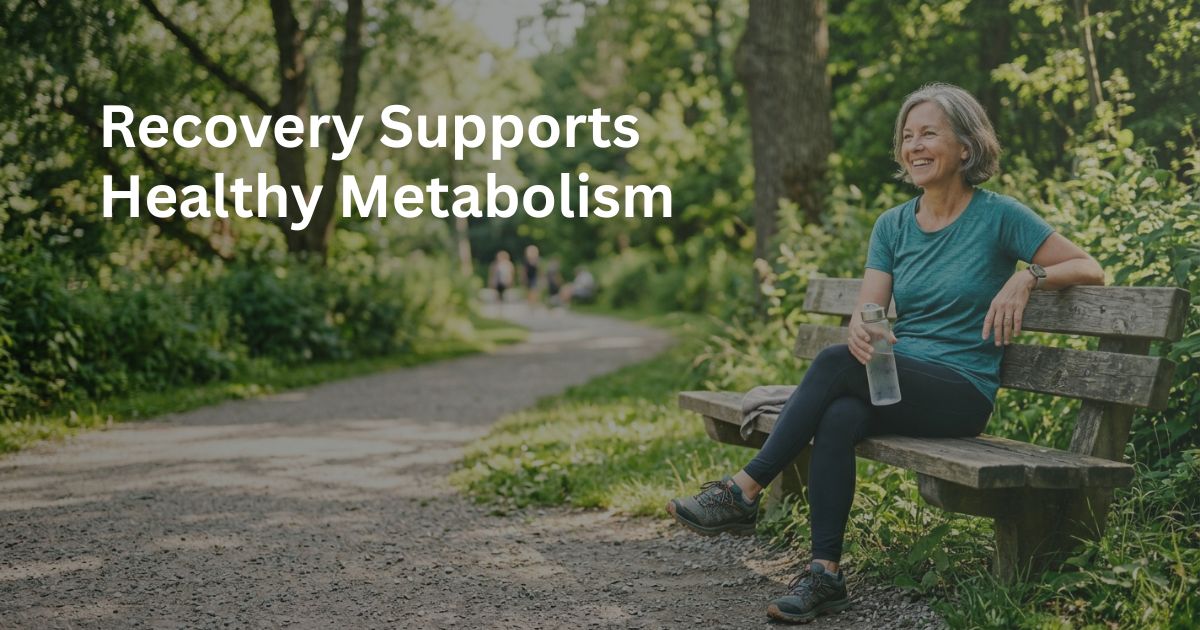
Recovery doesn't always mean complete rest. On lighter days, gentle movement can help you stay active without adding significant stress to your body.
Walking, easy cycling, gentle stretching, or mobility exercises can be useful forms of active recovery. They can help reduce stiffness and keep you moving while giving your muscles time to recover from harder training.
The key is to keep active recovery genuinely easy. You should finish feeling refreshed rather than tired. If a walk, bike ride, or yoga session starts to feel like another workout, reduce the intensity or give yourself a full rest day instead.
Walking is particularly useful because it's accessible, low impact, and easy to adjust to your energy and fitness level. Even a short, comfortable walk can be enough on a recovery day.
Continue learning: Can Walking Boost Your Metabolism After 50? What the Research Says.
Simple Recovery Habits That Support Healthy Aging
You don't need a complicated recovery routine. A few consistent habits can help your body adapt to exercise and keep you active over the long term.
Try to:
- Keep a reasonably consistent sleep schedule
- Include a good source of protein with each meal
- Drink enough fluids throughout the day
- Allow recovery time between harder workouts
- Use walking or other gentle movement on lighter days
- Increase exercise intensity or volume gradually
- Pay attention to persistent fatigue, soreness, or declining performance
- Take a full rest day when your body genuinely needs one
Recovery isn't about doing less. It's about giving your body what it needs so you can keep doing more over time.
The Bottom Line
Exercise is one of the best things you can do to maintain strength, mobility, and metabolic health after 50. But the benefits don't come from exercise alone. Your body also needs time to recover, repair, and adapt.
Quality sleep, adequate protein, hydration, gentle movement, and appropriate rest between harder workouts all contribute to that process. Just as importantly, paying attention to persistent fatigue, soreness, or declining performance can help you recognize when your body needs more recovery.
The goal isn't to exercise less. It's to create a sustainable rhythm of challenge and recovery that allows you to stay strong, active, and consistent over the years ahead.
Recovery isn't a break from progress. It's part of the process that makes progress possible.
Medical Disclaimer: This article is for educational purposes only and is not intended as medical advice. Always consult your qualified healthcare provider before making significant changes to your diet, supplements, lifestyle, or treatment plan.
Frequently Asked Questions
Does recovery affect metabolism after 50?
Recovery supports several factors involved in metabolic health, including maintaining muscle, getting adequate sleep, and staying consistently active. It doesn't directly “boost” metabolism, but good recovery can help your body adapt to exercise and maintain the muscle and activity levels that support metabolic health.
How many recovery days do adults over 50 need?
There is no single number that is right for everyone. Recovery needs depend on your fitness level, the type and intensity of exercise you do, your sleep, and how well your body is adapting. Rather than following a fixed rule based on age, allow adequate recovery between harder workouts and adjust your routine if fatigue, soreness, or declining performance persists.
Is walking a good recovery activity?
Yes. An easy walk can be an excellent form of active recovery because it keeps you moving without placing the same demands on your body as a harder workout. Keep the pace comfortable and aim to finish feeling refreshed rather than tired.
Can poor sleep affect recovery?
Yes. Sleep supports physical restoration, energy regulation, and adaptation to exercise. Regularly getting too little or poor-quality sleep can make exercise feel harder and make it more difficult to recover between workouts.
Does protein help with recovery after exercise?
Yes. Protein provides amino acids that your body uses to repair and maintain muscle tissue. Getting adequate protein throughout the day, together with regular resistance exercise, can help support muscle maintenance and recovery as you age.
Continue Learning
Why Protein Becomes More Important After 50 for Metabolism, Muscle and Weight Control
Can Walking Boost Your Metabolism After 50? What the Research Says
Why Strength Training Is One of the Best Ways to Boost Metabolism After 50
Why Sleep Is Essential for a Healthy Metabolism After 50
Why Stress Can Slow Your Metabolism After 50 (And What You Can Do About It)