
You’re eating healthy. You’ve cut back on sugar. You’re making better choices than ever before.
So why does your blood sugar still spike after meals?
For many adults over 50, the problem isn't just what you eat—it's how efficiently your body processes food after meals.. These hidden blood sugar spikes (known as post-meal or postprandial spikes) can quietly increase your risk of weight gain, insulin resistance, and long-term metabolic issues.
The good news? You don’t need a strict diet or extreme lifestyle changes to fix it.
With a few simple, science-backed strategies, you can significantly reduce blood sugar spikes—and improve your overall health.
Quick Summary
- Start meals with protein or fibre to slow glucose absorption
- Take a 10–15 minute walk after eating to help lower blood sugar
- Eat carbohydrates last, not first
- Avoid liquid sugars like fruit juice and soft drinks
- Add a small amount of vinegar before meals to improve insulin response
- Build muscle over time to support better glucose control
- Improve sleep and stress levels, which directly affect blood sugar

What Happens to Blood Sugar After You Eat?
Every time you eat—especially carbohydrates—your body breaks food down into glucose, which enters your bloodstream.
In response, your body releases insulin to help move that glucose into your cells for energy.
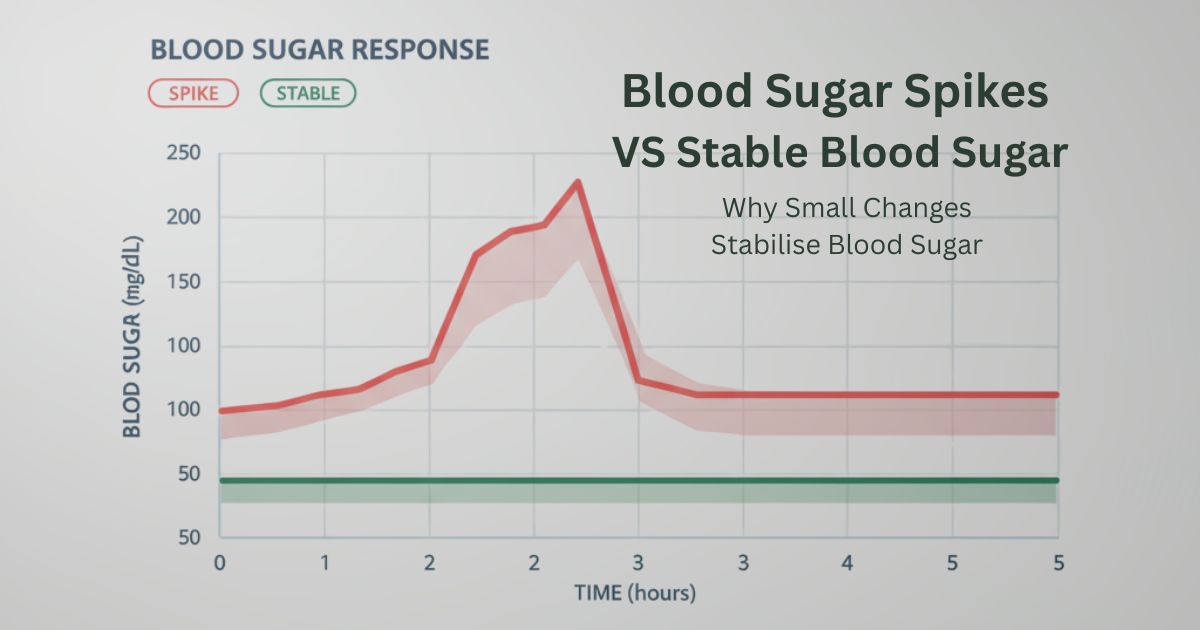
But when this process becomes less efficient, blood sugar levels can rise quickly and spike higher than they should.
These spikes may seem harmless in the moment, but repeated spikes over time can contribute to metabolic problems.
A healthy body keeps these rises fairly small and temporary. Problems begin when blood sugar climbs higher—or stays elevated longer than it should.
Continue Learning:
Why Blood Sugar Spikes After 50 (Even If You Eat Healthy Foods)]
Why Insulin Resistance Becomes More Common After 50]
Why Blood Sugar Spikes Get Worse After 50
As we age, the body becomes less efficient at managing blood sugar. Several factors contribute to this:
Increased Insulin Resistance
Cells don’t respond to insulin as effectively as they once did, meaning glucose stays in the bloodstream longer.
Continue Learning: Why Insulin Resistance Becomes More Common After 50
Slower Muscle Glucose Uptake
Muscle plays a major role in absorbing glucose. As muscle mass naturally declines with age, your body has fewer places to store glucose efficiently.
Hormonal Changes
Hormonal shifts can affect how your body regulates blood sugar, particularly in women after menopause.
Continue Learning: The Real Reason Belly Fat Becomes More Stubborn After 50
Why Blood Sugar Spikes Matter More Than You Think
Frequent blood sugar spikes don't just affect your energy today—they gradually increase your average blood sugar over time, making insulin resistance more likely.
- They increase your average blood sugar levels over time
Continue Learning: How to Lower HbA1c Naturally After 50 - They promote fat storage, especially around the abdomen
Continue Learning: Belly Fat After 50 - They place stress on blood vessels and metabolism
Even if your fasting blood sugar looks “normal,” frequent spikes after meals can still be doing damage behind the scenes.
7 Simple Ways to Reduce Blood Sugar Spikes After Meals
Small, consistent habits often make a bigger difference than trying to follow the perfect diet. These practical strategies can help reduce blood sugar spikes and support better metabolic health over time.
1. Start Meals with Protein or Fiber
Eating protein, vegetables, or other high-fiber foods before carbohydrates slows digestion and reduces the speed at which glucose enters your bloodstream. This simple habit can lead to smaller blood sugar spikes after meals and help you feel full for longer.
Continue learning: Best Foods for Insulin Resistance After 50
2. Take a Short Walk After Eating
A 10–15 minute walk after a meal encourages your muscles to use glucose for energy instead of leaving it circulating in your bloodstream. Even light activity after eating has been shown to improve post-meal blood sugar control.
3. Eat Carbohydrates Last
Try eating vegetables, protein, and healthy fats before foods like bread, rice, potatoes, or pasta. Changing the order of your meal slows carbohydrate absorption and can noticeably reduce blood sugar spikes without changing what you eat.
4. Avoid Liquid Sugars
Soft drinks, fruit juices, sweetened coffees, and other sugary beverages are absorbed very quickly, causing rapid increases in blood sugar. Choosing water, sparkling water, or unsweetened tea instead is one of the easiest ways to avoid unnecessary spikes.
5. Add Vinegar Before Meals
Some studies suggest that a small amount of vinegar, such as apple cider vinegar diluted in water before a meal, may improve insulin sensitivity and reduce post-meal blood sugar levels. If you have digestive conditions or take diabetes medication, check with your healthcare provider before trying this regularly.
6. Build Muscle Over Time
Muscle tissue acts like a storage site for glucose. Regular strength training improves your body's ability to remove glucose from the bloodstream, making blood sugar easier to manage over the long term. Even two or three sessions each week can make a meaningful difference.
7. Improve Sleep and Reduce Stress
Poor sleep and ongoing stress can increase insulin resistance and make blood sugar spikes more likely. Prioritizing good sleep habits, managing stress, and staying physically active all work together to support healthier glucose control.
Continue learning: How to Lower Fasting Blood Sugar Naturally After 50
What Is a Normal Blood Sugar After Eating?
While individual responses vary, general guidelines are:
- Normal: Less than 7.8 mmol/L (140 mg/dL) after meals
- Prediabetes: 7.8–11.0 mmol/L (140–199 mg/dL)
- Diabetes range: Above 11.1 mmol/L (200 mg/dL)
If your levels are frequently elevated after meals, it may be worth discussing with your healthcare provider.
Blood sugar usually peaks within one to two hours after eating before gradually returning toward your baseline.
The Bottom Line
Blood sugar spikes are one of the most overlooked aspects of metabolic health—especially after 50.
The encouraging part is that you don’t need to overhaul your entire lifestyle to see improvements.
By making a few small, consistent changes—like adjusting meal order, moving more after eating, and focusing on balanced meals—you can reduce spikes, improve energy, and support long-term health.
Small, consistent habits practiced every day have a much greater impact than trying to follow the perfect diet for a few weeks.
Medical Disclaimer: This article is for educational purposes only and is not intended as medical advice. Always consult your healthcare provider before making significant changes to your diet, supplements, lifestyle, or treatment plan.
Frequently Asked Questions
What is a blood sugar spike after eating?
A blood sugar spike is a rapid rise in glucose after a meal, especially after eating carbohydrate-rich foods. This is also called a post-meal or postprandial blood sugar rise. Insulin normally helps move glucose from the bloodstream into your cells, but the rise may be higher or last longer when insulin sensitivity is reduced.
Why do blood sugar spikes become more common after 50?
Blood sugar can become harder to regulate after 50 because muscle mass often declines, physical activity may decrease, and the body may become less sensitive to insulin. Hormonal changes, poor sleep, stress, and increased abdominal fat may also contribute.
How long does blood sugar stay elevated after a meal?
Blood sugar generally rises after eating and is often highest around one to two hours after the beginning of a meal. How quickly it returns toward your usual level depends on the meal, your activity level, insulin sensitivity, medication, and overall health.
Can walking after a meal reduce a blood sugar spike?
Yes. Light physical activity encourages your muscles to use glucose for energy and may help lower blood sugar after eating. Even a short walk can be a useful habit, although anyone using glucose-lowering medication should follow their healthcare provider’s advice about exercise.
Does eating carbohydrates last really make a difference?
It may. Eating vegetables, protein, and healthy fats before carbohydrate-rich foods can slow digestion and reduce how quickly glucose enters the bloodstream. This does not mean carbohydrates must be avoided; changing the order in which you eat them may help produce a steadier response.
What should blood sugar be two hours after eating?
Targets depend on whether you have diabetes, your age, your medication, and the goals set by your healthcare provider. The American Diabetes Association generally recommends a level below 180 mg/dL, or 10.0 mmol/L, one to two hours after the beginning of a meal for most nonpregnant adults with diabetes. This is a treatment target, not a diagnostic cutoff.
When should I speak to my healthcare provider about post-meal blood sugar?
Speak with your healthcare provider if your readings are frequently higher than your recommended range, remain elevated for several hours, or are accompanied by symptoms such as excessive thirst, frequent urination, blurred vision, unusual fatigue, or unexplained weight loss. You should also seek personalized advice before changing medication or regularly using remedies such as vinegar.
Continue Learning
Why Insulin Resistance Becomes More Common After 50
Learn why your body's response to insulin changes with age and what you can do to improve insulin sensitivity naturally.
The Real Reason Belly Fat Becomes More Stubborn After 50
Discover why abdominal fat becomes harder to lose after 50 and how it is closely connected to insulin resistance.
Why Blood Sugar Spikes After 50
Find out why blood sugar becomes more difficult to control as you get older—even if your diet hasn't changed.
Best Foods for Insulin Resistance After 50
Explore everyday foods that help stabilize blood sugar, improve insulin sensitivity, and support long-term metabolic health.
How to Lower Fasting Blood Sugar Naturally After 50
Learn practical lifestyle strategies that can help reduce high morning blood sugar and improve glucose control.
How to Lower HbA1c Naturally After 50
Discover simple habits that can gradually lower your average blood sugar levels and improve your long-term metabolic health.