
You might start the day with a walk or a workout and feel that you've ticked the exercise box. But then you sit down for breakfast, drive somewhere, spend a few hours at a desk or on your computer, sit again over lunch, and relax in front of the television in the evening.
Before you know it, you've spent much of the day sitting — even though you exercised.
After 50, this can matter more than you might think. Long periods of sitting mean the large muscles in your legs and hips spend less time actively working. That can reduce the amount of energy you use throughout the day and may also affect how efficiently your body handles blood sugar.
The answer isn't another exhausting workout. Small bursts of movement throughout the day — standing up, walking for a few minutes, stretching, or doing everyday tasks — can help break up long periods of inactivity.
In this article, we'll look at why sitting too much matters for metabolic health after 50 and the simple ways you can build more movement into your day.
Contine learning: How to Boost Metabolism After 50 (Without Extreme Diets)
Quick Summary
- Sitting for long periods reduces muscle activity and daily energy expenditure.
- Too much sedentary time can make blood sugar control more difficult.
- A daily workout does not necessarily make up for sitting most of the day.
- Short movement breaks — including walking, standing, stretching, and household tasks — all count.
- Small amounts of movement throughout the day can add up and support metabolic health after 50.

Why Metabolism Changes After 50
Metabolism is the collection of processes your body uses to turn food into energy and keep you functioning. It doesn't suddenly slow down when you turn 50, but several changes that often happen as we get older can affect how much energy we use each day.
These can include:
- Gradual loss of muscle mass
- Less physical activity and everyday movement
- Hormonal changes
- Changes in sleep
- Higher or more persistent stress levels
One of the most important — and most changeable — factors is how much we move throughout the day.
Muscle is metabolically active tissue, and regular movement helps keep those muscles working. Strength training can help preserve muscle as you age, while everyday activities such as walking, standing, gardening, and household tasks increase the amount of energy you use during the day.
That is why metabolic health after 50 isn't just about formal exercise. What you do during all the hours between your workouts matters too.
Continue learning: Why Strength Training Is One of the Best Ways to Boost Metabolism After 50
What Happens When You Sit for Long Periods?
When you're sitting at a computer, watching television, driving, or reading for several hours, the large muscles in your legs and hips are doing very little work.
Compared with standing, walking, or doing everyday tasks, prolonged sitting means less muscle activity. Over the course of the day, this can contribute to:
- Lower daily energy expenditure
- Less glucose being taken up and used by working muscles
- Fewer opportunities to maintain strength and mobility
- Longer stretches of uninterrupted inactivity
None of this means that sitting is inherently bad. We all need time to rest, work, travel, and relax. The concern is spending long periods sitting without regularly getting up and moving.
This is where small amounts of activity can make a surprisingly useful difference. Standing up, walking around the house, climbing a flight of stairs, or doing a few minutes of light activity gets your muscles working again.
It isn't only your workout that contributes to daily movement — all those little moments of activity count too.
Sitting and Blood Sugar Control
What happens after a meal is a good example of why everyday movement matters.
After you eat, glucose enters your bloodstream. Your muscles can use some of that glucose for energy — and when those muscles are active, they become an important place for glucose to go.
But imagine finishing dinner and then sitting on the sofa for the next two or three hours. Your muscles have very little work to do. Research suggests that breaking up prolonged sitting with short periods of light activity can help reduce the rise in blood sugar after meals.
And the movement doesn't have to be strenuous. You could:
- Take a short walk after eating
- Tidy the kitchen
- Do a few household chores
- Walk around while talking on the phone
- Stand up and move for a few minutes
For adults over 50, these small habits can be especially useful because maintaining muscle activity and healthy blood sugar control becomes increasingly important with age.
A little movement after a meal can do more than add steps to your day — it gives your muscles an opportunity to use some of the glucose circulating in your bloodstream.
Exercise Is Important—But So Is Daily Movement
Imagine you take a brisk 30-minute walk in the morning. That's excellent for your health — but what happens during the rest of your day matters too.
If the next several hours are spent sitting at a computer, driving, eating meals, and relaxing on the sofa, you can still accumulate a lot of sedentary time despite having exercised.
That's because structured exercise and everyday movement are not the same thing.
Your morning walk, gym session, or bike ride provides important health benefits. But standing up regularly, walking around the house, taking the stairs, gardening, shopping, and doing household tasks all add movement to the rest of your day.
You don't need to choose between exercise and everyday activity. Ideally, they work together.
Think of your workout as one part of an active day — not the only active part of your day.
Continue learning: Can Walking Boost Your Metabolism After 50? What the Research Says
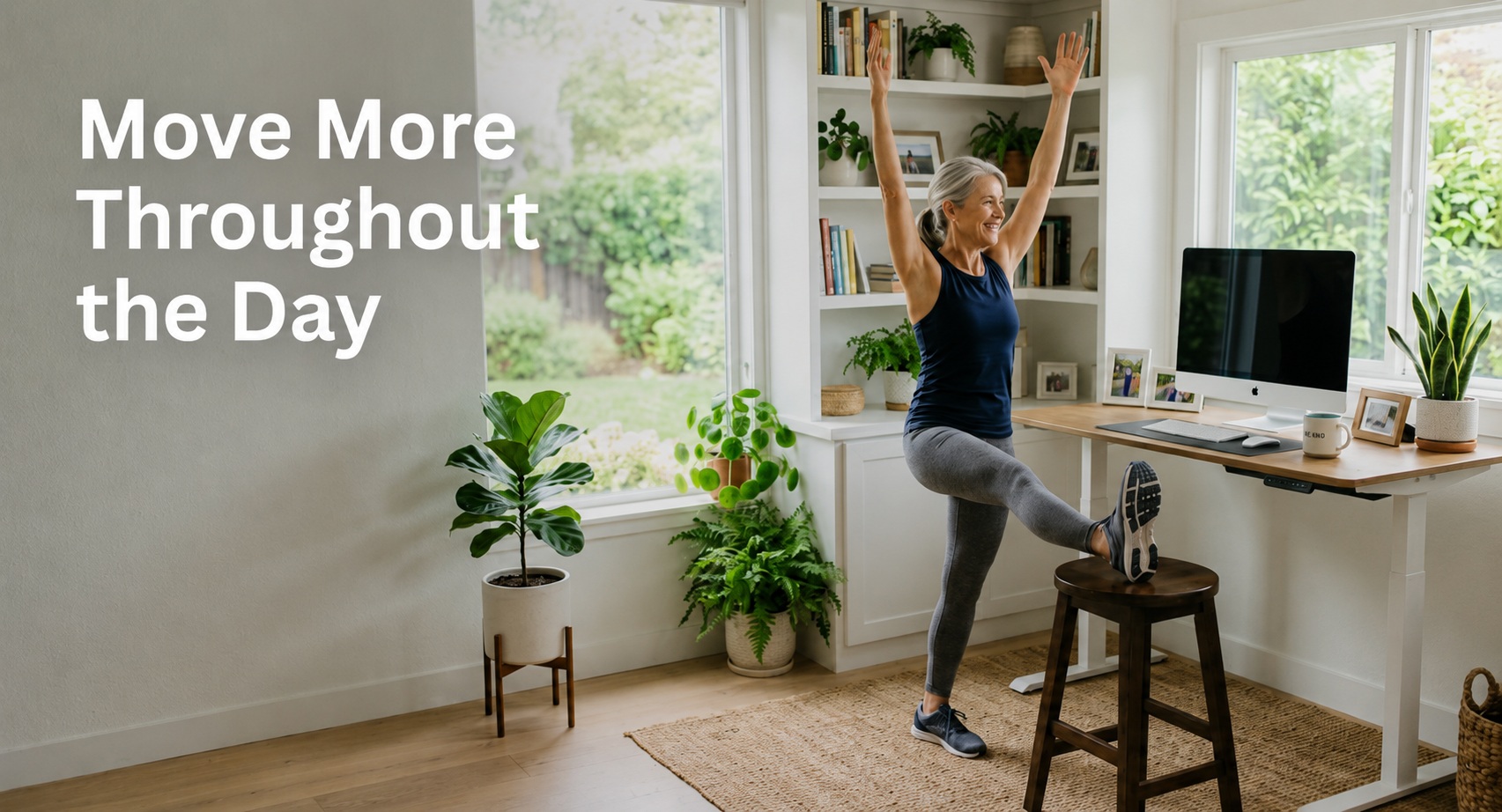
Simple Ways to Move More After 50
You don't need to overhaul your routine to spend less time sitting. The easiest approach is often to attach small amounts of movement to things you already do every day.
Take Short Walking Breaks
If you've been sitting for a while, get up and walk for a few minutes. Walk around the house, down the hallway, outside to the mailbox, or around the office. It doesn't need to be a workout to count.
Walk After Meals
A short walk after eating gets your muscles working at a particularly useful time and can help support a healthier blood sugar response.
Stand or Walk During Phone Calls
Phone calls are an easy opportunity to get out of your chair. Stand while you talk or walk around the room if you can.
Turn Household Tasks Into Movement
Tidying the kitchen, cooking, gardening, vacuuming, carrying groceries, and other everyday tasks all add activity to your day. It doesn't have to look like exercise to be movement.
Stretch and Move
If you've been sitting for a long time, stand up, stretch, and move your body for a few minutes. This can also help you feel less stiff after being in one position.
Use a Movement Reminder
If you tend to lose track of time at a computer or while watching television, set a timer or phone reminder as a simple prompt to get up and move.
The goal isn't to be constantly on your feet. It's simply to avoid letting hours of sitting pass without giving your body a chance to move.
You don't need to make all these changes at once. Standing up more often, taking a few extra steps, and breaking up long periods of sitting may seem like small things, but they can add up over time.
The goal isn't to be constantly on your feet — or to be perfect. It's simply to build a little more movement into the day you already have.
The Bottom Line
Sitting is a normal part of life, and there is no need to avoid it altogether. The bigger issue is spending long stretches of the day inactive without giving your muscles regular opportunities to work.
Exercise remains one of the best things you can do for your health after 50. But your metabolism also responds to the movement that happens between workouts — walking around the house, standing up regularly, doing everyday tasks, and taking a short walk after a meal.
You don't need to exercise all day. You simply need to give your body more reasons to move throughout the day.
Continue learning: Why Sleep Is Essential for a Healthy Metabolism After 50
Medical Disclaimer: This article is for educational purposes only and is not intended as medical advice. Always consult your healthcare provider before making significant changes to your diet, supplements, lifestyle, or treatment plan.
Frequently Asked Questions
Does sitting all day slow your metabolism?
Spending long periods sitting reduces muscle activity and the amount of energy you use compared with being up and moving. Sitting itself isn't the problem — the goal is to avoid spending long stretches of the day inactive without regular movement.
How often should I get up if I sit for long periods?
There isn't one perfect schedule that everyone needs to follow. A practical approach is to break up long periods of sitting regularly throughout the day. Even a few minutes of standing, walking, or light activity gives your muscles a chance to work again.
Can walking help offset the effects of sitting?
Yes. Walking increases muscle activity and energy expenditure, and short walks can be an easy way to break up sedentary time. Walking after meals can be particularly useful because active muscles help take up and use glucose from the bloodstream.
Is exercise enough if I sit most of the day?
Regular exercise provides important health benefits, even if you spend other parts of the day sitting. However, exercise and everyday movement aren't quite the same thing. Ideally, combine structured exercise with regular opportunities to stand, walk, and move throughout the day.
What are easy ways to sit less after 50?
Start with activities that fit naturally into your existing routine. Walk after a meal, stand or walk during phone calls, take short movement breaks, garden, tidy the house, or get up during television breaks. Small amounts of movement throughout the day all count.
References
- World Health Organization (2020). WHO Guidelines on Physical Activity and Sedentary Behaviour.
- World Health Organization (2022). Physical Activity and Sedentary Behaviour: A Brief to Support Older People.
- CDC (2025). Older Adult Activity: An Overview.
- U.S. Department of Health and Human Services. Physical Activity Guidelines for Americans, 2nd Edition.
- Henson J, et al. (2016). Breaking Up Prolonged Sitting With Standing or Walking Attenuates the Postprandial Metabolic Response in Postmenopausal Women: A Randomized Acute Study. Diabetes Care