After 50, it can be tempting to look for something that will give a slowing metabolism an extra push. Supplement labels often promise more energy, faster fat burning, or a metabolic boost — but the reality is much less dramatic.
No supplement can significantly speed up metabolism on its own. Muscle mass, physical activity, sleep, nutrition, and overall health have a much greater influence. As discussed in Why Your Metabolism Slows Down After 50 (And What You Can Do About It), sustainable lifestyle habits remain the foundation of metabolic health.
That doesn't mean supplements have no role. Some can help support muscle, strength, nutrient status, or other processes involved in metabolic health — particularly when they address a genuine nutritional need.
In this article, we'll look at which supplements have reasonable evidence behind them, what they can realistically do, and which metabolism claims deserve a healthy dose of skepticism.
Quick Summary
- No supplement can dramatically increase metabolism on its own.
- Protein powder can help support adequate protein intake and muscle maintenance after 50.
- Creatine can help support strength, muscle mass, and physical performance.
- Magnesium and vitamin D support important functions throughout the body, particularly when intake or levels are low.
- Green tea can have a small effect on energy expenditure, but it is not a significant metabolism booster.
- Lifestyle habits such as strength training, adequate protein, regular movement, sleep, and healthy eating matter far more than any supplement.
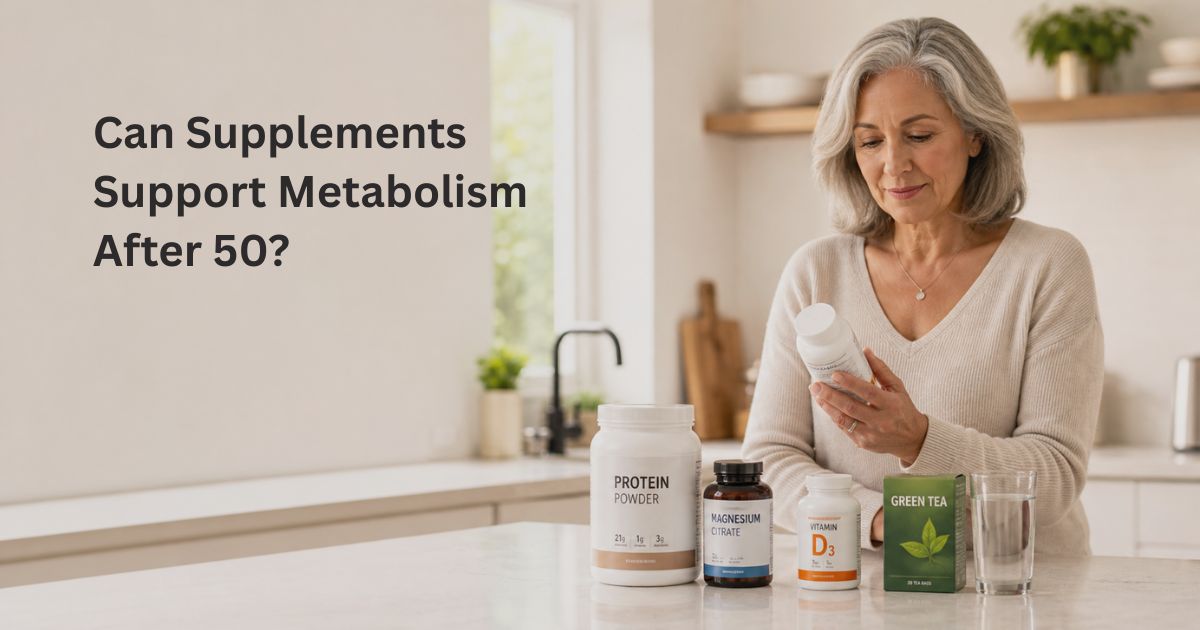
What Does It Mean to Support Metabolism?
Metabolism includes all the chemical processes that keep your body functioning — from converting food into energy to repairing tissues, maintaining muscle, and supporting normal hormone and cellular function.
When people talk about “boosting metabolism,” they usually mean burning more calories. But after 50, supporting metabolic health is about much more than calorie burn. Maintaining muscle, staying physically active, eating well, sleeping adequately, and supporting normal metabolic function all matter.
Supplements cannot replace these foundations. However, some can help support specific areas such as protein intake, muscle strength, or adequate nutrient levels — which is where they can become useful.
Protein Powder Can Help Support Muscle Maintenance
Maintaining muscle becomes increasingly important after 50. Muscle supports strength and physical function, helps with glucose regulation, and contributes to the amount of energy your body uses each day.
Muscle mass tends to decline with age, particularly when we become less active. Regular strength training combined with adequate protein can help preserve — and in many cases build — muscle later in life.
Whole foods such as eggs, fish, poultry, dairy products, beans, lentils, and soy foods can provide plenty of protein. But if getting enough protein from food is difficult, whey, casein, soy, or pea protein powder can be a convenient way to increase daily intake.
Protein powder does not directly “boost” metabolism. Its value comes from helping you meet your protein needs and support muscle maintenance, particularly when combined with strength training.
Continue learning: Why Protein Becomes More Important After 50.
Creatine Can Support Strength and Healthy Aging
Creatine is one of the most extensively studied dietary supplements, and its benefits are not limited to athletes and bodybuilders.
Research in older adults suggests that creatine, particularly when combined with resistance training, can help improve strength, lean body mass, and physical performance. These benefits become increasingly valuable after 50, when preserving muscle and the ability to stay active are important parts of healthy aging.
Creatine is not a stimulant and does not directly speed up metabolism. Its potential metabolic benefit is indirect: by supporting strength and muscle maintenance, it can help preserve the physical capacity needed to remain active.
Creatine generally works best alongside regular resistance training rather than as a substitute for it.
Continue learning:
Magnesium Supports Many Metabolic Processes
Magnesium is an essential mineral involved in hundreds of biochemical reactions throughout the body, including energy production, muscle and nerve function, and glucose metabolism.
Low magnesium intake or magnesium deficiency can interfere with normal body functions. However, taking extra magnesium does not appear to meaningfully increase calorie burning or “boost” metabolism when magnesium needs are already being met.
A supplement can be useful for people who are not getting enough magnesium from food or who have been advised by a healthcare provider that they need more. Good food sources include leafy greens, nuts, seeds, legumes, and whole grains.
Vitamin D Plays an Important Supporting Role
Vitamin D is best known for its role in bone health, but it is also important for normal muscle function and overall health.
People who get limited sun exposure, have low dietary intake, or have other risk factors can develop low vitamin D levels. When vitamin D is low, restoring adequate levels helps support normal bone and muscle function.
Vitamin D is not a metabolism booster, and taking more does not mean a faster metabolism. Its role is more fundamental: maintaining adequate vitamin D is part of supporting overall health and physical function as we age.
If you are concerned about your vitamin D level, a healthcare provider can advise whether testing or supplementation is appropriate.
Green Tea Has Only a Modest Effect on Metabolism
Green tea is often promoted as a natural way to boost metabolism. It contains compounds called catechins as well as caffeine, both of which have been studied for their possible effects on energy expenditure and fat metabolism.
Research suggests that any effect on calorie burning or body weight is likely to be small and can vary between individuals. Green tea should therefore not be viewed as a meaningful weight-loss or metabolism-boosting strategy on its own.
However, unsweetened green tea can still be a healthy beverage choice and can easily fit into an overall eating pattern that supports metabolic health.
Chromium: The Evidence Is Mixed
Chromium is a trace mineral involved in the way the body processes carbohydrates, fats, and proteins. Chromium supplements are often promoted for blood sugar control, weight loss, and metabolism.
However, research on chromium supplementation has produced mixed results. Some studies have reported small improvements in measures of blood sugar control, while others have found little or no meaningful benefit. There is also little evidence that chromium supplements produce significant weight loss or substantially increase metabolism.
For most people, chromium should not be viewed as a metabolism booster or a primary strategy for improving blood sugar control. If you are considering chromium supplements, particularly if you take medication for blood sugar, discuss them with your healthcare provider.
Be Skeptical of “Fat-Burner” Supplements
Many supplements marketed as “fat burners” or metabolism boosters promise results that go far beyond what the scientific evidence supports.
Be cautious of products that claim to:
-
Melt fat rapidly
-
Dramatically increase metabolism
-
Produce significant weight loss without lifestyle changes
-
Deliver fast results with little effort
Many fat-burning supplements contain stimulants, concentrated extracts, or proprietary ingredient blends. Depending on the ingredients and dose, they can also cause unwanted effects such as jitteriness, increased heart rate, digestive problems, or disrupted sleep.
Another reason for caution is that supplement labels and marketing claims do not necessarily tell you how effective a product will be — or whether it is appropriate for you. If you are considering a supplement containing multiple active ingredients, check with your healthcare provider, particularly if you take medications or have an existing health condition.
For long-term metabolic health, the evidence remains much stronger for habits such as resistance training, adequate protein, regular physical activity, nutritious food, and sufficient sleep.
The Habits That Matter Most
Supplements can sometimes provide useful support, but they cannot replace the foundations of metabolic health. After 50, the habits that help preserve muscle, keep you active, and support overall health matter far more than any quick fix.
The most effective strategies include:
- Eating enough protein
- Performing regular strength training
- Staying physically active throughout the day
- Getting adequate sleep
- Eating a nutrient-rich, minimally processed diet
- Managing stress
These habits work together. Strength training helps preserve muscle, adequate protein provides the building blocks muscle needs, regular movement increases daily energy expenditure, and good nutrition and sleep support recovery and overall health.
Continue learning: Can You Really Reset Your Metabolism After 50?

The Bottom Line
Supplements can play a supporting role in metabolic health after 50, but their usefulness depends on what they actually do. Protein powder can help you meet your protein needs, creatine can support strength and muscle, and nutrients such as magnesium and vitamin D are important when intake or levels are inadequate. Green tea has, at most, a modest effect on metabolism, while evidence for chromium supplements remains mixed.
None of these replaces the foundations of metabolic health. Regular strength training, adequate protein, daily movement, nutritious food, sufficient sleep, and other sustainable lifestyle habits have a much greater influence over time.
Think of supplements as tools that can fill a specific need — not shortcuts to a faster metabolism.
Medical Disclaimer: This article is for educational purposes only and is not intended as medical advice. Always consult your healthcare provider before making significant changes to your diet, supplements, lifestyle, or treatment plan.
Frequently Asked Questions
Can supplements really boost metabolism after 50?
Most supplements do not meaningfully increase metabolism. Some can support aspects of metabolic health by helping you meet protein or nutrient needs, preserve muscle, or support physical performance when combined with healthy lifestyle habits.
What is the best supplement for metabolism after 50?
There is no single best supplement for metabolism after 50. Protein powder can be useful if you struggle to meet your protein needs, while creatine can help support strength and muscle when combined with resistance training. Magnesium or vitamin D supplements can be useful when intake or levels are inadequate.
Is protein powder helpful after 50?
Yes. Protein powder can be a convenient way to increase protein intake if you find it difficult to get enough from food. Adequate protein, particularly when combined with resistance training, helps support muscle maintenance and healthy aging.
Does creatine help metabolism after 50?
Creatine does not directly speed up metabolism. However, particularly when combined with resistance training, it can help support strength, muscle mass, and physical performance. These benefits can make it easier to remain active as you age.
Are fat-burner supplements safe?
Fat-burner supplements can contain stimulants, concentrated extracts, or combinations of active ingredients that can cause unwanted effects or interact with medications. Their effectiveness is also often overstated. Check with your healthcare provider before using these products, especially if you take medications or have an existing health condition.
References
Harvard T.H. Chan School of Public Health – Protein
NIH Office of Dietary Supplements – Magnesium Fact Sheet for Health Professionals
NIH Office of Dietary Supplements – Vitamin D Fact Sheet for Health Professionals
Jurgens TM, et al. – Green Tea for Weight Loss and Weight Maintenance in Overweight or Obese Adults