
If you've recently had a blood test, you may have noticed a result called HbA1c—and wondered what it actually means.
Unlike a single blood sugar reading, HbA1c shows your average blood sugar levels over the past 2–3 months, giving you a much bigger picture of your metabolic health. After 50, this information becomes especially valuable because age-related changes can make it easier for blood sugar levels to gradually rise.
The problem is that many people receive an HbA1c result without being told what the number means—or what they can do if it's higher than they'd like.
In this guide, you'll learn:
- What HbA1c measures
- What is considered a normal HbA1c after 50
- Why HbA1c levels often increase with age
- How HbA1c differs from fasting blood sugar
- Simple lifestyle habits that can help improve your HbA1c naturally
Quick Summary
- HbA1c measures your average blood sugar over the past 2–3 months, giving a broader picture than a single blood sugar reading.
- For most adults, an HbA1c below 5.7% is considered normal, while higher levels can indicate prediabetes or diabetes.
- HbA1c levels often rise after 50 due to age-related changes such as increased insulin resistance, loss of muscle mass, hormonal changes, and poorer sleep.
- HbA1c and fasting blood sugar measure different things, so both tests can provide valuable information about your metabolic health.
- Healthy lifestyle habits—including regular exercise, balanced nutrition, quality sleep, and maintaining a healthy weight—can help improve your HbA1c over time.
- Tracking your HbA1c regularly can help you identify trends early and take steps to support healthy aging and reduce your risk of metabolic disease.

What Is HbA1c?
HbA1c (also called glycated hemoglobin) is a blood test that measures your average blood sugar levels over the past 2–3 months. Unlike a single blood sugar reading, it provides a longer-term picture of how well your body has been managing glucose.
It works by measuring how much glucose (sugar) has attached to your red blood cells. Because these cells live for about three months, the test reflects your average blood sugar during that time rather than what it happens to be on the day of the test.
This makes HbA1c one of the most useful tests for identifying changes in blood sugar control, monitoring insulin resistance, and assessing your long-term metabolic health.
What Does HbA1c Measure?
When glucose (sugar) circulates in your bloodstream, some of it naturally attaches to hemoglobin—the protein inside your red blood cells that carries oxygen.
The more glucose in your blood over time, the more it attaches to your hemoglobin. Because red blood cells live for about three months, HbA1c provides a reliable picture of your average blood sugar during that period.
This means HbA1c reflects:
- Your average blood sugar over the past 2–3 months
- Long-term blood sugar trends rather than a single day's reading
This makes HbA1c one of the most useful blood tests for:
- Identifying insulin resistance
- Detecting prediabetes
- Monitoring long-term metabolic health
- Tracking how well lifestyle changes or treatment are working
What Is a Normal HbA1c After 50?
General HbA1c reference ranges are:
- Below 5.7% — Normal
- 5.7% to 6.4% — Prediabetes
- 6.5% or higher — Diabetes
However, these numbers don't tell the whole story.
After 50, the goal isn't simply to stay below the diabetes threshold. It's to maintain an HbA1c that supports healthy aging, good energy levels, and long-term metabolic health.
For many people, an HbA1c toward the lower end of the normal range is ideal—as long as it's achieved through sustainable lifestyle habits rather than extreme dieting or other measures that are difficult to maintain.
Remember, HbA1c is just one piece of the picture. Your healthcare provider will also consider factors such as your fasting blood sugar, overall health, medications, and individual medical history when interpreting your results.
Why HbA1c Often Rises After 50
If your HbA1c has increased over time, you're not imagining it—and you're certainly not alone. As we get older, several natural changes can make it harder for the body to regulate blood sugar effectively.
1. Increased Insulin Resistance
As you age, your cells can become less responsive to insulin. This means glucose stays in your bloodstream longer instead of moving efficiently into your cells for energy.
Continue learning: Why Insulin Resistance Becomes More Common After 50
2. Loss of Muscle Mass
Muscle plays an important role in using glucose for energy. As muscle mass naturally declines with age, your body becomes less efficient at removing glucose from the bloodstream, which can contribute to higher HbA1c levels.
3. Poor Sleep
Poor sleep doesn't just leave you feeling tired—it can also reduce insulin sensitivity and make it harder for your body to regulate blood sugar effectively.
Continue learning: How Sleep Affects Insulin Resistance After 50
4. Hormonal Changes
Hormonal changes, particularly around menopause, can affect how your body processes glucose. Combined with the natural changes above, these shifts can gradually contribute to higher HbA1c levels over time.
HbA1c vs Fasting Blood Sugar
Both HbA1c and fasting blood sugar are important tests, but they measure different aspects of your blood sugar control.
- HbA1c shows your average blood sugar over the past 2–3 months.
- Fasting blood sugar measures your blood sugar at a single point in time, usually first thing in the morning after fasting overnight.
Because they measure different things, it's possible to have:
- A normal fasting blood sugar but an elevated HbA1c
- An elevated fasting blood sugar but a normal HbA1c
Looking at both results together gives a more complete picture of your metabolic health and can help identify changes that one test alone might miss.
Continue learning:
What Is an Ideal HbA1c for Healthy Aging?
A "normal" HbA1c isn't always the same as an ideal HbA1c.
Rather than focusing on a perfect number, the goal is to maintain an HbA1c that supports long-term health and can be achieved through sustainable lifestyle habits.
An ideal HbA1c helps:
- Support stable energy levels
- Reduce the risk of metabolic disease
- Reflect good insulin sensitivity
Small, consistent improvements over time are far more important than trying to achieve perfection.
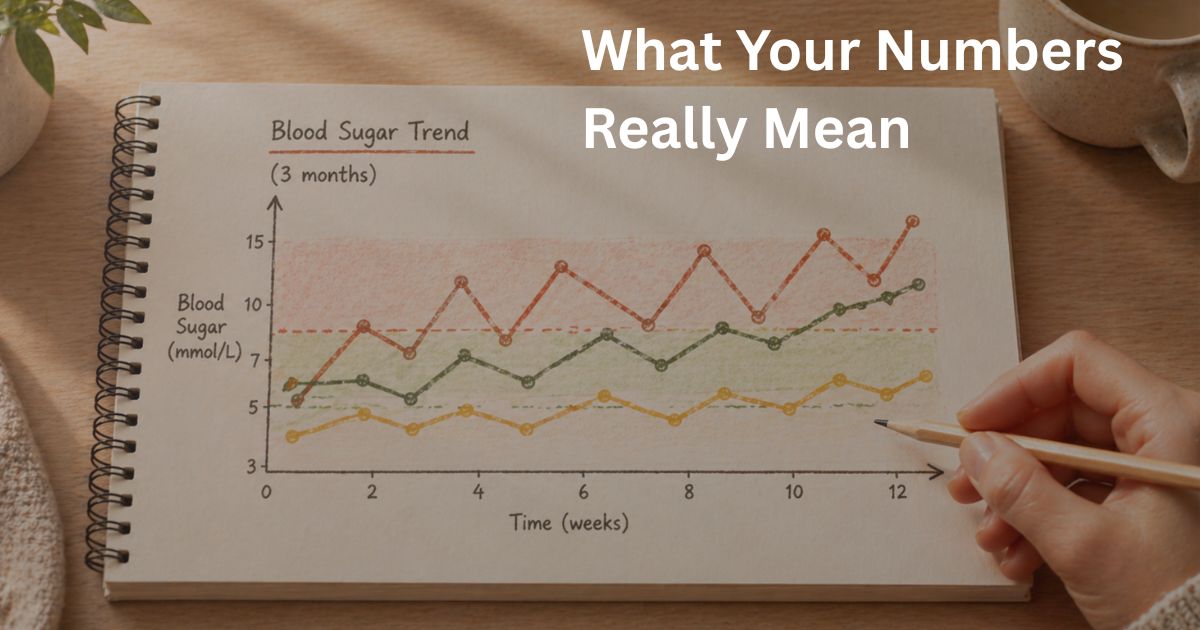
The illustration below shows how different blood sugar patterns over several months can produce very different HbA1c results.
How to Lower HbA1c Naturally
If your HbA1c is higher than you'd like, the good news is that it often responds well to healthy lifestyle changes. Small, consistent habits can make a meaningful difference over time.
Focus on these key areas:
1. Improving Meal Timing
Avoid constant snacking and give your body regular breaks between meals. This can help improve blood sugar regulation and reduce the demand on your insulin system.
2. Moving Regularly
Regular physical activity helps your muscles use glucose more efficiently. Even a short walk after meals or simple heel raises can help lower blood sugar levels.
3. Prioritizing Sleep
Good-quality sleep supports healthy insulin sensitivity and helps your body regulate blood sugar more effectively.
4. Supporting Good Nutrition
Eating a balanced diet rich in fiber, protein, healthy fats, and nutrient-dense whole foods can help keep blood sugar levels more stable throughout the day.
Continue learning:
When Should You Be Concerned?
An elevated HbA1c isn't a failure—it's valuable feedback about how your body has been managing blood sugar over the past few months.
It's a good idea to talk with your healthcare provider if:
- Your HbA1c is rising over time
- Your results fall within the prediabetes or diabetes range
- You have symptoms such as unusual fatigue, increased thirst, frequent urination, or unexplained weight changes
- You have other risk factors, such as a family history of diabetes or excess abdominal weight
Remember, a single HbA1c result is only part of the picture. Tracking your results over time—and combining them with other tests and your overall health—provides a much clearer understanding of your metabolic health.
The Bottom Line
HbA1c is one of the most useful tools for understanding your long-term blood sugar control and overall metabolic health.
Rather than focusing on a single blood sugar reading, HbA1c tells the story of how your body has been managing glucose over the past 2–3 months.
Most importantly, remember this: Your HbA1c is not fixed. It can change.
With healthy lifestyle habits—including regular movement, balanced nutrition, quality sleep, and maintaining a healthy weight—many people can improve their HbA1c over time and support healthier aging in the process.
Medical Disclaimer: This article is for educational purposes only and is not intended as medical advice. Always consult your qualified healthcare provider before making significant changes to your diet, supplements, lifestyle, or treatment plan.
Frequently Asked Questions
What does HbA1c measure?
HbA1c measures your average blood sugar levels over the past 2–3 months. It shows how much glucose has attached to the hemoglobin in your red blood cells, providing a longer-term view than a single blood sugar reading.
What is a normal HbA1c after 50?
The general reference ranges are the same for adults of all ages: below 5.7% is considered normal, 5.7% to 6.4% indicates prediabetes, and 6.5% or higher indicates diabetes. A result in the diabetes range usually needs to be confirmed with repeat testing unless clear symptoms are present.
Does HbA1c naturally increase with age?
HbA1c can gradually rise after 50 as insulin sensitivity declines, muscle mass decreases, sleep changes, and hormonal shifts affect blood sugar regulation. However, a rising HbA1c should not automatically be dismissed as a normal part of aging.
What is the difference between HbA1c and fasting blood sugar?
HbA1c reflects your average blood sugar over the previous 2–3 months. Fasting blood sugar measures your glucose at one point in time after an overnight fast. Because they measure different things, one result can be normal while the other is elevated.
Can I lower my HbA1c naturally?
Healthy lifestyle changes can help lower HbA1c for many people. Regular movement, balanced meals, fewer refined carbohydrates, good-quality sleep, weight management where appropriate, and consistent meal habits can all support healthier blood sugar levels.
How often should HbA1c be tested?
The appropriate testing frequency depends on your results, overall health, and whether you have prediabetes or diabetes. Your healthcare provider can recommend a schedule based on your individual circumstances.
When should I talk to my healthcare provider about my HbA1c?
Speak with your healthcare provider if your HbA1c is rising, falls within the prediabetes or diabetes range, or you experience symptoms such as increased thirst, frequent urination, unusual fatigue, or unexplained weight changes.
References
American Diabetes Association. (2025). Standards of Care in Diabetes—2025.
Centers for Disease Control and Prevention (CDC). (2024). A1C Test for Diabetes and Prediabetes.
National Institute of Diabetes and Digestive and Kidney Diseases. The A1C Test & Diabetes.
DeFronzo RA. (2004). Pathogenesis of type 2 diabetes mellitus.
Shulman GI. (2000). Cellular mechanisms of insulin resistance.
Spiegel K, et al. (2005). Sleep loss and metabolic function.
Continue Learning
Why Insulin Resistance Becomes More Common After 50
How to Tell If You Have Insulin Resistance: Early Signs Most People Miss
The Best Blood Tests for Insulin Resistance (And What Your Results Mean)
Why Your Fasting Blood Sugar Is High in the Morning After 50 (And How to Lower It Naturally)
How to Lower Fasting Blood Sugar Naturally After 50
How to Lower HbA1c Naturally After 50
The Best Daily Routine to Improve Insulin Resistance After 50