
If you’ve noticed your waistline increasing after 50—even when your weight hasn’t changed much—there may be more going on than simple weight gain.
One reason can be an increase in visceral fat, the type of fat stored deep inside the abdomen around organs such as the liver and intestines.
Unlike the fat stored just beneath your skin, visceral fat is metabolically active. Higher levels are associated with:
- Increased insulin resistance
- Higher blood sugar
- Chronic inflammation
- Greater risk of type 2 diabetes and heart disease
The good news is that visceral fat responds surprisingly well to lifestyle changes. You don’t need an extreme diet or hours of exercise to start making a difference.
Small, consistent changes to the way you eat, move, sleep, and manage stress can help reduce visceral fat while improving your overall metabolic health.
In this article, we’ll look at why visceral fat tends to increase after 50, how to recognize your risk, and the practical steps that can help reduce it.
Quick Summary
- Visceral fat is stored deep in the abdomen around your organs and is linked to insulin resistance, inflammation, and metabolic disease.
- Visceral fat often increases after 50 as hormones, body composition, and fat distribution change.
- Waist circumference can provide a useful indication of whether your visceral fat risk is increasing.
- Protein-rich whole foods, regular movement, strength training, good sleep, and stress management can all help reduce visceral fat.
- Consistency matters more than extreme dieting—small, sustainable habits can produce meaningful changes over time.

What Is Visceral Fat and Why Is It Different?
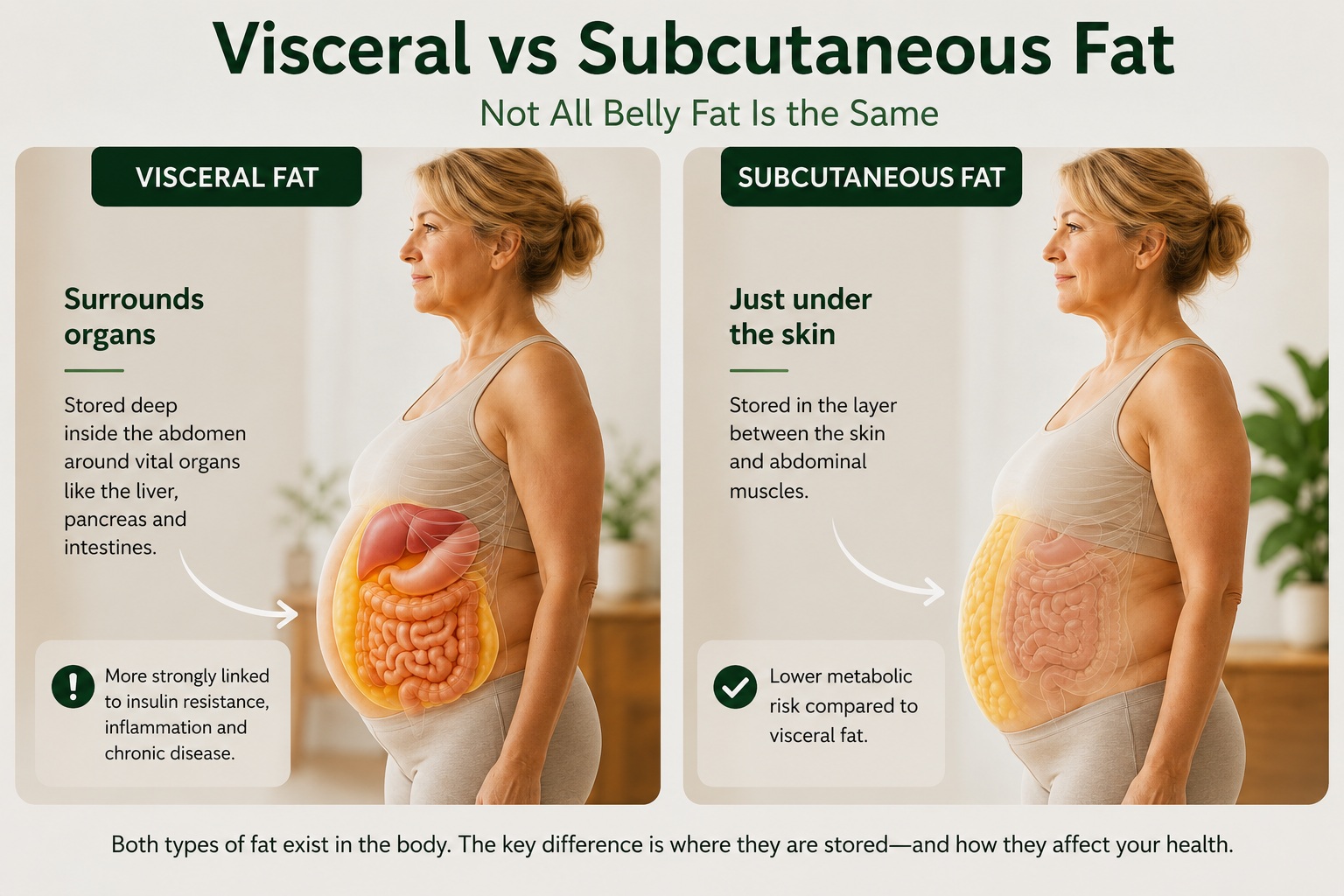
Not all body fat is stored in the same place—or affects your health in the same way.
The two types most relevant here are:
- Subcutaneous fat sits just beneath the skin. This is the softer fat you can usually pinch around your abdomen, hips, or thighs.
- Visceral fat is stored deeper inside the abdomen, where it surrounds organs such as the liver and intestines.
Visceral fat is particularly important because it is metabolically active. When too much accumulates, it can release inflammatory substances and contribute to changes in the way your body responds to insulin.
Higher levels of visceral fat are associated with:
- Insulin resistance
- Higher blood sugar
- Type 2 diabetes
- Fatty liver disease
- Cardiovascular disease
This is why two people with a similar body weight—or even a similar BMI—can have very different metabolic health risks depending on where their body fat is stored.
Continue learning: Understanding Your Blood Test Results: Fasting Glucose, HbA1c and More
Why Visceral Fat Increases After 50
Several changes that become more common with age can make it easier to store fat around the abdomen. Hormones play a role, but so do changes in muscle mass, activity levels, and insulin sensitivity.
Hormonal Changes
Hormonal changes can influence where your body tends to store fat.
- In women, declining estrogen during and after menopause is associated with a shift toward more abdominal and visceral fat.
- In men, declining testosterone can contribute to changes in body composition, including increased abdominal fat and reduced muscle mass.
This helps explain why your waistline can change after 50 even when the number on the scale changes very little.
Changes in Muscle Mass and Energy Needs
Rather than metabolism simply “slowing down” at 50, an important change is the gradual loss of muscle mass, particularly if you are less physically active.
Because muscle uses energy and helps regulate glucose, losing muscle can:
- Reduce your daily energy needs
- Make fat gain easier if food intake stays the same
- Reduce your body's ability to use glucose efficiently
Regular movement and strength training can help preserve muscle and support metabolic health as you age.
Increased Insulin Resistance
Insulin sensitivity can also decline with age, especially when combined with less activity, lower muscle mass, poor sleep, or increasing abdominal fat.
When your cells become less responsive to insulin, your body has more difficulty moving glucose from the bloodstream into your cells. Over time, this can contribute to higher blood sugar and further visceral fat accumulation.
This can create a cycle: more visceral fat can worsen insulin resistance, while insulin resistance can make managing abdominal fat more difficult.
Continue learning: Why Insulin Resistance Becomes More Common After 50
Why Visceral Fat Can Be Dangerous After 50
Visceral fat isn’t simply stored energy. Because it is metabolically active, excess visceral fat can affect inflammation, insulin sensitivity, and the way your body regulates blood sugar.
Higher levels of visceral fat are associated with:
- Insulin resistance and higher blood sugar
- Type 2 diabetes
- Fatty liver disease
- Cardiovascular disease
- Chronic inflammation
Visceral fat and insulin resistance can also reinforce one another. As visceral fat increases, insulin sensitivity can worsen; as insulin resistance develops, managing abdominal fat can become more difficult.
This is why reducing visceral fat isn't only about changing your waistline—it's about improving metabolic health from the inside.
How to Tell If You Have Excess Visceral Fat
Although you can’t determine exactly how much visceral fat you have just by looking at your body, waist circumference is a simple way to estimate abdominal fat and metabolic risk.
A higher health risk is generally associated with a waist circumference above:
- Women: 88 cm (35 inches)
- Men: 102 cm (40 inches)
These cutoffs are commonly used for many adults, but appropriate thresholds can vary with ethnicity and individual health factors.
Waist measurement is a useful screening tool rather than a diagnosis. Imaging methods such as CT or MRI can measure visceral fat more directly, but they are not usually needed just to assess metabolic risk.
The most useful approach is to look at waist circumference alongside other measures such as blood pressure, fasting glucose, HbA1c, cholesterol, and triglycerides.
How to Reduce Visceral Fat After 50
The encouraging news is that visceral fat can respond well to lifestyle changes. You don’t need an extreme diet or an exhausting exercise routine to make progress.
Instead, focus on a few habits that improve insulin sensitivity, preserve muscle, and support a healthy waistline.
The most effective approach combines nutritious food, regular movement, strength training, quality sleep, stress management, and consistency.
The six habits below give you a practical place to start.
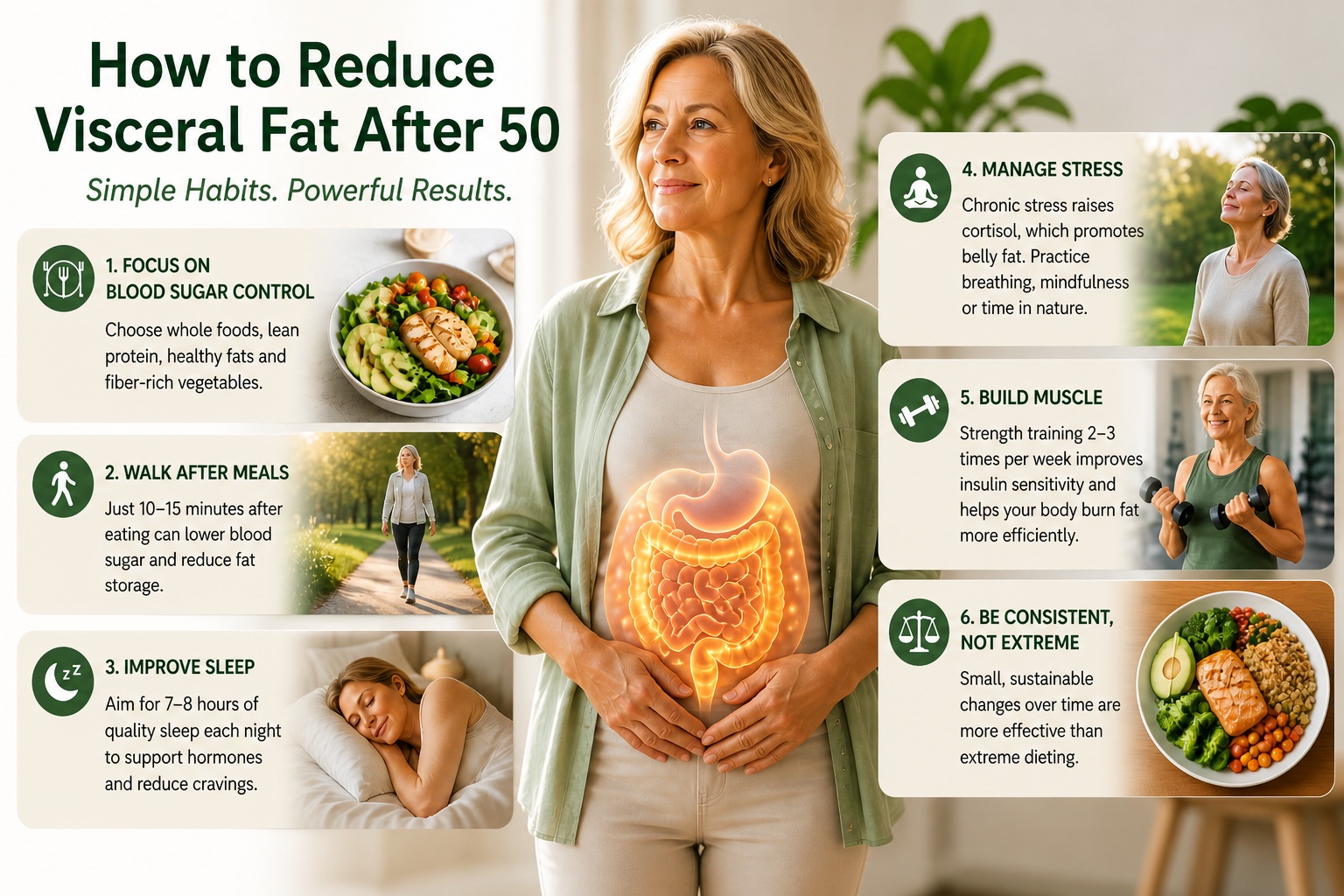
6 Practical Ways to Reduce Visceral Fat After 50
Then the six numbered items can sit beneath it as H3s:
1. Focus on Blood Sugar Control
Stable blood sugar and better insulin sensitivity can make it easier to manage visceral fat.
Prioritize:
- Protein with every meal
- Fiber-rich vegetables
- Healthy fats
- Minimally processed, nutrient-dense foods
You don't need to eliminate carbohydrates. Instead, choose higher-fiber sources and combine them with protein, healthy fats, and vegetables to help moderate the rise in blood sugar after eating.
Continue learning: Best Foods for Insulin Resistance After 50
2. Walk After Meals
Even a short walk after eating can help your muscles use glucose and reduce the rise in blood sugar after a meal.
Aim for 10–15 minutes when practical. A post-meal walk can help:
- Lower post-meal blood sugar
- Improve insulin sensitivity
- Add more movement to your day
You don't need a strenuous workout—the simple act of getting up and moving after a meal can be beneficial.
Continue learning: Reduce Blood Sugar Spikes After Meals
3. Improve Sleep
Poor sleep can affect appetite, blood sugar regulation, and insulin sensitivity—all of which can make managing visceral fat more difficult.
Aim for:
- 7–9 hours of sleep per night
- A consistent sleep and wake schedule
- A relaxing routine before bed
Even small improvements in sleep quality and consistency can support better metabolic health.
Continue learning: How Sleep Affects Insulin Resistance After 50
4. Manage Stress
Chronic stress can affect sleep, eating habits, blood sugar, and hormones such as cortisol. Over time, these changes can contribute to increased abdominal fat.
Simple ways to manage stress include:
- Regular gentle exercise
- Breathing or relaxation techniques
- Spending time outdoors
- Making time for enjoyable activities
- Staying socially connected
You don't need to eliminate stress—the goal is to give your body regular opportunities to recover from it.
5. Build and Maintain Muscle
Strength training becomes especially valuable after 50 because maintaining muscle helps support insulin sensitivity, physical function, and healthy body composition.
Aim for:
- Strength training 2–3 times per week
- Exercises that work the major muscle groups
- Gradual progression as you become stronger
Building muscle isn't just about strength—it gives your body more metabolically active tissue that can help use glucose effectively.
6. Choose Consistency Over Extreme Dieting
You don't need a very low-calorie or highly restrictive diet to reduce visceral fat. Extreme approaches can be difficult to maintain and can increase the risk of losing valuable muscle along with body fat.
Instead, focus on:
- Sustainable changes you can maintain
- Adequate protein and nutrient-rich foods
- Regular meals that support blood sugar control
- Combining nutrition with movement and strength training
The goal isn't to lose visceral fat as quickly as possible. It's to create habits that improve your metabolic health and that you can continue long term.
How Long Does It Take to Lose Visceral Fat?
There is no single timeline for losing visceral fat. How quickly it changes depends on factors such as your starting point, activity level, diet, sleep, and overall metabolic health.
The encouraging part is that health improvements can begin before you notice a major change in your waistline.
With consistent lifestyle changes:
- Blood sugar and insulin sensitivity can begin improving relatively quickly.
- Visceral fat and waist circumference tend to decrease more gradually.
- Regular movement, strength training, nutritious food, and good sleep all contribute over time.
Focus on the direction you're moving rather than how quickly you get there. Consistency matters more than perfection.
The Bottom Line
Visceral fat is more than the fat around your waist. Because it surrounds your internal organs and affects insulin sensitivity, inflammation, and blood sugar regulation, reducing excess visceral fat can have important benefits for your metabolic health.
Fortunately, you don't need extreme measures.
Eating nutritious foods, walking regularly, building and maintaining muscle, getting enough sleep, and managing stress can all help.
Small changes practiced consistently are far more valuable than a perfect routine you can't maintain.
If you're just starting out, choose one habit you can work on this week. Once that becomes part of your routine, build from there.
Medical Disclaimer: This article is for educational purposes only and is not intended as medical advice. Always consult your qualified healthcare provider before making significant changes to your diet, supplements, lifestyle, or treatment plan.
Frequently Asked Questions.
What is the best way to reduce visceral fat after 50?
The most effective approach combines regular physical activity, strength training, nutritious whole foods, adequate sleep, and stress management. You do not need an extreme diet. Sustainable habits that improve insulin sensitivity and help maintain muscle are more useful over the long term.
Can you lose visceral fat without losing a lot of weight?
Yes. Visceral fat can decrease even when changes on the scale are relatively modest. Improvements in waist circumference, insulin sensitivity, blood sugar, and other metabolic markers can be meaningful even without dramatic weight loss.
Does walking help reduce visceral fat?
Yes. Regular walking increases physical activity and can contribute to reductions in abdominal and visceral fat over time. Walking after meals has the additional benefit of helping your muscles use glucose and reducing post-meal blood sugar rises.
How do you know if you have too much visceral fat?
You cannot determine your exact amount of visceral fat by looking at your body. However, waist circumference is a useful screening measure for abdominal fat and metabolic risk. For many adults, risk increases above 88 cm (35 inches) for women and 102 cm (40 inches) for men, although appropriate thresholds can vary with ethnicity and individual health factors.
How long does it take to reduce visceral fat?
There is no fixed timeline. The rate of change depends on factors such as your starting point, diet, activity level, sleep, and metabolic health. Blood sugar and insulin sensitivity can improve before you see a major difference in your waistline, while reductions in visceral fat generally occur gradually with consistent lifestyle changes.
References
- Després JP. (2012). Body fat distribution and risk of cardiovascular disease
- Hamdy O, Porramatikul S, Al-Ozairi E. (2006). Metabolic obesity: the paradox between visceral and subcutaneous fat
- Harvard Health Publishing. (2024). Abdominal Fat and What to Do About It.
- Harvard Health Publishing. (2026). What Can I Do to Lose Belly Fat?