Many people over 50 become frustrated when weight loss seems harder than it used to be. When progress feels slow, a crash diet promising rapid results can be tempting.
The problem is that severe calorie restriction can work against you. Along with body fat, rapid weight loss can lead to loss of muscle, lower energy levels, increased hunger, and changes in how the body uses and conserves energy.
After 50, this matters even more because preserving muscle is important for strength, mobility, and metabolic health.
The good news is that you don't need extreme dieting to make progress. A more sustainable approach — built around adequate protein, strength training, regular movement, sleep, and recovery — can support healthy weight management while helping protect your metabolism.
Quick Summary
- Crash diets can lead to muscle loss as well as fat loss.
- Losing muscle can reduce the number of calories your body burns each day.
- Severe calorie restriction can increase hunger, lower energy, and make healthy habits harder to maintain.
- After 50, preserving muscle becomes especially important for strength, mobility, and metabolic health.
- A sustainable approach built around adequate protein, strength training, regular movement, sleep, and recovery can support weight management while helping protect your metabolism.
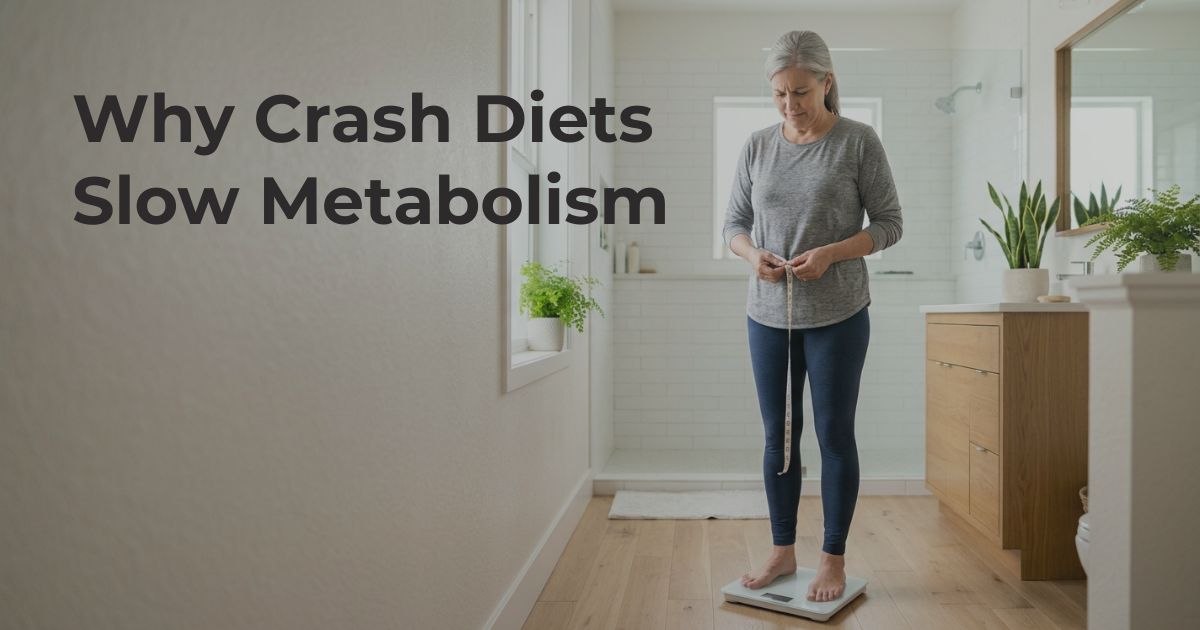
Why Crash Diets Often Fail
Crash diets typically involve severely restricting calories or cutting out entire food groups in an attempt to lose weight quickly.
At first, the results can seem encouraging. The number on the scale may drop rapidly, particularly during the first few weeks. But not all of that change necessarily comes from body fat. Some can come from water, stored carbohydrate, and lean body tissue, including muscle.
As the diet continues, hunger can increase, energy levels can fall, and maintaining such severe restrictions often becomes increasingly difficult. Eventually, many people return to their previous eating patterns.
This can create a frustrating cycle of losing and regaining weight. More importantly after 50, repeated periods of severe restriction can make it harder to preserve the muscle that supports strength, mobility, and metabolic health.
The goal, therefore, shouldn't simply be to lose weight as quickly as possible. It should be to lose weight in a way that you can maintain while protecting your health and muscle mass.
What Happens to Metabolism During Extreme Dieting
When calorie intake drops sharply, your body doesn't simply continue burning energy at exactly the same rate. It begins to adapt to having less energy available.
Part of this response is known as adaptive thermogenesis. As you lose weight and consume fewer calories, your body can reduce its energy expenditure — sometimes beyond what would be expected from the change in body size alone.
At the same time, severe calorie restriction can affect hunger, energy levels, physical activity, and exercise performance. You may notice:
- Increased hunger
- Lower energy levels
- Difficulty concentrating
- Reduced exercise performance
- Greater fatigue
These responses can make a very restrictive diet increasingly difficult to maintain. They are not evidence that your metabolism is permanently “broken”; rather, they reflect the body's attempt to adapt to reduced energy intake.
This is one reason rapid weight loss can become harder to sustain over time — and why simply cutting calories further is not always the best solution.
Continue learning: Why Your Metabolism Slows Down After 50.
Why Muscle Loss Matters After 50
One of the biggest concerns with crash dieting after 50 is the potential loss of muscle along with body fat.
Muscle mass naturally tends to decline with age, particularly if we are inactive or don't do regular resistance exercise. Significant age-related loss of muscle strength and function can contribute to a condition known as sarcopenia.
This matters because muscle supports much more than appearance. It plays an important role in strength, balance, mobility, independence, and metabolic health.
Muscle tissue is also metabolically active. Although it doesn't burn enormous numbers of calories at rest, maintaining muscle helps support daily energy expenditure and makes it easier to stay physically active.
When a crash diet leads to excessive muscle loss, you may experience:
- Reduced strength
- Lower physical function
- Slower recovery from exercise
- Greater difficulty maintaining weight loss
- Increased risk of further muscle loss
After 50, the goal should therefore be not simply to lose weight, but to lose excess body fat while preserving as much muscle as possible. Eating adequate protein and including regular strength training are two of the most important ways to support that goal.
Continue learning:

A Better Approach to Weight Loss After 50
A better approach after 50 is not simply to eat less and hope the number on the scale falls. The goal is to create a modest, sustainable calorie deficit while still giving your body the nutrition and activity it needs to preserve muscle.
That means shifting the focus from rapid weight loss to body composition — losing excess body fat while protecting as much lean muscle as possible.
A sustainable approach generally includes:
- Eating enough protein to support muscle maintenance
- Including regular strength training
- Staying active through walking and everyday movement
- Choosing mostly nutrient-dense foods rather than severely restricting food
- Getting enough sleep and allowing time for recovery
Progress may be slower than the dramatic losses promised by crash diets, but slower weight loss is often easier to maintain and gives you a better opportunity to protect muscle along the way.
The aim isn't to eat as little as possible. It's to create an eating and activity pattern you can realistically continue.
Simple Habits to Protect Your Metabolism After 50
Build Meals Around Protein
Include a good source of protein at each meal to help preserve muscle and improve fullness. Eggs, fish, poultry, Greek yogurt, cottage cheese, tofu, beans, and lentils are all useful options.
Strength Train Regularly
Resistance exercise gives your body a reason to maintain muscle while you are losing weight. Aim for regular strength-based activity that suits your fitness level and abilities.
Keep Moving Throughout the Day
Exercise matters, but so does everyday movement. Walking, gardening, housework, taking the stairs, and short walks after meals can all increase daily activity without requiring another formal workout.
Don't Cut Calories Too Aggressively
More restriction is not necessarily better. An eating pattern that leaves you constantly hungry, exhausted, or struggling to exercise is unlikely to be sustainable.
Make Sleep Part of the Plan
Poor sleep can affect hunger, cravings, energy, and motivation to exercise. Aim for a consistent sleep routine rather than treating sleep as separate from weight management.
Allow Time for Recovery
Your body needs recovery as well as activity. Rest between demanding workouts can help you train consistently and reduce the temptation to combine excessive exercise with severe calorie restriction.
The Bottom Line
Crash diets can produce rapid changes on the scale, but faster weight loss is not necessarily better weight loss. Severe calorie restriction can increase hunger, reduce energy expenditure, and contribute to the loss of valuable muscle as well as body fat.
After 50, protecting muscle becomes especially important for strength, mobility, independence, and metabolic health. The goal should be to lose excess body fat while preserving as much muscle as possible.
Sustainable weight loss rarely comes from doing something extreme for a few weeks. It comes from building an eating and activity pattern that supports your health — and that you can realistically maintain for the long term.
Slow, sustainable progress isn't a lesser approach. After 50, it can be the smarter one.
Medical Disclaimer This article is for educational purposes only and is not intended as medical advice. Always consult your qualified healthcare provider before making significant changes to your diet, supplements, lifestyle, or treatment plan.
Frequently Asked Questions
Do crash diets permanently damage your metabolism?
Crash diets do not usually permanently damage your metabolism. However, severe calorie restriction and rapid weight loss can cause the body to adapt by reducing energy expenditure. Loss of muscle can also reduce the amount of energy your body uses each day. These changes can make maintaining weight loss more difficult, but they do not mean your metabolism is permanently “broken.”
Why are crash diets especially risky after 50?
Muscle mass and strength tend to decline with age, making muscle preservation increasingly important after 50. Crash diets can accelerate muscle loss, particularly when calorie intake is very low or protein intake and resistance exercise are inadequate. This can affect strength, mobility, physical function, and metabolic health.
Is it possible to lose weight after 50 without extreme dieting?
Yes. Sustainable weight loss does not require severe calorie restriction. A balanced approach that includes adequate protein, regular strength training, everyday movement, nutritious foods, sufficient sleep, and realistic eating habits can support gradual weight loss while helping preserve muscle.
Focus on preserving muscle while losing excess body fat. Eat adequate protein, include regular strength training, stay physically active, get sufficient sleep and recovery, and avoid excessively restrictive diets. These habits can support metabolic health while making weight loss easier to maintain.
What is a healthy rate of weight loss after 50?
A gradual rate of weight loss is generally preferable to rapid weight loss, particularly when preserving muscle is a priority. A commonly recommended target is around 1–2 pounds (0.5–1 kg) per week, although an appropriate rate can vary according to body size, health, activity level, and individual circumstances. Slower progress can also be perfectly appropriate and sustainable.