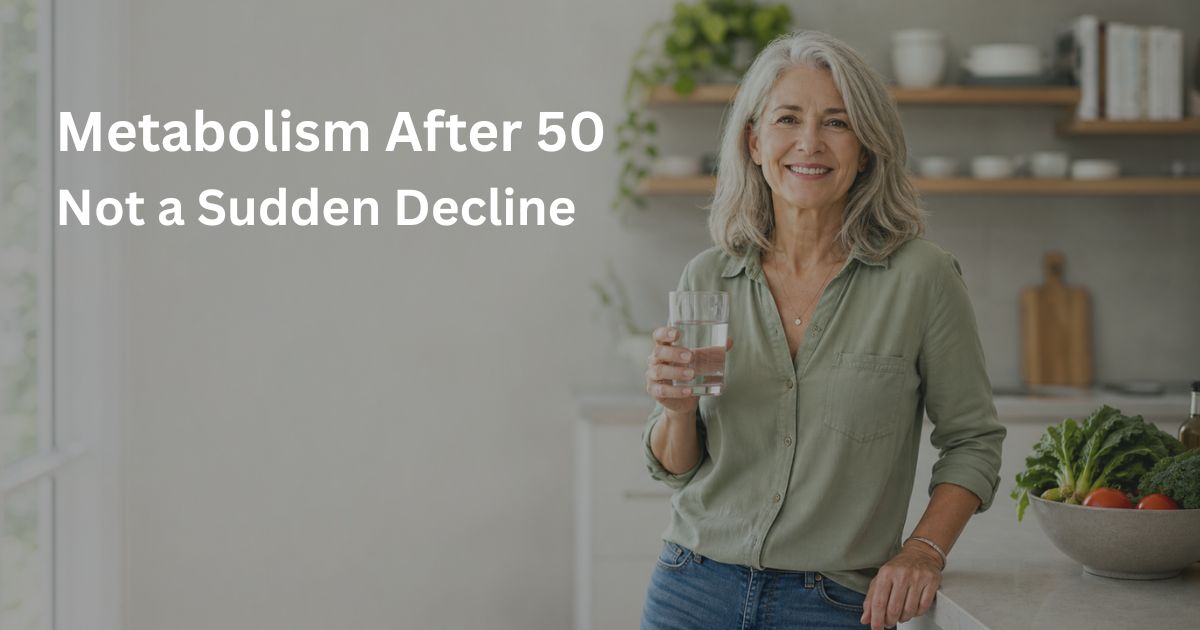
Many people believe that metabolism slows dramatically every year after age 50, making weight gain almost inevitable. While metabolism does change with age, the reality is more encouraging than many people realize.
Research suggests that daily energy expenditure remains remarkably stable through much of adulthood when differences in body size and composition are taken into account. A major age-related decline appears to occur much later in life rather than beginning automatically at 50.
This means that weight gain after 50 cannot usually be blamed on age alone. Loss of muscle, reduced physical activity, changes in sleep, hormonal shifts, and eating habits can all influence body weight and metabolic health.
Understanding what really affects metabolism can help you focus on the factors you can influence — including maintaining muscle, staying active, eating well, and getting enough sleep.
Quick Summary
- Metabolism does not appear to suddenly slow when you turn 50. Research suggests daily energy expenditure can remain relatively stable through much of adulthood.
- Weight gain after 50 is often influenced by changes in muscle mass, physical activity, sleep, hormones, and eating habits rather than age alone.
- Maintaining muscle through strength training and eating enough protein can help support metabolic health as you age.
- Regular movement, quality sleep, balanced nutrition, and other healthy lifestyle habits can support long-term metabolic health.
What Is Metabolism?
Metabolism refers to all the processes your body uses to convert food into energy and keep you alive. These include breathing, circulation, digestion, repairing cells, and maintaining body temperature.
A large portion of your daily energy expenditure comes from your basal metabolic rate (BMR) — the energy your body uses to perform essential functions while at rest.
Physical activity, digestion, and maintaining muscle also contribute to the amount of energy your body uses each day.
What Is Metabolism?
Metabolism refers to all the processes your body uses to convert food into energy and keep you alive. These include breathing, circulation, digestion, repairing cells, and maintaining body temperature.
A large portion of your daily energy expenditure comes from your basal metabolic rate (BMR) — the energy your body uses to perform essential functions while at rest.
Physical activity, digestion, and maintaining muscle also contribute to the amount of energy your body uses each day.
Does Metabolism Naturally Slow With Age?
Yes, but not in the steady year-by-year decline that many people imagine.
A large 2021 study examining daily energy expenditure across the human lifespan found that, after accounting for differences in body size and composition, energy expenditure remained relatively stable from about age 20 through age 60. After around 60, it began to decline gradually.
The decline seen after about age 60 does not mean that lifestyle stops mattering. Some age-related change is likely to occur, but staying physically active and preserving muscle through strength training can help counter factors that contribute to lower daily energy expenditure. Eating a balanced, nutrient-rich diet with enough protein can also help support muscle and overall metabolic health. In other words, you may not be able to prevent every age-related metabolic change, but lifestyle can influence how well your body functions as you grow older.
That does not mean everyone has exactly the same metabolism. Muscle mass, physical activity, body composition, sleep, nutrition, and overall health can all influence how much energy an individual uses.
The important point is that turning 50 does not appear to trigger a sudden metabolic slowdown. Many of the changes people notice during midlife are influenced by factors other than age alone.
Why Many People Notice Weight Gain After 50
If metabolism does not suddenly collapse after 50, why do so many people notice weight gain during this stage of life? Several changes can occur at the same time.
Loss of Muscle Mass
Muscle tissue requires more energy to maintain than fat tissue. Without regular resistance exercise, muscle mass tends to decline with age.
Losing muscle can reduce daily energy expenditure and make weight management more challenging. Preserving muscle through strength training and adequate protein becomes increasingly important as you age.
Continue learning: Does Building Muscle After 50 Really Increase Metabolism?
Reduced Physical Activity
Many adults become less physically active as they get older. Retirement, injuries, joint discomfort, changes in routine, or simply spending more time sitting can reduce daily movement.
Even relatively small reductions in everyday activity can add up over time. Walking, household tasks, gardening, recreational activities, and structured exercise can all contribute to daily energy expenditure.
Changes in Sleep and Recovery
Sleep quality and duration can change with age. Poor sleep can affect appetite regulation, energy levels, food choices, and motivation to be physically active.
These effects can make weight management more difficult even without a dramatic change in metabolism itself.
Hormonal Changes
Hormonal changes can influence body composition and where fat is stored. After menopause, declining estrogen levels can contribute to changes in fat distribution, including a greater tendency to store fat around the abdomen.
Hormones can therefore influence weight and body composition during midlife, but they are only one part of a much larger picture.
Continue learning: Does Building Muscle After 50 Really Increase Metabolism?
How Much Does Metabolism Actually Slow?
The amount of metabolic change varies from person to person, but age alone does not appear to cause a substantial year-by-year decline beginning at 50.
Research suggests that, after accounting for body size and composition, daily energy expenditure remains relatively stable through much of adulthood. From around age 60 onward, it begins to decline gradually — by roughly 0.7% per year on average.
This is an average, not a prediction for any one person. Muscle mass, physical activity, body composition, nutrition, sleep, and overall health can all influence individual energy needs.
Can You Prevent Metabolism From Slowing Completely?
Not entirely. Some changes in energy expenditure occur naturally with aging, particularly later in life.
But that does not mean metabolic health is outside your control. Maintaining muscle, staying physically active, eating enough protein, getting quality sleep, and supporting overall health can all help preserve the factors that influence how your body uses energy.
The goal is not to prevent aging or keep metabolism permanently unchanged. It is to maintain strength, movement, and metabolic health for as long as possible.
Habits That May Help Support Metabolism After 50
You cannot control every change that comes with aging, but several everyday habits can help preserve muscle, maintain activity, and support metabolic health.
Maintain Muscle Through Strength Training
Strength training can help preserve and build muscle as you age. Maintaining muscle supports physical function and contributes to daily energy expenditure.
Eat Enough Protein
Protein provides the building blocks your body needs to maintain muscle tissue. Including adequate protein across your meals can help support muscle maintenance, particularly when combined with strength training.
Stay Physically Active
Regular movement contributes to daily energy expenditure and helps maintain physical function. Walking, gardening, household tasks, recreational activities, and structured exercise all count.
Prioritize Sleep
Consistent, high-quality sleep supports appetite regulation, recovery, energy levels, and overall health. Good sleep can also make it easier to stay active and maintain healthy eating habits.

The Bottom Line
Turning 50 does not appear to trigger a sudden metabolic slowdown. Research suggests that, after accounting for body size and composition, daily energy expenditure remains relatively stable through much of adulthood before beginning a gradual decline later in life.
The changes many people notice after 50 are often influenced by a combination of factors, including loss of muscle, reduced physical activity, changes in sleep, hormones, and eating habits.
You cannot control every aspect of aging, but you can influence many of the factors that support metabolic health. Maintaining muscle, staying active, eating enough protein, getting quality sleep, and supporting your overall health can all make a meaningful difference as you age.
Medical Disclaimer: This article is for educational purposes only and is not intended as medical advice. Always consult your healthcare provider before making significant changes to your diet, supplements, lifestyle, or treatment plan.
Frequently Asked Questions
Does metabolism slow down every year after 50?
Not necessarily. Research suggests that, after accounting for body size and composition, daily energy expenditure remains relatively stable through much of adulthood rather than declining dramatically every year after 50. A gradual age-related decline appears to become more noticeable later in life.
Why do people often gain weight after 50?
Weight gain after 50 is usually influenced by several factors working together. These can include loss of muscle, reduced physical activity, changes in sleep, hormonal changes, stress, and eating habits that no longer match the body's energy needs.
Can strength training help support metabolism after 50?
Yes. Strength training can help preserve and build muscle mass as you age. Maintaining muscle supports physical function and contributes to daily energy expenditure, making resistance exercise an important part of healthy aging.
Is a slower metabolism after 50 inevitable?
No. Turning 50 does not automatically cause a major metabolic slowdown. Although some age-related changes occur over time, maintaining muscle, staying physically active, eating enough protein, getting quality sleep, and supporting overall health can help maintain metabolic health as you age.
What is the best way to support metabolism after 50?
Focus on the fundamentals: strength training, adequate protein, regular physical activity, quality sleep, balanced nutrition, and maintaining muscle. Together, these habits support physical function and long-term metabolic health.
References
Pontzer H, et al. Daily energy expenditure through the human life course (Science, 2021)
National Institute on Aging – How Can Strength Training Build Healthier Bodies as We Age?
Harvard T.H. Chan School of Public Health – Protein
CDC – Physical Activity for Older Adults
National Heart, Lung, and Blood Institute – Sleep Deprivation and Deficiency
National Institute on Aging – Exercise and Physical Activity