Many people assume that boosting metabolism after 50 means spending more time in the gym. Exercise is important, but it is only part of the picture.
Another part is N.E.A.T., or Non-Exercise Activity Thermogenesis — the energy your body uses for everyday movement outside structured exercise.
Walking around the house, carrying groceries, gardening, doing household chores, taking the stairs, or simply standing and moving more often can all contribute.
These small movements may not feel like exercise, but accumulated throughout the day, they can make a meaningful contribution to your total daily energy expenditure.
After 50, finding simple ways to move more throughout the day can help support an active lifestyle and overall metabolic health — without adding another demanding workout to your schedule.
Continue learning: Why Your Metabolism Slows Down After 50 (And What You Can Do About It)
Quick Summary
- N.E.A.T. stands for Non-Exercise Activity Thermogenesis.
- It refers to the energy you use through everyday movement outside structured exercise.
- Walking, gardening, cleaning, taking the stairs, standing, and other small movements all count.
- N.E.A.T. can make a meaningful contribution to total daily energy expenditure.
- Moving more throughout the day can support metabolic health, weight management, and healthy aging after 50.
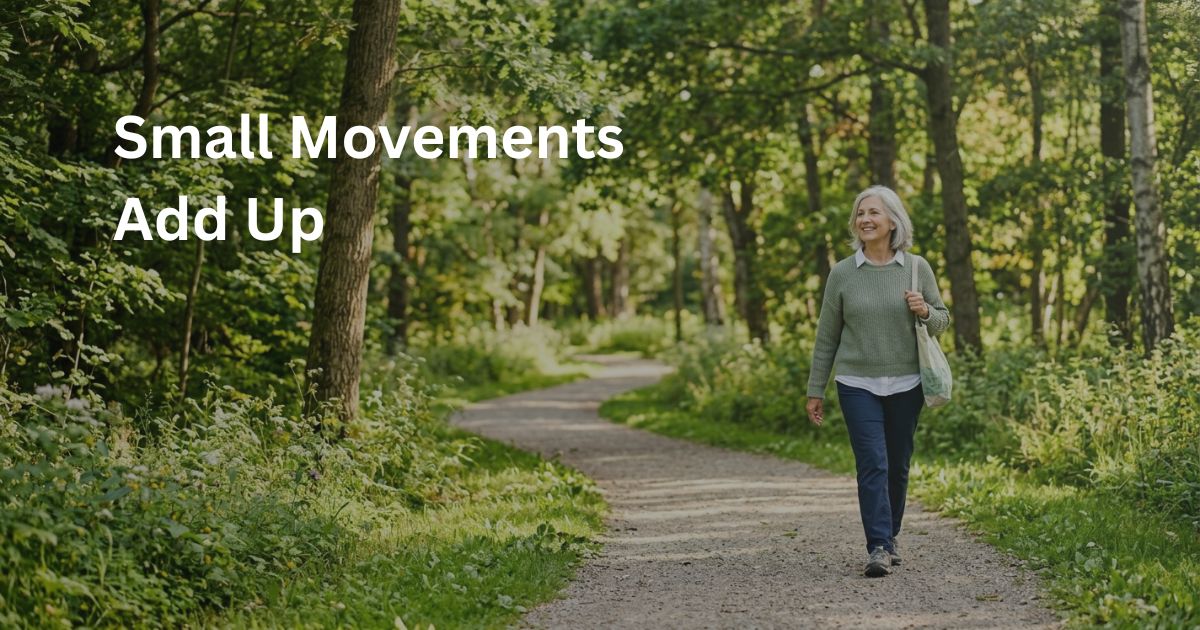
What Is N.E.A.T.?
N.E.A.T. stands for Non-Exercise Activity Thermogenesis. It refers to the energy your body uses for everyday movement outside intentional exercise.
Unlike a gym workout, N.E.A.T. happens naturally as you go about your day. It can include:
- Walking around the house
- Taking the stairs
- Doing household chores
- Gardening
- Shopping
- Standing instead of sitting
- Carrying bags or groceries
- Playing with grandchildren
- Walking or moving while talking on the phone
- Moving more frequently while working
Individually, these activities may use only a small amount of energy. But repeated throughout the day, all those small movements can add up to a meaningful contribution to your daily energy expenditure.
Why N.E.A.T. Becomes Important After 50
As we age, several factors may contribute to reduced daily movement:
- Retirement from active jobs
- More time spent sitting
- Reduced muscle mass
- Joint discomfort
- Lower energy levels
- Increased screen time
Many people unknowingly become less active throughout the day even if they still exercise a few times each week.
Long periods of sitting may also affect energy expenditure and overall metabolic health. If you'd like to learn more, read How Sitting Too Much Can Slow Your Metabolism After 50 (And What to Do Instead).
For example, a person may complete a 45-minute gym session but spend most of the remaining day sitting.
Moving more throughout the day helps fill this movement gap.
Why N.E.A.T. Becomes Important After 50
Regular exercise remains important after 50, but what you do during the rest of the day matters too.
Daily movement can gradually decrease for many reasons. Changes in work routines, more time spent sitting, increased screen time, or simply having fewer reasons to walk and move throughout the day can all reduce overall activity.
This means someone can exercise regularly and still spend much of the day sitting. For example, a 45-minute gym session is valuable, but it doesn't replace the movement that can occur during all the other waking hours.
N.E.A.T. helps fill that gap. Walking around the house, standing up regularly, gardening, shopping, doing household tasks, and taking other opportunities to move can increase your total daily activity without requiring another formal workout.
Long periods of sitting are also associated with poorer metabolic health, which is another reason to break up sedentary time and move regularly throughout the day.
Continue learning: How Sitting Too Much Can Slow Your Metabolism After 50 (And What to Do Instead)
N.E.A.T. vs Exercise: What's the Difference?
NEAT Activities Structured Exercise
Housework Strength Training
Gardening Brisk Exercised Walk
Walking while Shopping Running or Jogging
Standing while Working Cycling Workout
Taking Stairs Fitness Class
Both are important. Structured exercise helps support cardiovascular fitness, strength, balance, and muscle mass. N.E.A.T. adds movement throughout the rest of your day and contributes to total daily energy expenditure.
You don't need to choose between them. The goal is to combine regular exercise with more everyday movement.
Strength training is particularly valuable after 50 because it helps preserve muscle mass, strength, and physical function as you age.
Continue learning: Why Strength Training Is One of the Best Ways to Boost Metabolism After 50.
Simple Ways to Increase N.E.A.T. After 50
You don't need a complicated fitness program to increase N.E.A.T. The easiest approach is to look for small opportunities to move more during things you already do.
Simple ways to add more movement include:
- Take short walks throughout the day.
- Walk while talking on the phone or listening to a podcast.
- Park a little farther from the entrance when shopping.
- Take the stairs when practical.
- Stand up and move regularly during long periods of sitting.
- Use a standing desk for part of the day if you have one.
- Make household tasks such as vacuuming, sweeping, gardening, and tidying count.
- Walk around or march in place while waiting for the kettle or microwave.
- Get up and move during television breaks.
- Carry groceries rather than using a cart for small loads when comfortable.
You don't need to do all of these. Choose a few that fit naturally into your day. The goal is simply to create more reasons to move and fewer long stretches of sitting.
Continue learning: Can Walking Boost Your Metabolism After 50? What the Research Says

Can N.E.A.T. Help With Weight Management?
N.E.A.T. can play a useful role in weight management because everyday movement contributes to your total daily energy expenditure.
The amount varies considerably from person to person. Someone who walks frequently, does household tasks, gardens, takes the stairs, and spends less time sitting will generally use more energy through daily movement than someone who spends much of the day sedentary.
That doesn't mean N.E.A.T. is a shortcut to weight loss. Body weight is influenced by many factors, including food intake, physical activity, sleep, muscle mass, medications, and individual metabolism.
The practical advantage of N.E.A.T. is that it doesn't require another workout. Small amounts of movement can be spread throughout the day and become part of your normal routine.
For long-term weight management, think of N.E.A.T. as one useful piece of the bigger picture — alongside regular exercise, strength training, nutritious eating, and adequate sleep.
Continue learning: Why Crash Diets Slow Your Metabolism After 50 (And What to Do Instead)
N.E.A.T. and Healthy Aging
N.E.A.T. is primarily about everyday movement and energy expenditure, but the broader idea behind it is also important for healthy aging: spending less time sedentary and finding more opportunities to move throughout the day.
Regular physical activity — including both structured exercise and everyday movement — can help support physical function, mobility, cardiovascular health, and independence as we age.
Everyday activities such as walking, gardening, shopping, household tasks, and taking the stairs also provide opportunities to stay active without needing to schedule another workout.
N.E.A.T. doesn't replace strength training, aerobic exercise, or balance activities. Instead, it helps keep movement woven into the rest of your day.
The Bottom Line
N.E.A.T. is a reminder that movement doesn't have to be a workout to matter.
Walking around the house, gardening, carrying groceries, taking the stairs, standing more often, and breaking up long periods of sitting all contribute to the movement you accumulate throughout the day.
Structured exercise and strength training remain important after 50, but what you do between workouts matters too.
You don't need to overhaul your routine. Look for small opportunities to move more often, and let those small movements add up over time.
Medical Disclaimer: This article is for educational purposes only and is not intended as medical advice. Always consult your healthcare provider before making significant changes to your diet, supplements, lifestyle, or treatment plan.
Frequently Asked Questions
What does N.E.A.T. stand for?
N.E.A.T. stands for Non-Exercise Activity Thermogenesis. It refers to the energy your body uses for everyday movement outside structured exercise, such as walking around the house, gardening, shopping, or doing household tasks.
Can N.E.A.T. really affect metabolism?
Yes. N.E.A.T. contributes to total daily energy expenditure, and the amount can vary considerably depending on how much you move throughout the day. Small activities such as walking, standing, gardening, and household chores can add up over time.
Is N.E.A.T. the same as exercise?
No. Exercise is intentional, structured physical activity such as strength training, running, or cycling. N.E.A.T. comes from everyday movement outside planned exercise. Both are valuable and work well together.
What are some easy ways to increase N.E.A.T. after 50?
Simple ways include taking short walks, using the stairs, standing and moving regularly, gardening, doing household tasks, carrying groceries, and finding more opportunities to move during activities you already do.
Can increasing N.E.A.T. help with weight management?
N.E.A.T. can support weight management by contributing to total daily energy expenditure. However, it is only one part of the picture. Regular exercise, nutritious eating, adequate sleep, and other lifestyle factors also play important roles.