You can eat well, stay active, and get enough sleep — yet still wonder whether there is another piece of the metabolism puzzle after 50. Increasingly, researchers are looking at a place you might not immediately expect: the gut.
Your digestive tract is home to trillions of bacteria and other microorganisms collectively known as the gut microbiome. These microbes help break down food and produce beneficial compounds, and they interact with processes involved in immune function, inflammation, blood sugar regulation, and metabolism.
That doesn't mean that “fixing your gut” will suddenly speed up your metabolism or make excess weight disappear. The science is much more nuanced than many online claims suggest. But emerging research indicates that the composition and diversity of the gut microbiome may be one factor in metabolic health as we age.
So, what actually happens to the gut microbiome after 50 — and can the way you eat and live make a meaningful difference? Let's look at what the research tells us and the practical habits that can support both gut and metabolic health.
Quick Summary
-
The gut microbiome contains trillions of microorganisms that help digest food and interact with many aspects of health.
-
Research suggests the microbiome may influence metabolic health through processes involving insulin sensitivity, inflammation, and compounds produced during digestion.
-
Diet, medications, physical activity, sleep, and aging can all influence the gut microbiome after 50.
-
Eating a wide variety of fibre-rich plant foods can help support a diverse and healthy gut microbiome.
-
Fermented foods can be beneficial for some people, but probiotic foods or supplements are not a magic solution for metabolism or weight loss.
-
Regular exercise, quality sleep, stress management, and a nutritious diet support overall metabolic health as well as gut health.

What Is the Gut Microbiome?
The gut microbiome is the community of trillions of microorganisms that live in the digestive tract, with most found in the large intestine. These include bacteria, fungi, viruses, and other microbes that interact with both the foods we eat and the body itself.
Scientists once focused largely on the role of gut bacteria in digestion. Today, research suggests that the microbiome is also connected with immune function, inflammation, blood sugar regulation, and metabolism.
Think of the gut microbiome a little like a garden. A garden containing many different plants can be more resilient than one dominated by only a few species. Similarly, a varied community of gut microorganisms can help perform many different functions — although scientists are still learning exactly what constitutes a “healthy” microbiome.
Some gut microbes also break down components of food that our own digestive enzymes cannot fully process, particularly certain types of dietary fibre. In doing so, they produce compounds such as short-chain fatty acids, which can interact with metabolic, immune, and digestive processes throughout the body.
How Can Gut Health Influence Metabolism?
Researchers are still learning how the gut microbiome interacts with metabolism. The relationship is complex, but several processes may help explain why gut health and metabolic health are connected.
Energy extraction from food. Certain gut bacteria break down dietary fibre and other compounds that our own digestive enzymes cannot fully process. In doing so, they produce short-chain fatty acids, which can interact with processes involved in energy regulation, appetite, blood sugar control, and metabolic health.
Because each person's microbiome is different, the way gut microbes interact with food can also vary considerably from one person to another.
Insulin sensitivity. Insulin helps move glucose from the bloodstream into cells, where it can be used for energy. Research has found associations between the composition of the gut microbiome, insulin sensitivity, and blood sugar regulation. Scientists are still investigating whether — and to what extent — changes in the microbiome directly contribute to insulin resistance.
Inflammation. Chronic low-grade inflammation is associated with insulin resistance and other metabolic problems. The gut microbiome interacts closely with the immune system and the intestinal barrier, which may influence inflammatory processes throughout the body.
These connections don't mean that changing the gut microbiome will automatically “boost” metabolism. Instead, the microbiome appears to be one part of a much larger metabolic system influenced by diet, physical activity, sleep, body composition, hormones, genetics, and age.
Why Does Gut Health Change After 50?
The gut microbiome can change throughout life, and several factors that become more common as we get older may influence its composition and function.
Changes in diet. Fibre provides fuel for many beneficial gut microbes. If your diet becomes less varied or contains fewer fibre-rich plant foods over time, the microbial community in your gut can change too.
Reduced physical activity. Regular exercise has been associated with differences in gut microbial diversity and composition. Staying physically active as you age may therefore support gut health as well as metabolic and cardiovascular health.
Medication use. Some medications can alter the gut microbiome. Antibiotics have particularly noticeable effects on bacterial populations, while other commonly used medications can also influence the gut environment. This doesn't mean necessary medications should be avoided — only that medication use is one of many factors that can shape the microbiome.
Changes associated with aging. Studies have found differences in the gut microbiome across age groups, but aging itself is only part of the picture. Diet, physical activity, medications, health conditions, living environment, and other lifestyle factors can all contribute to the changes observed later in life.
The encouraging part is that the microbiome remains responsive to how we live. Getting older doesn't mean that declining gut health is inevitable. Eating a varied diet, staying active, sleeping well, and looking after your overall health can continue to support the gut environment after 50.
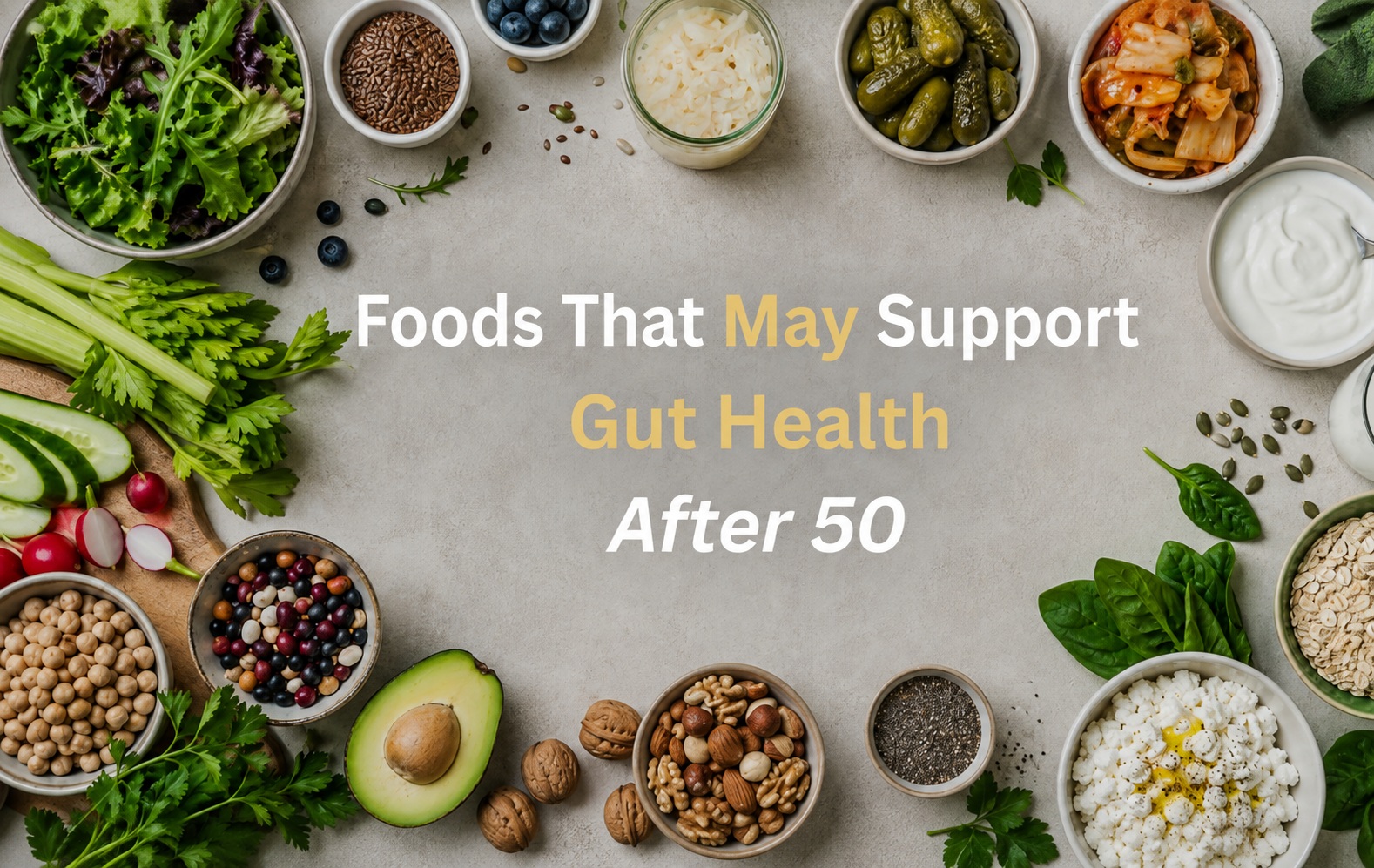
Foods That May Support Gut Health After 50
There is no single “gut health” food that can transform your microbiome overnight. What appears to matter more is the overall pattern of foods you eat — particularly the amount and variety of plant foods in your diet.
Fibre-rich foods. Many gut microbes use dietary fibre and other plant compounds as fuel, producing substances such as short-chain fatty acids in the process. Good sources include:
- Vegetables
- Fruits
- Legumes and beans
- Oats and other whole grains
- Nuts
- Seeds
If you currently eat relatively little fibre, increasing it gradually — and drinking enough fluids — can help reduce digestive discomfort as your gut adjusts.
Fermented foods. Foods such as yogurt, kefir, sauerkraut, kimchi, and miso contain microorganisms or compounds produced during fermentation that can contribute to a gut-friendly diet. However, fermented foods don't affect everyone in the same way, and they don't need to be eaten in large amounts to be worthwhile.
Plant variety. Rather than concentrating on one supposedly “super” food, aim to eat a variety of vegetables, fruits, legumes, whole grains, nuts, seeds, herbs, and spices across the week. Different plant foods provide different fibres and compounds that can nourish different members of the gut microbial community.
The practical message is simple: feed your gut with variety rather than searching for one perfect food.
Lifestyle Habits That Support Both Gut Health and Metabolism
Food matters, but the gut microbiome doesn't exist in isolation. Physical activity, sleep, stress, and your overall dietary pattern can also influence the environment in which gut microbes live.
Regular physical activity. Exercise is strongly associated with better metabolic health and has also been linked with differences in the composition and diversity of the gut microbiome. Walking, strength training, cycling, swimming, and other activities you enjoy can all contribute to an active lifestyle.
Quality sleep. Poor or irregular sleep can affect appetite, blood sugar regulation, and other aspects of metabolic health. Research also suggests that sleep and the gut microbiome may influence one another, although scientists are still working to understand this relationship.
Stress management. The gut and brain communicate through what is often called the gut-brain axis. Chronic stress can affect digestion, appetite, and gut function, so practices such as meditation, deep breathing, Tai Chi, or simply spending time in nature can be useful parts of an overall healthy lifestyle.
Limit highly processed foods. Diets dominated by highly processed foods can displace fibre-rich whole foods that nourish gut microbes. Choosing vegetables, fruits, legumes, whole grains, nuts, seeds, and other minimally processed foods more often supports both overall nutrition and the gut microbiome.
The important point is that gut health and metabolic health aren't separate projects. Many of the same everyday habits support both.
Can Improving Gut Health Help With Weight Loss?
It's easy to find claims that “fixing” your gut microbiome will automatically lead to weight loss. The evidence doesn't support such a simple relationship.
The gut microbiome is associated with body weight, appetite regulation, blood sugar control, and other aspects of metabolic health. However, researchers are still working out how much the microbiome itself contributes to weight gain or weight loss — and simply changing your gut bacteria is unlikely to produce significant, lasting weight loss on its own.
What is more useful is that many habits that support the gut microbiome also support healthy weight management. Eating more fibre-rich whole foods, including a variety of plant foods, exercising regularly, sleeping well, and limiting highly processed foods can benefit health in several ways at the same time.
So rather than trying to “fix” your gut as a shortcut to weight loss, think of gut health as one part of a broader approach to metabolic health after 50.
Practical Tips to Support Gut Health After 50
- Increase fibre-rich foods gradually, especially if your current diet is low in fibre.
- Eat a variety of vegetables, fruits, legumes, whole grains, nuts, and seeds across the week.
- Include fermented foods such as yogurt, kefir, kimchi, or sauerkraut if you enjoy and tolerate them.
- Stay physically active with a combination of everyday movement and regular exercise.
- Prioritize consistent, good-quality sleep.
- Choose minimally processed foods more often and highly processed foods less often.
- Focus on habits you can maintain rather than supplements, restrictive diets, or quick fixes.
The Bottom Line
Gut health and metabolism are connected, but the relationship is complex — and scientists are still discovering exactly how the gut microbiome influences metabolic health as we age.
What we do know is that you don't need a special “gut cleanse,” expensive supplement, or perfect microbiome to support your health. Eating a varied, fibre-rich diet, staying physically active, getting enough quality sleep, and limiting highly processed foods can support both your gut and your overall metabolic health.
After 50, the most useful approach isn't to try to “fix” your gut. It's to create an everyday lifestyle that gives both your gut and your metabolism the conditions to function well.
Medical Disclaimer: This article is for educational purposes only and is not intended as medical advice. Always consult your healthcare provider before making significant changes to your diet, supplements, lifestyle, or treatment plan.
Frequently Asked Questions
Can gut health affect metabolism after 50?
Research suggests that the gut microbiome is connected with several aspects of metabolic health, including blood sugar regulation, inflammation, and the way certain foods are processed. However, scientists are still determining how much changes in the microbiome directly influence metabolism, particularly as we age.
What foods are best for gut health after 50?
Rather than focusing on one “best” food, aim for a variety of fibre-rich plant foods such as vegetables, fruits, legumes, whole grains, nuts, and seeds. Fermented foods such as yogurt, kefir, sauerkraut, and kimchi can also be useful additions if you enjoy and tolerate them.
Can improving gut health help with weight loss?
Gut health alone is unlikely to produce significant weight loss. However, many habits that support the gut microbiome — including eating more fibre-rich whole foods, exercising regularly, sleeping well, and limiting highly processed foods — can also support healthy weight management and metabolic health.
Are probiotics necessary for good gut health?
No. Many people can support their gut microbiome through a varied, fibre-rich diet without taking probiotic supplements. Probiotics can be helpful in some circumstances, but their effects depend on the specific strain, dose, and reason for taking them, and they are not necessary for everyone.
Does aging affect the gut microbiome?
The gut microbiome can change as we age, but age itself is only part of the picture. Diet, physical activity, medications, health status, living environment, and other lifestyle factors can all influence the microbiome throughout life. Getting older does not automatically mean that gut health must decline.
References
Jardon KM, Canfora EE, Goossens GH, Blaak EE. Dietary macronutrients and the gut microbiome: a precision nutrition approach to improve cardiometabolic health.
A detailed review of how diet, the gut microbiome, and metabolism interact, including links with glucose regulation, body weight, inflammation, and insulin resistance.
Pham NHT, et al. Short-chain fatty acids and insulin sensitivity: a systematic review and meta-analysis.
Examines human evidence linking short-chain fatty acids produced by gut microbes with insulin sensitivity and metabolic health.
Vinelli V, et al. Effects of Dietary Fibers on Short-Chain Fatty Acids and Gut Microbiota Composition in Healthy Adults: A Systematic Review.
Reviews how different types of dietary fiber can influence gut bacteria and the production of short-chain fatty acids in adults.
Wastyk HC, et al. Gut-microbiota-targeted diets modulate human immune status.
A human dietary intervention study comparing high-fiber and fermented-food diets and examining changes in the microbiome and immune markers.
Ramos C, et al. Systematic Review of the Effects of Exercise and Physical Activity on the Gut Microbiome of Older Adults.
Reviews evidence suggesting that regular physical activity can influence gut microbiome composition in older adults.
Wen NN, et al. Gut microbiota changes associated with frailty in older adults: a systematic review.
Examines age-related differences in the gut microbiome while highlighting the complexity of separating aging itself from health and lifestyle factors.
National Center for Complementary and Integrative Health. 5 Things To Know About Probiotics.
Provides an evidence-based overview of probiotic supplements and explains why benefits depend on the particular probiotic and health condition being studied.