You add a little chilli to dinner, drink green tea in the afternoon, or choose a high-protein breakfast — and somewhere along the way you may wonder: Can certain foods actually boost your metabolism after 50?
The internet is full of claims about fat-burning foods, metabolism-boosting ingredients, and simple tricks that supposedly help your body burn more calories.
The reality is less dramatic — but much more useful.
No single food can dramatically speed up your metabolism. However, certain foods can support metabolic health by helping you maintain muscle, stay satisfied after meals, manage blood sugar, and get the nutrients your body needs as you age.
The key is knowing which foods have genuine benefits — and which so-called “metabolism boosters” are mostly hype.
Quick Summary
- No single food can dramatically boost metabolism on its own.
- Protein-rich foods can support muscle maintenance and have a higher thermic effect than carbohydrates or fat.
- High-fiber foods can improve fullness and help support steadier blood sugar levels.
- Healthy fats can improve meal satisfaction and help create a balanced eating pattern.
- Green tea and coffee can provide a small, temporary increase in energy expenditure.
- Your overall eating pattern matters far more than any single “metabolism-boosting” food.
What Happens to Metabolism After 50?
Many people find that maintaining their weight becomes more challenging as they get older. But this does not necessarily mean that metabolism suddenly “slows down” at 50.
Several changes that often occur with age can influence how much energy your body uses, including:
- Gradual loss of muscle mass
- Lower levels of physical activity
- More time spent sitting
- Changes in body composition
- Hormonal changes that can indirectly affect muscle, fat distribution, sleep, or activity
Muscle is metabolically active tissue, so maintaining it becomes particularly important as you age. Losing muscle — especially when combined with becoming less active — can reduce daily energy expenditure over time.
For a closer look at these changes, see [why your metabolism slows down after 50].
The good news is that many of the factors that influence metabolic health are modifiable. Eating enough protein, staying physically active, and maintaining muscle can all help support your metabolism as you age.
Why Protein Matters for Metabolic Health After 50
Protein deserves particular attention after 50 because it supports two things that matter for metabolic health: maintaining muscle and helping you feel satisfied after meals.
Protein also has a higher thermic effect than carbohydrates or fat. In other words, your body uses more energy digesting, absorbing, and processing protein.
Maintaining muscle becomes increasingly important with age because muscle contributes to daily energy expenditure, physical function, and long-term metabolic health.
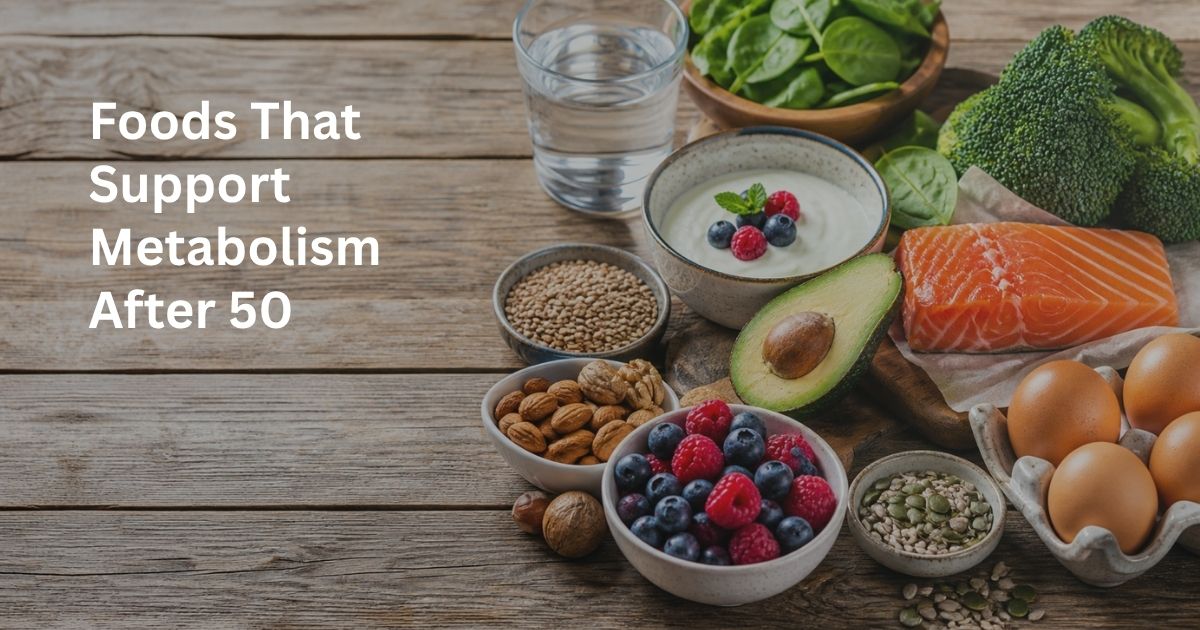
Good protein-rich foods include:
- Eggs
- Fish and seafood
- Chicken and other lean meats
- Greek yogurt or cottage cheese
- Beans, lentils, and chickpeas
- Tofu and other soy foods
Including a source of protein at each meal can help support muscle maintenance and fullness, especially when combined with regular strength training and an overall balanced diet.
Continue learning: Why Protein Becomes More Important After 50

High-Fiber Foods That Support Metabolic Health
Fiber doesn't directly speed up your metabolism, but it can play an important supporting role in metabolic health.
Fiber-rich foods can slow digestion, improve fullness after meals, support digestive health, and help moderate the rise in blood sugar after eating.
Good sources include:
- Vegetables
- Beans and lentils
- Oats and other whole grains
- Chia seeds and flaxseeds
- Berries and other whole fruits
The bigger advantage is what these foods can do for your overall eating pattern. Meals built around protein, fiber-rich foods, and minimally processed ingredients tend to be more filling and nutrient-dense, which can make healthy eating easier to sustain over time.
Healthy Fats Can Help Keep You Satisfied
Healthy fats don't significantly speed up metabolism, but they can make meals more satisfying and help your body absorb fat-soluble vitamins.
Good sources include:
-
Avocados
-
Olive oil
-
Nuts and seeds
-
Fatty fish such as salmon
Combining healthy fats with protein, vegetables, whole grains, or other fiber-rich foods can help create satisfying, nutrient-dense meals.
The goal isn't to add large amounts of fat in an attempt to boost metabolism. Instead, include moderate amounts of healthy fats as part of an overall balanced eating pattern.
Can Spicy Foods Increase Metabolism?
There is some truth behind the idea that spicy foods can boost metabolism.
Capsaicin, the compound that gives chilli peppers their heat, can temporarily increase energy expenditure. However, the effect is small and unlikely to make a meaningful difference to weight loss on its own.
If you enjoy spicy foods, they can certainly be part of a healthy diet — just don't rely on them as a metabolism-boosting strategy.
What About Green Tea and Coffee?
Green tea and coffee are often promoted as natural metabolism boosters, and there is some evidence behind the claim.
Caffeine can temporarily increase energy expenditure, while green tea also contains catechins that have been studied for their potential effects on metabolism. However, any increase in calorie burning is generally modest.
Enjoy green tea or coffee if you like them, but think of any metabolic effect as a small bonus rather than a weight-loss strategy. Physical activity, maintaining muscle, sleep, and your overall eating pattern matter much more.
What You Eat Most Often Matters More
Just as no single food can dramatically boost your metabolism, no single food will determine your metabolic health.
What matters most is the overall pattern of what you eat over time.
Foods that are easy to overconsume while providing relatively little protein, fiber, or nutritional value include:
- Sugar-sweetened beverages
- Highly processed snack foods
- Frequent fast food
- Large portions of refined carbohydrates
These foods don't need to be completely avoided. But when they regularly replace vegetables, whole fruits, protein-rich foods, whole grains, legumes, nuts, seeds, and other minimally processed foods, it becomes harder to build an eating pattern that supports metabolic health.
Rather than searching for one “metabolism-boosting” food, aim for variety: protein, fiber-rich carbohydrates, healthy fats, vegetables, fruits, and other nutrient-dense foods working together.
Metabolic health is built from the pattern — not from one ingredient.
The Bigger Picture for Metabolic Health
Food is an important part of metabolic health, but it is only one part of the picture.
A strong foundation after 50 includes:
- Eating enough protein to help maintain muscle
- Choosing plenty of vegetables, fruits, legumes, whole grains, and other fiber-rich foods
- Including healthy fats as part of balanced meals
- Staying well hydrated
- Getting enough sleep
- Strength training regularly
- Staying physically active throughout the day
These habits work together. Strength training helps preserve muscle, regular movement increases daily energy expenditure, sleep supports appetite regulation and metabolic health, and a balanced diet provides the nutrients your body needs.
You don't need to do everything perfectly. Consistently getting the basics right will do far more for your metabolic health than chasing individual foods, supplements, or “metabolism hacks.”
The Bottom Line
Certain foods can influence metabolism, but the effects are usually modest. Protein has a higher thermic effect and helps maintain muscle, while fiber-rich foods and healthy fats can support fullness, blood sugar regulation, and an overall nutritious eating pattern.
Spicy foods, green tea, and coffee can temporarily increase energy expenditure, but their effects are too small to rely on as a weight-management strategy.
The most effective approach after 50 is much less complicated: eat a varied, nutrient-dense diet, maintain your muscle, stay active, sleep well, and focus on habits you can sustain.
There is no single food that will transform your metabolism. What you do consistently matters far more than any individual “metabolism booster.”
Medical Disclaimer: This article is for educational purposes only and is not intended as medical advice. Always consult your healthcare provider before making significant changes to your diet, supplements, lifestyle, or treatment plan.