
You reach the middle of the afternoon and realize you've barely had anything to drink since breakfast. Perhaps you've had a coffee or two, but your water bottle is still sitting almost untouched.
Then the headache starts. You feel a little tired, your concentration slips, or your usual walk feels harder than it should.
It's easy to blame poor sleep, a busy day, or a slowing metabolism. But sometimes, you may simply need more fluids.
Hydration plays an important role in digestion, circulation, temperature regulation, nutrient transport, and normal energy production. And after 50, staying properly hydrated can become a little more challenging. Thirst signals may become less noticeable, the kidneys may become less efficient at conserving water, and certain medications can affect fluid balance.
The good news is that staying hydrated doesn't have to mean constantly counting glasses of water. A few simple habits — including drinking regularly and eating water-rich foods — can make it much easier to meet your needs throughout the day.
Quick Summary
- Water supports digestion, circulation, temperature regulation, nutrient transport, and normal energy production.
- After 50, changes in thirst and fluid regulation can make dehydration easier to overlook.
- Even mild dehydration can contribute to fatigue, headaches, poor concentration, and reduced physical performance.
- Most people can stay hydrated by drinking regularly throughout the day and eating water-rich foods.
- Electrolytes help regulate fluid balance, but most people don't need to add salt to their everyday drinking water.
- Your individual fluid needs depend on factors such as activity, climate, medications, and overall health.
Why Hydration Becomes More Important After 50
As we get older, staying properly hydrated can become a little more challenging — even if our daily routine hasn't changed very much.
One important reason is that the sensation of thirst can become less noticeable with age. You may already need fluids before you actually feel thirsty. The kidneys can also become less efficient at conserving water, making it harder for the body to maintain its fluid balance during periods of low intake or increased fluid loss.
Other factors can increase the risk of dehydration, including:
- Certain medications
- Hot weather
- Increased physical activity or sweating
- Illness, fever, vomiting, or diarrhea
- Reduced mobility
- Simply forgetting to drink regularly
There's another piece of the hydration puzzle too: electrolytes. Minerals such as sodium and potassium help the body maintain normal fluid balance. After significant fluid loss — such as heavy sweating or illness — replacing electrolytes as well as water can sometimes be helpful.
That doesn't mean everyone over 50 needs to add salt to their water. For everyday hydration, most people can get the electrolytes they need from a normal balanced diet. People who have been advised to limit sodium or fluids should follow the guidance of their healthcare provider.
The practical takeaway: don't rely on thirst alone. Drinking fluids regularly throughout the day is often a better strategy than waiting until you feel very thirsty.
How Hydration Supports Metabolism and Energy
Water is involved in many of the processes that keep the body functioning normally throughout the day.
Hydration helps:
Transport nutrients
Water helps carry nutrients through the bloodstream so they can reach the cells that need them.
Support digestion
Fluids help with digestion and help move food through the digestive tract.
Regulate body temperature
Water helps the body control temperature, particularly through sweating during exercise or hot weather.
Support physical performance
Even mild dehydration can make physical activity feel harder and can contribute to fatigue or reduced exercise performance.
Support normal energy levels
When you are dehydrated, you may feel tired, sluggish, or less able to concentrate. Staying well hydrated can help the body function more efficiently throughout the day.
The key point: hydration supports metabolism because water is needed for normal body processes — but drinking extra water does not dramatically “speed up” metabolism or cause significant weight loss on its own. .
Common Signs You May Not Be Drinking Enough Water
Dehydration isn't always obvious at first. Sometimes the earliest signs are easy to mistake for tiredness, stress, or simply having an off day.
Possible signs can include:
- Dry mouth
- Headaches
- Fatigue or low energy
- Dizziness or lightheadedness
- Darker yellow urine
- Reduced physical performance
- Difficulty concentrating
- Constipation
One symptom on its own doesn't necessarily mean you're dehydrated. But if several of these signs appear together — particularly after you've been drinking less than usual, exercising, spending time in hot weather, or being unwell — it may be worth paying closer attention to your fluid intake.
Urine color can also provide a useful everyday clue. Pale yellow urine often suggests you're reasonably well hydrated, while consistently darker urine can be a sign that you need more fluids. However, medications, supplements, and some foods can also change urine color.
How Much Water Do You Really Need?
There is no single amount of water that is right for everyone. Your needs can change from day to day depending on factors such as:
- Body size
- Activity level and how much you sweat
- Hot or humid weather
- Illness or fever
- Health conditions
- Certain medications
As a general guide, the National Academies recommends an adequate intake of about 2.7 liters (91 ounces) of total water per day for women and 3.7 liters (125 ounces) for men.
But here's the important part: that doesn't mean you need to drink 2.7 or 3.7 liters of plain water.
Those figures include water from all beverages and from food. Water-rich foods such as fruit, vegetables, soups, yogurt, and other foods can contribute significantly to your daily intake.
Your needs can also increase when you're exercising, sweating heavily, spending time in hot weather, or recovering from an illness that causes fluid loss.
Rather than becoming fixated on hitting an exact number every day, aim to drink regularly throughout the day and adjust your intake according to your activity, environment, and individual needs.
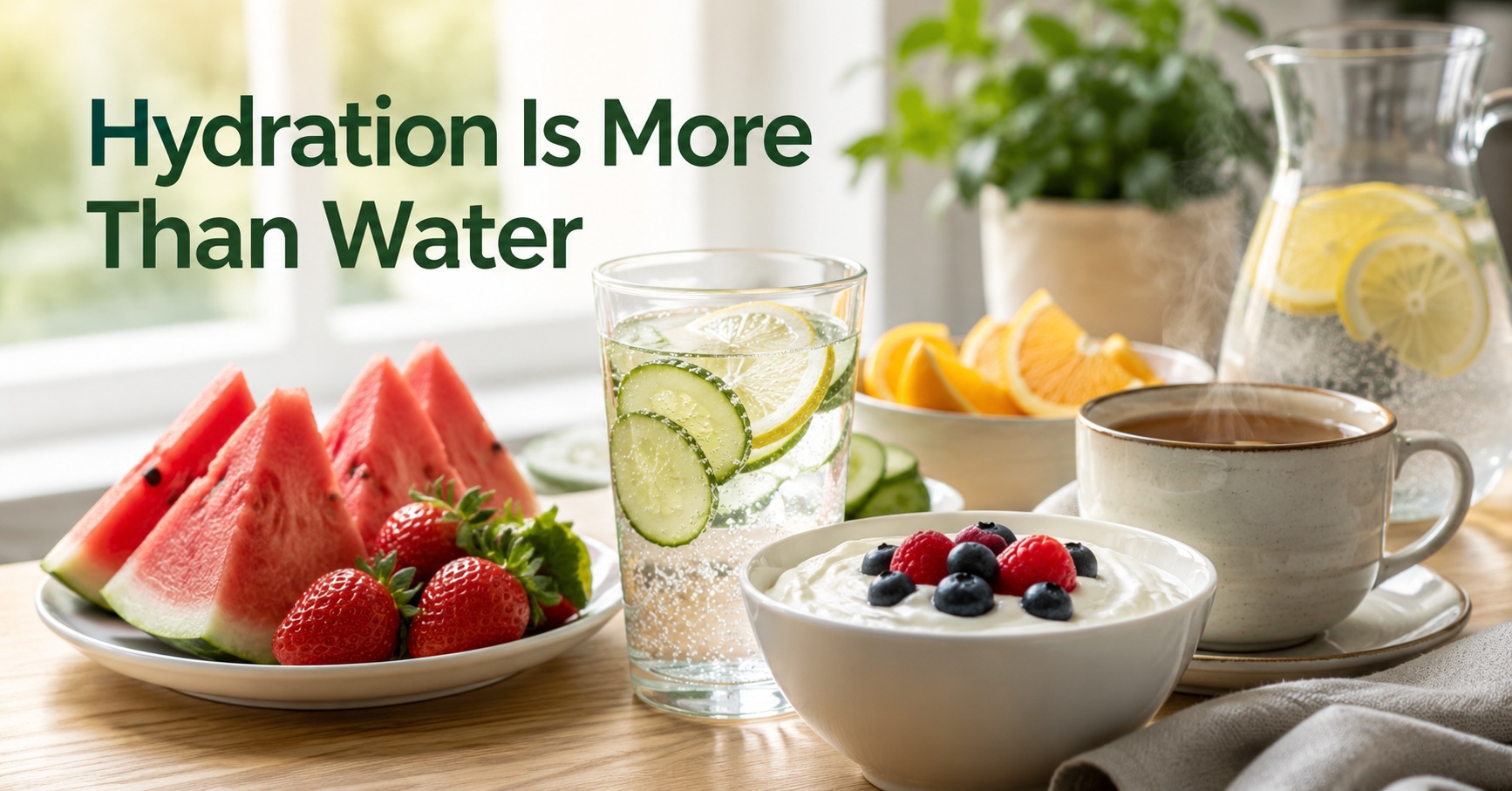
Water Isn't the Only Source of Hydration
Plain water is an excellent way to stay hydrated, but it isn't the only source of the water your body receives each day.
Other beverages count too. Tea, coffee, milk, sparkling water, and other drinks all contribute to your daily fluid intake. Despite the common belief that coffee and tea are dehydrating, moderate amounts still contribute to overall hydration.
Food can also provide a surprising amount of water. Water-rich choices include:
- Cucumbers
- Watermelon
- Oranges
- Strawberries
- Tomatoes
- Celery
- Lettuce and other leafy vegetables
- Yogurt
- Soups and broths
Fruit and vegetables have another advantage: along with water, they provide vitamins, minerals, and naturally occurring electrolytes such as potassium.
So when thinking about your daily hydration, look at the whole picture — not just the number of glasses of plain water you drink.
Simple Ways to Stay Hydrated Throughout the Day
Healthy hydration habits don't need to be complicated. In fact, it's often easier to attach drinking to things you already do rather than trying to remember an arbitrary number of glasses.
Try:
- Having a drink with breakfast and your morning coffee
- Keeping a water bottle or glass where you can see it
- Having a drink with meals and snacks
- Including water-rich fruit and vegetables throughout the day
- Drinking before, during, and after exercise as needed
- Having extra fluids available during hot weather
- Choosing water, herbal tea, or another unsweetened drink when you feel thirsty
You don't need to drink large amounts all at once. Regular fluid intake spread throughout the day is usually a more practical approach.
If you're exercising or sweating heavily, your fluid needs will increase. Longer periods of exercise, very hot weather, or substantial sweating can also increase electrolyte losses, so in some circumstances replacing both fluids and electrolytes can be useful.
The goal isn't to spend the day obsessing over water. It's to make hydration such a normal part of your routine that you rarely have to think about it.
You may have heard that drinking water with meals can interfere with digestion by diluting stomach acid. For most people, there's no need to avoid it — having a normal amount of water with a meal does not prevent the digestive system from doing its job.
When Drinking More Water Isn't the Answer
Staying hydrated is important, but more water isn't always better. Drinking excessive amounts in a short period can dilute the sodium in your blood, potentially causing a dangerous condition called hyponatremia.
Some people also need to be particularly careful about fluid intake. Certain kidney or heart conditions, for example, can require individualized advice or fluid restrictions. Some medications can also affect the body's fluid and electrolyte balance.
Persistent or excessive thirst can sometimes be a sign of an underlying health problem rather than simply a need to drink more water. The same applies to significant or unexplained changes in urination.
The goal is healthy fluid balance — not drinking as much water as possible.
If you're unusually thirsty, experiencing significant changes in urination, or have been advised to restrict fluids or sodium, talk with your healthcare provider about the amount that's appropriate for you.
The Bottom Line
Hydration is a simple but important part of healthy aging after 50. Water supports digestion, circulation, temperature regulation, physical performance, and many of the everyday processes that help your body function well.
As we get older, thirst can become less reliable, which makes regular hydration habits increasingly important. But staying hydrated doesn't mean forcing yourself to drink a certain number of glasses every day.
Water from food counts. Tea and coffee count. And your individual needs can change with activity, weather, medications, and health.
The goal is not to drink as much water as possible. It's to give your body the fluids it needs, consistently, throughout the day.
A simple habit to remember: don't always wait until you're thirsty — make hydration part of your everyday routine.
Medical Disclaimer: This article is for educational purposes only and is not intended as medical advice. Always consult your healthcare provider before making significant changes to your diet, supplements, lifestyle, or treatment plan.
Frequently Asked Questions
Can drinking more water boost metabolism after 50?
Staying well hydrated supports the many processes involved in normal metabolism, but drinking extra water is unlikely to dramatically increase your metabolic rate or cause significant weight loss on its own. Think of hydration as something your metabolism needs to function normally — not as a metabolism-boosting shortcut.
How much water should adults over 50 drink each day?
There is no single amount that is right for everyone. As a general guide, women need about 2.7 liters (91 ounces) and men about 3.7 liters (125 ounces) of total water per day. Importantly, this includes water from food and all beverages — not just plain drinking water. Individual needs vary with activity, climate, medications, and health.
Do tea and coffee count toward hydration?
Yes. Tea, coffee, milk, and other beverages contribute to your daily fluid intake. Although caffeine can have a mild diuretic effect, moderate amounts of caffeinated drinks still contribute to overall hydration.
Is it okay to drink water with meals?
Yes. For most people, drinking a normal amount of water with meals does not interfere with digestion or dilute stomach acid enough to prevent the digestive system from doing its job. Fluids can also help with chewing, swallowing, and moving food through the digestive tract.
Can dehydration make you feel tired?
Yes. Even mild dehydration can contribute to fatigue, headaches, difficulty concentrating, and reduced physical performance. Because thirst can become less noticeable with age, drinking regularly throughout the day can be more reliable than waiting until you feel very thirsty.