
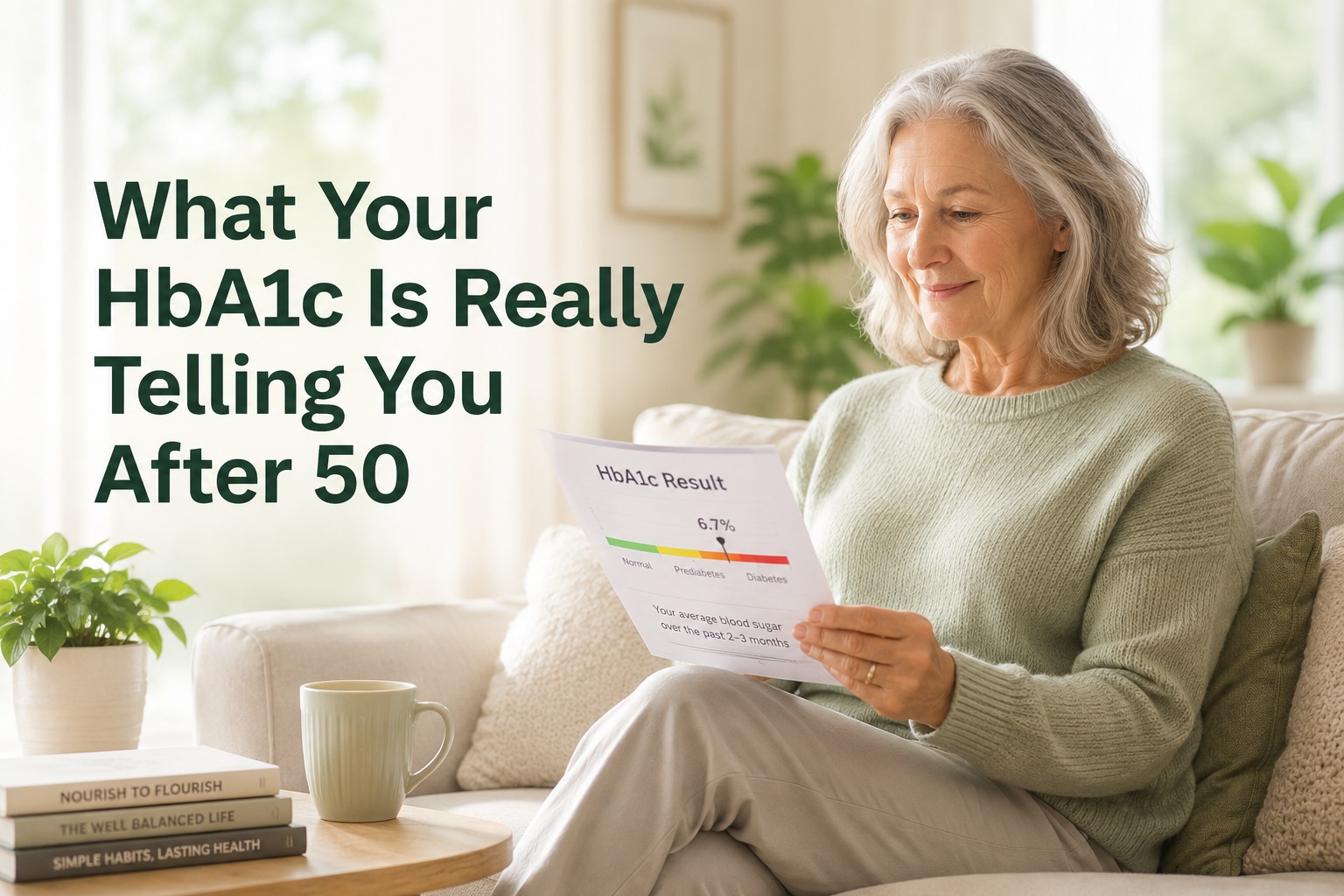
If you've recently been told your HbA1c is higher than it should be, you're not alone. HbA1c is an important blood test that reflects your average blood sugar levels over the previous two to three months. Many people over 50 begin to notice changes in their blood sugar—even if their diet hasn't changed significantly.
Seeing your HbA1c result creep upward can feel worrying, especially if you believe you're eating reasonably well. You may wonder why your blood sugar is rising or whether there's anything you can do to improve it naturally.
The good news is that HbA1c levels often respond well to simple, consistent lifestyle changes. Understanding what influences your blood sugar is the first step toward making meaningful improvements.
In this article, you'll learn what HbA1c really means, why it often rises after 50, and the practical, evidence-based strategies that can help you lower it naturally and support better long-term metabolic health.
Quick Summary
- HbA1c reflects your average blood sugar over the past 2–3 months
- Small, consistent lifestyle changes can significantly lower HbA1c over time.
- Walking after meals and improving food choices are key
- Most people see improvements within 8–12 weeks
What Is HbA1c and Why Does It Matter After 50?
HbA1c, also called glycated hemoglobin, is one of the most useful blood tests for understanding your long-term blood sugar levels. Unlike a standard glucose test, which shows your blood sugar at a single moment, HbA1c reflects your average blood glucose over the past two to three months.
It works by measuring how much glucose has attached to your red blood cells. Because these cells live for around three months, HbA1c provides a much clearer picture of how well your body has been managing blood sugar over time.
After age 50, many people begin to develop insulin resistance without realizing it. As cells become less responsive to insulin, blood sugar remains elevated for longer, gradually causing HbA1c levels to rise.
Continue Learning: Why Insulin Resistance Becomes More Common After 50
Higher HbA1c levels are associated with an increased risk of prediabetes, type 2 diabetes, heart disease, and other metabolic conditions. The good news is that HbA1c often improves when you address the underlying causes—making it one of the most valuable markers for tracking your progress.
What Causes High HbA1c After 50
Several age-related changes can make it harder for your body to regulate blood sugar effectively. Understanding these underlying causes is the first step toward lowering your HbA1c naturally.
Increased Insulin Resistance
As we age, our cells often become less responsive to insulin. This means glucose remains in the bloodstream longer instead of moving efficiently into the cells where it can be used for energy. Over time, this can contribute to rising HbA1c levels.
Continue Learning: Why Insulin Resistance Becomes More Common After 50
Muscle tissue is one of the body's largest users of glucose. Because we naturally lose muscle with age—unless we actively maintain it—our ability to regulate blood sugar gradually declines.
Blood Sugar Spikes from “Healthy” Foods
Some foods that appear healthy—such as fruit smoothies, breakfast cereals, and wholegrain breads—can still cause rapid blood sugar spikes, particularly when eaten on their own.
Continue Learning: Why Blood Sugar Spikes After 50 (Even If You Eat Healthy Foods)
Poor Sleep and Chronic Stress
Poor sleep and ongoing stress increase hormones such as cortisol, making it harder for your body to regulate blood sugar effectively and increasing the likelihood of higher glucose levels over time.
Continue Learning: The Best Foods for Insulin Resistance After 50
7 Natural Ways to Lower HbA1c
The good news is that HbA1c can often be improved with simple, consistent lifestyle habits. The following seven strategies are practical, sustainable, and supported by research. Even small changes can make a meaningful difference over time.
1. Focus on Low-Glycemic Whole Foods
Choose foods that release glucose slowly, such as vegetables, legumes, nuts, seeds, and high-fiber whole foods. These foods help keep blood sugar levels steadier, reduce insulin demand, and support better long-term glucose control.
Continue Learning: Best Foods for Insulin Resistance After 50 (What to Eat to Stabilize Blood Sugar)
2. Walk After Meals
A 10–15 minute walk after meals is one of the best ways to reduce post-meal blood sugar spikes. If walking isn't an option, standing or seated heel lifts can provide another simple way to activate your calf muscles and encourage glucose uptake from the bloodstream after eating.
3. Build Muscle with Resistance Training
Strength training helps build and maintain muscle, one of the body's largest users of glucose. More muscle improves insulin sensitivity and helps your body remove glucose from the bloodstream more efficiently, making blood sugar easier to control over time.
4. Improve Sleep Quality
Aim for consistent, restful sleep whenever possible. Good sleep supports healthy insulin function, helps lower stress hormones such as cortisol, and allows your body to regulate blood sugar more effectively.
5. Reduce Refined Carbs and Sugar
Highly processed carbohydrates and sugary foods are rapidly digested, often causing larger blood sugar spikes. Replacing them with whole, minimally processed foods can help keep blood sugar levels more stable throughout the day.
6. Try Gentle Fasting (If Appropriate)
For some people, allowing a longer overnight break between dinner and breakfast can improve insulin sensitivity and support healthier blood sugar levels. This approach isn't suitable for everyone, so it's best discussed with your healthcare provider if you have diabetes, take glucose-lowering medication, or have other medical conditions.
Continue Learning: Why Your Fasting Blood Sugar Is High in the Morning After 50 (And How to Lower It Naturally)
7. Support Your Body with Key Nutrients
Certain nutrients—including magnesium and chromium—support normal glucose metabolism and healthy insulin function. While supplements aren't a substitute for a balanced diet, correcting a deficiency may help support healthier blood sugar regulation.
Continue Learning: The Missing Link in Insulin Resistance After 50: Why Magnesium Matters More Than You Thin
The good news is that HbA1c can often be improved with simple daily habits. The following strategies are practical, sustainable, and backed by research.

Why Lowering HbA1c Can Feel Difficult (Even When You're Trying)
Many people make positive changes to their diet and lifestyle but still don't see their HbA1c improve as quickly as they hoped. That can be frustrating—especially when it feels like you're doing everything right.
The reality is that blood sugar is influenced by many factors working together. Some of the most common reasons include:
- Small blood sugar spikes throughout the day that gradually increase your average blood glucose levels over time.
- Foods that seem healthy but still cause larger glucose spikes than expected.
- Long periods of sitting, particularly after meals, which reduce your muscles' ability to clear glucose from the bloodstream efficiently. That's why even simple movement after eating—such as a short walk or standing or seated heel lifts—can make a difference.
- Poor sleep and ongoing stress, which increase cortisol levels and reduce insulin sensitivity, making blood sugar harder to regulate.
The encouraging news is that you don't have to be perfect. Consistently making small improvements to your food choices, movement, sleep, and stress management often has a much greater impact than trying to change just one thing.
A Simple Daily Routine to Lower HbA1c After 50
You don't need to overhaul your entire lifestyle overnight. Small, consistent habits repeated every day can have a powerful effect on your blood sugar over time. Here's one simple example of how you might build these habits into a typical day.
Morning
Start your day with a balanced breakfast that includes protein, healthy fats, and fiber. This combination helps slow the release of glucose into the bloodstream, keeping blood sugar steadier and helping you stay satisfied for longer. Try to avoid high-sugar breakfasts that can trigger early glucose spikes.
After Meals
Whenever possible, take a 10–15 minute walk after eating, particularly after your largest meal. If walking isn't practical, standing or seated heel lifts can also help activate your calf muscles and encourage glucose uptake from the bloodstream after eating.
Throughout the Day
Avoid sitting for long periods. Regular movement—whether it's walking, stretching, standing up regularly, gardening, or doing household tasks—helps your muscles use glucose more effectively throughout the day.
Evening
Choose a lighter evening meal with fewer refined carbohydrates and more protein, vegetables, and healthy fats. Finishing dinner a little earlier can also help support overnight blood sugar regulation.
Before Bed
Create a relaxing bedtime routine and aim for consistent, quality sleep. Good sleep supports healthy insulin function, lowers stress hormones, and gives your body the best opportunity to regulate blood sugar while you rest.
What to Expect (And When to Seek Professional Advice)
Lowering your HbA1c doesn't happen overnight. Because HbA1c reflects your average blood glucose over the previous two to three months, it usually takes 8 to 12 weeks of consistent lifestyle changes before meaningful improvements begin to appear.
The most important thing isn't perfection—it's consistency. Small daily habits, such as choosing lower-glycemic foods, moving after meals, improving sleep, and managing stress, can gradually add up to significant improvements in blood sugar control.
If your HbA1c is significantly elevated, or you've been diagnosed with prediabetes or type 2 diabetes, it's important to work with a qualified healthcare provider. They can help monitor your progress, recommend appropriate tests, review medications if needed, and ensure your overall plan is safe, effective, and tailored to your individual needs.
The Bottom Line
Lowering your HbA1c naturally after 50 is possible, but it doesn't happen overnight. The most effective approach is to focus on small, consistent habits that improve your body's ability to regulate blood sugar over time.
Choosing lower-glycemic foods, staying active throughout the day, building muscle, getting enough sleep, and managing stress all work together to support healthier blood sugar levels. Even simple changes—such as taking a short walk after meals or doing standing or seated heel lifts when walking isn't practical—can make a meaningful difference when practiced consistently.
Remember, progress is measured over weeks and months, not days. Every healthy choice you make is another step toward better metabolic health.
Medical Disclaimer: This article is for educational purposes only and is not intended as medical advice. Always consult a qualified healthcare provider before making significant changes to your diet, supplements, exercise routine, lifestyle, or treatment plan.
Frequently Asked Questions
What is HbA1c, and what does it measure?
HbA1c is a blood test that reflects your average blood glucose levels over the previous two to three months. Unlike a single glucose reading, it provides a broader picture of how well your blood sugar has been managed over time.
Can you lower HbA1c naturally after 50?
Yes. Consistent changes to your food choices, movement, sleep, stress management, and muscle-building habits can improve blood sugar regulation and help lower HbA1c over time. However, some people may also need medication or other treatment recommended by a qualified healthcare provider.
How long does it take to lower HbA1c?
Because HbA1c reflects several months of blood glucose levels, meaningful changes usually take time to appear. Many people reassess their results after approximately 8 to 12 weeks of consistent lifestyle changes.
What foods can help lower HbA1c?
Foods that release glucose more slowly can support steadier blood sugar levels. Helpful choices include non-starchy vegetables, legumes, nuts, seeds, protein-rich foods, healthy fats, and high-fiber whole foods. Reducing refined carbohydrates, sugary drinks, and heavily processed foods can also help.
Can walking after meals help lower blood sugar?
A short walk after eating can help your muscles use glucose from the bloodstream and reduce post-meal blood sugar spikes. When walking is not practical, standing or seated heel lifts can provide another simple way to activate the calf muscles and encourage glucose uptake after eating.
When should I seek professional advice about my HbA1c?
Speak with a qualified healthcare provider if your HbA1c is significantly elevated, continues to rise, or you have been diagnosed with prediabetes or diabetes. Professional guidance is especially important if you take glucose-lowering medication or plan to make major changes to your diet, fasting routine, supplements, exercise, or treatment plan.
Continue Learning
What Is HbA1c and What Is Normal After 50? A Simple Guide to Your Blood Sugar Marker
A helpful next step for readers who want to understand their HbA1c result and what the numbers mean.
Why Blood Sugar Spikes After 50 (Even If You Eat Healthy Foods)
Learn why seemingly healthy meals can still raise glucose and what you can do differently.
The Best Daily Routine to Improve Insulin Resistance After 50
Discover how to turn the article’s recommendations into realistic daily habits.