
If your blood sugar is higher than expected in the morning, what you eat for breakfast can either make the problem worse—or help bring it under control.
Many people over 50 begin the day with foods they believe are healthy, only to experience energy crashes, hunger, and rising glucose levels a few hours later. Breakfast cereals, toast, fruit-heavy smoothies, and other high-carbohydrate choices can all trigger significant blood sugar spikes.
The good news is that you don't need a complicated meal plan. Choosing a breakfast that includes protein, healthy fats, and fibre can help stabilise your blood sugar, keep you feeling satisfied for longer, and set the tone for the rest of the day.
Continue learning: Why Your Fasting Blood Sugar Is High in the Morning After 50.
Quick Summary
- Many popular breakfast foods can cause blood sugar spikes.
- Build your breakfast around protein, healthy fats, and fibre.
- Limit high-carbohydrate choices like cereal, white toast, and sugary smoothies.
- Choose protein-rich options such as eggs, Greek yoghurt, balanced smoothies, or even leftovers.
- Small, consistent changes can improve blood sugar control over time.

Why Breakfast Matters More After 50
As you get older, your muscles naturally become less responsive to insulin. Hormonal changes, reduced muscle mass, and the normal morning rise in cortisol can all make blood sugar harder to control—even before you've eaten breakfast.
This is often called the dawn phenomenon (or dawn effect), where blood sugar rises naturally in the early morning hours as your body prepares to wake up.
That means breakfast becomes an important opportunity to influence what happens next. A meal built around protein, healthy fats, and fibre can help steady your blood sugar, while a high-carbohydrate breakfast can make morning glucose levels rise even further.
If you've noticed higher morning readings, continue learning: Why Insulin Resistance Becomes More Common After 50.
The Worst Breakfasts for Blood Sugar (Even If They Seem Healthy)
Some of the most popular breakfast foods can cause the biggest blood sugar spikes—especially if they're high in refined carbohydrates and low in protein and fibre.
Common examples include:
- Breakfast cereals (even many marketed as "whole grain")
- White toast with jam or honey
- Fruit-only smoothies
- Low-fat flavoured yoghurt
- Pastries, muffins, or other sweet baked goods
These foods digest quickly and provide very little protein, healthy fat, or fibre to slow the release of glucose into your bloodstream. The result is often a rapid rise in blood sugar, followed by an energy crash that can leave you feeling tired, hungry, and reaching for another snack.
If this pattern sounds familiar, continue learning: Why Blood Sugar Spikes After Meals (Especially After 50).
The Best Breakfast Formula for Stable Blood Sugar
Instead of trying to remember long lists of "good" and "bad" foods, it helps to follow one simple formula:
Protein + Healthy Fat + Fibre
This combination works because:
- Protein slows digestion and helps reduce blood sugar spikes.
- Healthy fats provide lasting energy and help keep you feeling satisfied.
- Fibre slows the absorption of glucose, supports insulin sensitivity, and promotes good gut health.
Once you understand this simple formula, choosing a blood sugar-friendly breakfast becomes much easier—whether you're eating eggs, Greek yoghurt, a balanced smoothie, or even last night's leftovers.
For more meal ideas, continue learning: Best Foods for Insulin Resistance After 50 (What to Eat to Stabilize Blood Sugar).
5 Simple Breakfast Ideas That Lower Blood Sugar
Here are five simple, repeatable breakfast ideas that follow the Protein + Healthy Fat + Fibre formula.
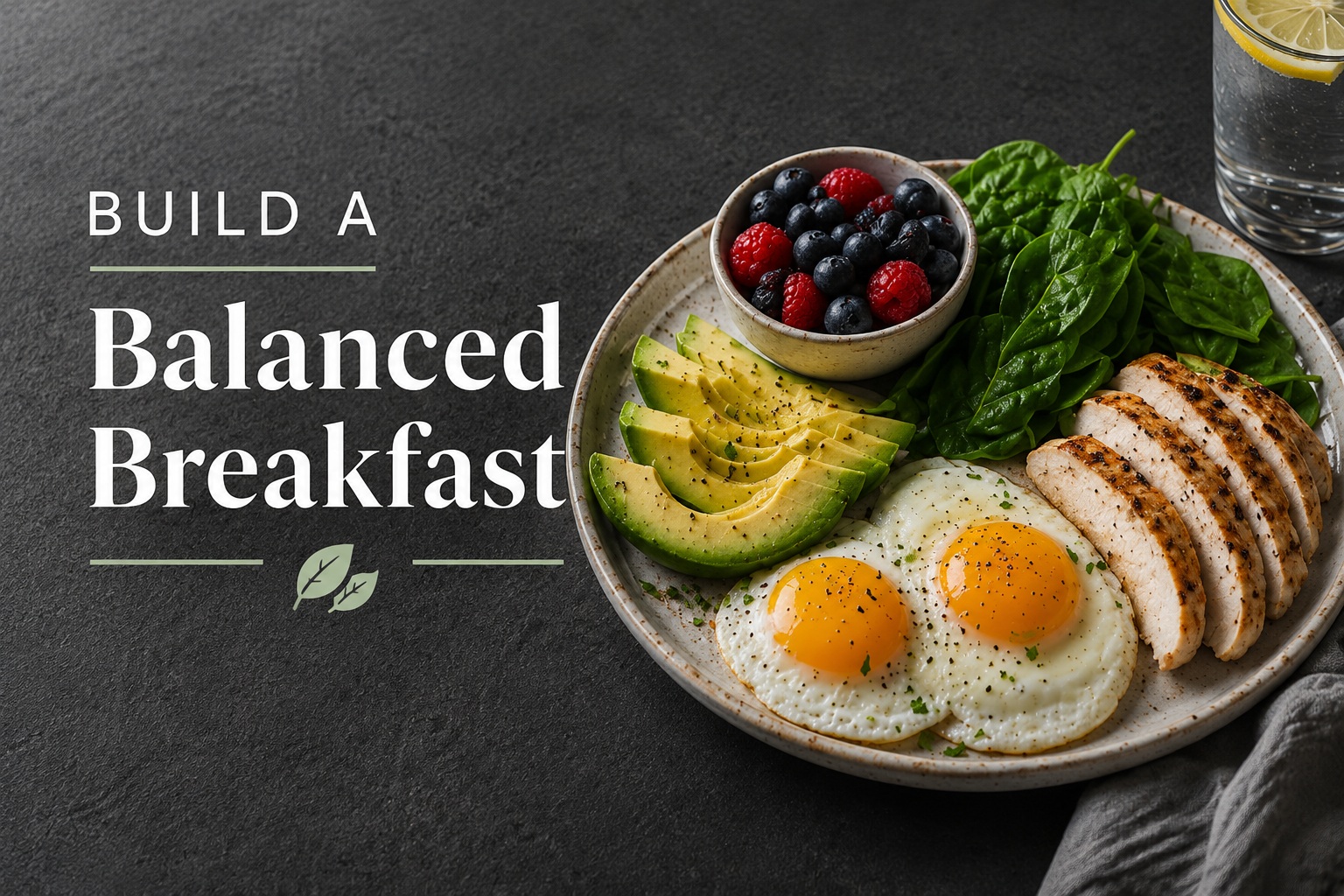
1. Eggs with Avocado and Greens
Eggs paired with avocado and leafy greens make an excellent high-protein breakfast that can help keep you full for longer. Add tomatoes, mushrooms, or other non-starchy vegetables for extra fibre, nutrients, and flavour.
2. Greek Yoghurt with Chia Seeds and Berries
Choose plain, unsweetened Greek yoghurt and top it with chia or flaxseeds for fibre. Add a small handful of berries for antioxidants and natural sweetness without causing a large blood sugar spike.
3. A Balanced Protein Smoothie
A smoothie can be a convenient, blood sugar-friendly breakfast when it's built around the right ingredients. Include:
- Protein powder (whey or plant-based)
- Healthy fats such as MCT oil, avocado, or seeds
- Fibre from spinach, chia seeds, or flaxseeds
Keep the fruit portion moderate and avoid fruit-only smoothies, which are often high in sugar and low in protein.
4. Leftover Dinner for Breakfast
It may sound unusual, but leftover grilled chicken, fish, or lean meat with vegetables can make one of the most balanced breakfasts you can eat. There's no rule that breakfast has to include traditional breakfast foods.
5. Cottage Cheese with Nuts and Seeds
Cottage cheese is naturally high in protein and quick to prepare. Top it with walnuts, almonds, or pumpkin seeds for healthy fats and extra fibre.
If you'd like even more meal ideas, continue learning: How to Lower Fasting Blood Sugar Naturally After 50.
The “Better Smoothie” for Blood Sugar Control
Smoothies can either support stable blood sugar or cause a significant glucose spike—it all depends on what's inside them.
To make your smoothie more blood sugar-friendly:
- Include a quality protein source, such as whey or plant-based protein powder.
- Add healthy fats like MCT oil, avocado, nuts, or seeds.
- Boost the fibre with spinach, chia seeds, or ground flaxseed.
- Keep fruit portions moderate and choose lower-sugar options such as berries.
A well-balanced smoothie can be a quick and nutritious breakfast that supports steady energy throughout the morning. The key is to treat it as a complete meal—not simply fruit blended into a drink.
If you'd like more ideas, continue learning: Best Foods for Insulin Resistance After 50 (What to Eat to Stabilize Blood Sugar).
What Time Should You Eat Breakfast?
There isn't a single "best" time to eat breakfast. The ideal timing depends on your hunger, lifestyle, activity level, and overall metabolic health.
Some people feel their best eating soon after waking, while others find that waiting a little longer fits naturally with their routine or intermittent fasting plan.
The most important factor isn't the exact time you eat—it's what you eat. A breakfast built around protein, healthy fats, and fibre will usually have a much greater impact on your blood sugar than whether you eat at 7:00 a.m. or 9:00 a.m.
If you're experimenting with intermittent fasting, keep it gentle and consistent, and pay attention to how your body responds.
If sleep is affecting your morning blood sugar, continue learning: How Sleep Affects Insulin Resistance After 50.
A Simple Morning Routine for Better Blood Sugar
A few simple morning habits can make a noticeable difference to your blood sugar throughout the day:
- Start your day with a glass of water to rehydrate.
- Choose a breakfast built around protein, healthy fats, and fibre.
- Limit high-sugar, highly processed breakfast foods.
- Take a short walk after eating whenever possible.
If you can't go for a walk after breakfast, don't worry. Even two or three minutes of gentle movement or standing heel raises can help your muscles use glucose more effectively.
If you'd like to build healthier habits throughout the day, continue learning: The Best Daily Routine to Improve Insulin Resistance After 50.
Bottom Line
Breakfast is one of the easiest places to start improving your blood sugar after 50 because small, consistent changes can make a meaningful difference over time.
Building your breakfast around protein, healthy fats, and fibre—and limiting highly processed, high-sugar foods—can help reduce blood sugar spikes, improve energy, and support long-term metabolic health.
Remember, the goal isn't to eat a "perfect" breakfast every day. It's to make healthier choices more often. Over time, those small, consistent habits can add up to lasting improvements in your blood sugar and overall health.
Medical Disclaimer: This article is for educational purposes only and is not intended as medical advice. Always consult your qualified healthcare provider before making significant changes to your diet, supplements, lifestyle, or treatment plan.
Frequently Asked Questions
What is the best breakfast for lowering blood sugar after 50?
A balanced breakfast built around protein, healthy fats, and fibre is usually a good choice. Examples include eggs with avocado and vegetables, unsweetened Greek yoghurt with seeds and berries, or a protein smoothie with leafy greens and healthy fats.
What breakfast foods are most likely to spike blood sugar?
Sugary cereals, white toast with jam, pastries, sweetened yoghurt, and fruit-only smoothies can raise blood sugar quickly. These foods are often high in rapidly digested carbohydrates and low in protein, healthy fats, and fibre.
Are eggs a good breakfast for blood sugar control?
Yes. Eggs provide protein and contain very little carbohydrate, making them a useful base for a blood sugar-friendly breakfast. Pair them with avocado, leafy greens, mushrooms, or tomatoes for healthy fats, fibre, and additional nutrients.
Can I eat fruit at breakfast if I have high blood sugar?
Yes, but portion size and what you eat with it matter. Choose lower-sugar fruits such as berries and combine them with protein, healthy fats, or fibre—for example, Greek yoghurt with chia seeds and a small serving of berries.
Are smoothies good for lowering blood sugar?
Smoothies can be blood sugar-friendly when they contain protein, healthy fats, and fibre. Avoid fruit-only smoothies and large amounts of high-sugar fruit. A balanced option might include protein powder, spinach, chia or flaxseed, and a small portion of berries.
What time should I eat breakfast for better blood sugar control?
There is no single breakfast time that works for everyone. Some people prefer eating soon after waking, while others feel better waiting. The quality of your breakfast usually matters more than the exact time you eat it.
Continue Learning
Why Your Fasting Blood Sugar Is High in the Morning After 50
Learn why blood sugar often rises before breakfast and practical ways to bring morning readings under better control.
Best Foods for Insulin Resistance After 50
Discover the foods that can improve insulin sensitivity and help keep your blood sugar more stable throughout the day.
How to Reduce Blood Sugar Spikes After Meals (Especially After 50)
Learn simple strategies to reduce glucose spikes after breakfast, lunch, and dinner for steadier energy and better long-term health.