You may have heard that building muscle after 50 can “boost” your metabolism. Perhaps you've even started strength training and wondered whether adding muscle really makes a noticeable difference to the number of calories you burn each day.
The answer is yes—but probably not in the dramatic way some online claims suggest.
Muscle tissue uses more energy than fat tissue, even at rest. However, gaining a modest amount of muscle is unlikely to dramatically increase your daily calorie burn. The bigger benefits include maintaining strength, mobility, body composition, and metabolic health as you age.
Muscle mass also tends to decline gradually with age, particularly when we become less active. Preserving or rebuilding that muscle can help counter some of the physical and metabolic changes associated with aging.
And the encouraging part is that people can build and maintain muscle well beyond 50.
With regular strength training, adequate protein, recovery, and consistency, maintaining muscle can become an important part of staying strong, active, and metabolically healthy as you age.
Continue learning: Why Strength Training Is One of the Best Ways to Boost Metabolism After 50
Quick Summary
-
Muscle tissue uses more energy than fat tissue, even at rest.
-
Muscle mass tends to decline with age, especially when physical activity decreases.
-
Building muscle can modestly increase resting energy expenditure, but the effect is relatively small.
-
Strength training helps preserve muscle mass, strength, mobility, and physical function.
-
Adequate protein and recovery are important for maintaining and building muscle after 50.
-
The benefits of maintaining muscle go far beyond simply burning more calories.
What Happens to Muscle Mass After 50?
Starting around middle age, muscle mass and strength tend to decline gradually. The rate varies considerably from person to person and is influenced by activity levels, nutrition, health, and other factors.
More significant age-related loss of muscle mass, strength, and physical function can develop into a condition known as sarcopenia.
Several factors can contribute to muscle loss as we age, including:
- Reduced physical activity
- Changes in hormones and other age-related processes
- Inadequate protein or overall nutrition
- Illness or injury
- Extended periods of inactivity
Because these changes often occur gradually, they can be easy to overlook. Over time, however, losing muscle can affect strength, balance, mobility, and the ability to perform everyday activities independently.
Maintaining muscle therefore becomes increasingly important with age—not simply for metabolism, but for staying strong, mobile, and physically capable.
Continue learning: Why Your Metabolism Slows Down After 50 (And What You Can Do About It)
Why Muscle Matters for Metabolism
Metabolism refers to the processes your body uses to convert food into energy and support essential functions.
A large portion of the energy you use each day is your resting metabolic rate (RMR)—the energy your body needs simply to keep functioning while you are at rest.
Muscle tissue is metabolically active and requires energy to maintain. It uses more energy at rest than fat tissue, which means having more muscle can contribute to a somewhat higher resting metabolic rate.
However, the difference is smaller than many popular claims suggest. Adding a modest amount of muscle will not suddenly cause your body to burn hundreds of extra calories each day.
That doesn't make muscle unimportant. Maintaining muscle can help preserve metabolic health while also supporting strength, mobility, physical activity, and healthy aging.
Continue learning: Can You Really Reset Your Metabolism After 50?
How Much Does Muscle Really Increase Calorie Burning?
One of the biggest myths about metabolism is that adding a small amount of muscle will suddenly cause you to burn hundreds of extra calories each day.
In reality, the direct effect is much more modest.
Estimates suggest that a pound of skeletal muscle uses roughly 6 calories per day at rest, compared with about 2 calories for a pound of body fat. The exact amount varies, but the important point is that adding a few pounds of muscle does not dramatically increase resting calorie expenditure.
The benefits of muscle extend beyond those resting calories. Maintaining muscle helps you:
-
Stay stronger and more physically capable
-
Remain active as you age
-
Perform strength training and other exercise
-
Maintain healthier body composition
-
Support glucose regulation and metabolic health
So, while building muscle is unlikely to transform your resting metabolism, maintaining more muscle can support the behaviors and physical capacity that contribute to long-term metabolic health and weight management.

Can Strength Training Help Preserve Metabolism?
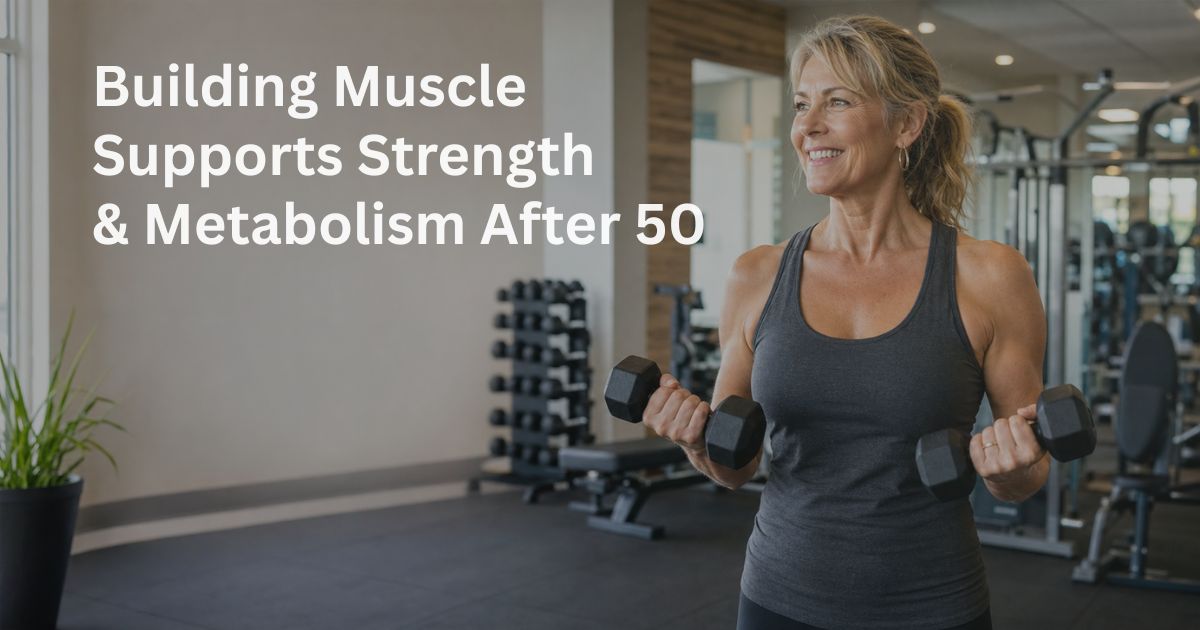
Strength training is one of the most effective ways to maintain or build muscle after 50. It can include weight machines, free weights, resistance bands, or bodyweight exercises—the important factor is providing your muscles with enough resistance to challenge them.
Regular strength training can help:
- Preserve or increase muscle mass
- Improve strength and physical function
- Support bone health
- Maintain balance and mobility
- Improve insulin sensitivity and glucose regulation
These benefits matter for metabolism even if the increase in resting calorie burn from additional muscle is relatively small.
Strength training helps preserve the physical capacity to remain active, exercise, and perform everyday activities—all of which contribute to long-term metabolic health and healthy aging.
Continue learning: Why Strength Training Is One of the Best Ways to Boost Metabolism After 50
How to Build or Maintain Muscle After 50
Building and maintaining muscle after 50 usually comes down to a few fundamentals: challenging your muscles regularly, eating enough protein, allowing time for recovery, and staying consistent.
Strength Train Regularly
Aim to include strength training at least twice a week, working the major muscle groups. Weight machines, free weights, resistance bands, and bodyweight exercises can all be effective when they provide enough resistance to challenge your muscles.
Eat Enough Protein
Protein provides the building blocks needed to repair and maintain muscle tissue. Good sources include fish, eggs, poultry, lean meat, Greek yogurt, tofu, beans, and lentils.
Protein needs can vary with age, body size, activity level, and health, but getting enough protein becomes particularly important for preserving muscle as we age.
Prioritize Recovery
Muscles need time to repair and adapt after training. Adequate sleep, rest between challenging workouts, good nutrition, hydration, and managing excessive stress can all support recovery.
Stay Consistent
You do not need perfect workouts or an extreme exercise program. Regular strength training and supportive nutrition practiced consistently over months and years are far more important than occasional bursts of intense effort.
Even modest improvements in strength and muscle mass can provide meaningful benefits for mobility, physical function, and long-term health.
Continue learning:
Common Myths About Muscle and Metabolism
Myth: Muscle Turns Into Fat
Muscle and fat are different types of tissue, so one cannot turn into the other.
If you stop strength training and become less active, however, you can lose muscle while gaining body fat. Because both changes can happen at the same time, it can sometimes appear as though muscle has “turned into” fat.
Myth: It’s Too Late to Build Muscle After 50
Age does not prevent you from becoming stronger or building muscle. Research shows that older adults can improve muscle strength and function through appropriately designed resistance training.
Progress varies between individuals, but meaningful improvements are possible well beyond middle age.
Myth: Cardio Is All That Matters
Walking and other forms of aerobic exercise provide important benefits for cardiovascular health, fitness, and metabolic health. But they do not fully replace the benefits of strength training for preserving muscle and strength.
For most people, combining aerobic activity with regular strength training provides broader benefits for healthy aging than relying on either one alone.
Continue learning: Why N.E.A.T Matters After 50
The Bottom Line
Building muscle after 50 can support metabolic health, but not because it dramatically increases the number of calories you burn at rest.
Its greater value lies in helping preserve strength, mobility, physical function, body composition, and the ability to stay active as you age.
Regular strength training, adequate protein, good recovery, and consistency can all help maintain or build muscle over time.
Rather than thinking of muscle simply as a way to burn more calories, think of it as an investment in healthy aging. Maintaining muscle can help you stay strong, active, independent, and metabolically healthy for years to come.
Medical Disclaimer: This article is for educational purposes only and is not intended as medical advice. Always consult your healthcare provider before making significant changes to your diet, supplements, lifestyle, or treatment plan.
Frequently Asked Questions
How does muscle affect metabolism after 50?
Muscle tissue uses more energy at rest than fat tissue. However, the difference is relatively small. Maintaining muscle after 50 is valuable not only for resting energy expenditure, but also for supporting strength, physical activity, glucose regulation, and overall metabolic health.
Can people over 50 still build muscle?
Yes. Research shows that older adults can improve muscle mass, strength, and physical function through appropriate resistance training. Adequate protein, recovery, and consistency also help support muscle maintenance and growth.
Does strength training increase calorie burning?
Yes. Strength training uses energy during exercise and can help maintain or increase muscle mass. Additional muscle can modestly increase resting energy expenditure, but the larger benefits come from supporting strength, activity, body composition, and metabolic health.
How often should adults over 50 do strength training?
Major physical activity guidelines generally recommend muscle-strengthening activities on at least two days per week, working the major muscle groups. The appropriate frequency and intensity can vary according to fitness, health, and experience.
Is protein important for maintaining muscle after 50?
Yes. Protein provides the amino acids needed to repair and maintain muscle tissue. Getting adequate protein becomes particularly important with age, especially when combined with regular strength training.
Is walking enough to maintain muscle mass?
Walking provides important benefits for cardiovascular health, mobility, and overall physical activity, but it generally does not provide enough resistance to maintain all major muscle groups on its own. Combining walking or other aerobic activity with regular strength training provides broader benefits for muscle health and healthy aging.