Many adults over 50 become frustrated when healthy habits do not produce immediate results. You may start walking more, eating healthier foods, improving your sleep, or lifting weights — only to wonder why you don't feel very different yet.
Part of the problem is that “improving metabolism” is often misunderstood. It does not simply mean burning more calories or losing weight quickly. Metabolic health also involves how well your body manages energy and blood sugar, while maintaining muscle and supporting overall health.
The encouraging news is that your body can respond to positive lifestyle changes at any age. Some benefits, such as improved energy, sleep, or exercise tolerance, can begin within a few weeks. Changes in fitness, muscle mass, and body composition usually take longer and depend on your starting point and how consistently you maintain your new habits.
Quick Summary
- Healthy habits can begin supporting metabolic health within weeks, although noticeable changes vary from person to person.
- Early benefits can include better energy, sleep, exercise tolerance, and blood sugar regulation.
- Improvements in fitness and strength often become noticeable before major changes in weight or body composition.
- Building or preserving muscle, increasing daily movement, eating enough protein, and getting adequate sleep can support metabolic health over time.
- Think in weeks and months, not days: consistency matters far more than quick fixes.

What Does “Improving Metabolism” Actually Mean?
When people talk about improving metabolism, they often mean increasing the number of calories they burn each day. But metabolism is much broader than calorie burning. It includes the processes your body uses to convert food into energy, maintain tissues, regulate blood sugar, and support normal body function.
When healthy lifestyle changes are working, you may notice improvements such as:
- More stable energy levels
- Better blood sugar regulation
- Improved insulin sensitivity
- Greater strength and physical capacity
- Better exercise tolerance and recovery
- Maintenance or improvement of muscle mass
- Gradual improvements in body composition
These changes do not all happen at the same rate. Some can become noticeable within weeks, while changes in muscle mass and body composition generally take longer.
Why Metabolism Changes After 50
Several changes that become more common as we get older can affect metabolic health, but age itself is only part of the picture.
Muscle mass can gradually decline if it is not actively maintained, particularly in later adulthood. Losing muscle can reduce strength and physical capacity and can also contribute to a modest reduction in daily energy expenditure.
Daily movement may also decrease over time because of changes in work, retirement, injury, illness, or lifestyle. Sleep difficulties, chronic stress, changes in body composition, and hormonal changes can also influence metabolic health.
The encouraging part is that many of these factors are influenced by lifestyle. Regular strength training, adequate protein, daily movement, good sleep, and balanced nutrition can help preserve muscle and support metabolic health as you get older.
Getting older does not mean that a slower metabolism is inevitable or that metabolic health is beyond your control.
Continue learning: Does Metabolism Really Slow Down Every Year After 50?
Changes You May Notice Within the First Few Weeks
When you improve your diet, activity, sleep, or exercise habits, some benefits can appear relatively quickly. Others — particularly changes in muscle mass and body composition — require much more time.
During the First Few Weeks
Depending on the changes you make and your starting point, you may begin to notice:
- More consistent energy levels
- Better sleep quality
- Improved exercise tolerance
- Less fatigue during everyday activities
- Better stamina during walking or other exercise
These early changes do not necessarily mean that your metabolic rate has increased. Instead, they can be signs that your body is adapting to greater activity, better sleep, improved nutrition, or a combination of healthier habits.
After Several Weeks
With continued healthy habits, improvements may become more noticeable. You might experience:
- Greater strength or exercise capacity
- Better stamina during walks or workouts
- Improved recovery from exercise
- Improvements in blood sugar regulation
- Everyday physical activities beginning to feel easier
Weight may change slowly — or not at all during this period. Improvements in fitness, blood sugar regulation, and physical capacity can occur before substantial changes appear on the scale.
The important point is not whether a particular change happens in week two or week four. What matters is whether your health and physical capacity are gradually moving in the right direction.
Strength and Muscle Improvements Take Time
When you begin strength training, early improvements in strength often come from your nervous system becoming better at coordinating movement and using the muscle you already have. Building noticeable amounts of new muscle generally takes longer.
| Approximate Time Frame | Changes You May Notice |
|---|---|
| First few weeks | Better coordination, exercise technique, and early strength improvements |
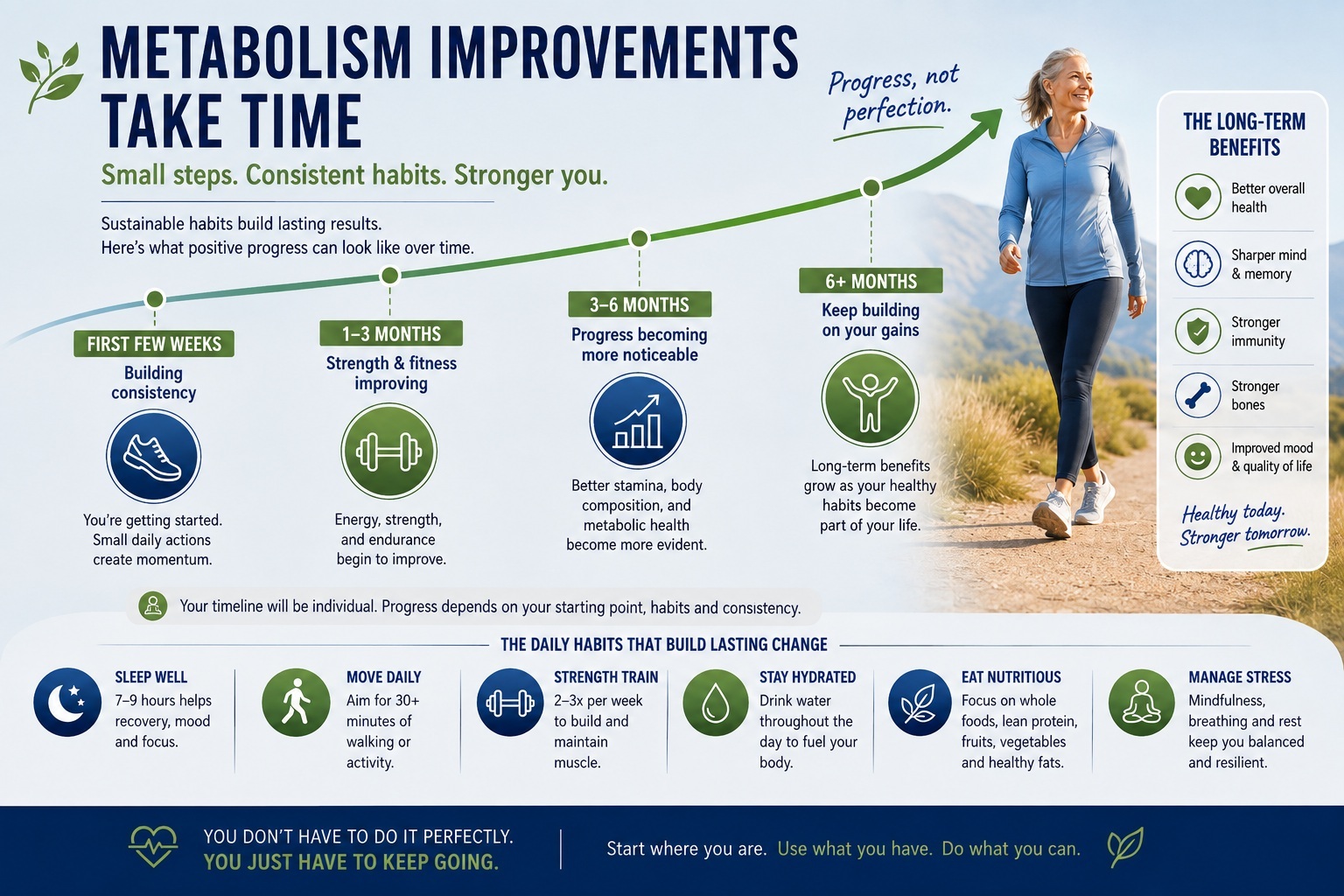
| 1- 3 months | More noticeable improvements in strength, stamina, and exercise capacity |
| 3-6 months | Gradual increases in muscle mass and possible body composition changes |
| 6+ months | Continued gains in strength, muscle, fitness, and physical function with consistent training |
These time frames are only a general guide. Progress varies depending on your starting fitness, training program, nutrition, recovery, health, age, and consistency.
Why Weight Loss Is Not the Best Measure of Metabolic Progress
Many people judge their progress entirely by the number on the scale. But body weight alone does not tell the full story.
As you become more active, improve your fitness, and build or preserve muscle, positive changes can occur even when your weight changes slowly. You may notice:
- Clothes fitting differently
- Improved strength
- Better endurance
- More consistent energy
- Improvements in blood sugar regulation
- Everyday activities becoming easier
Some of these changes can appear before substantial weight loss occurs and can provide useful signs that your health, fitness, and body composition are moving in the right direction. Focusing only on the scale can make genuine progress easy to overlook.
Habits That Support Metabolism Most Effectively
There is no single habit that transforms metabolism. The most useful approach is to combine several habits that support muscle, movement, recovery, and metabolic health over time.
Strength Training
Strength training helps preserve and build muscle, while improving strength and physical function. Even two or three sessions per week can produce meaningful improvements when continued consistently.
Continue learning: Why Strength Training Is One of the Most Effective Ways to Support Metabolism After 50
Protein Intake
Adequate protein supports muscle maintenance and recovery, particularly when combined with strength training. Including protein across your meals can also help support healthy aging and body composition.
Walking and Daily Movement
Regular walking and other everyday movement increase daily energy expenditure and help maintain fitness and mobility. Small amounts of movement performed consistently throughout the day can add up over time.
Quality Sleep
Sleep supports recovery, appetite regulation, glucose metabolism, and the ability to stay physically active. Improving sleep habits can therefore support metabolic health even though sleep itself does not “boost” metabolism.
Stress Management
Chronic stress can affect sleep, eating habits, activity levels, and blood sugar regulation. Finding sustainable ways to manage stress can make it easier to maintain the habits that support metabolic health.
Hydration
Adequate hydration supports normal body function and physical performance. While drinking more water does not dramatically increase metabolism, staying well hydrated can help you exercise, recover, and function at your best.
Avoid Looking for Overnight Results
Many products promise to "boost metabolism" rapidly. Unfortunately, most quick-fix solutions fail to deliver meaningful long-term results.
Some people turn to supplements in search of faster results.
Extreme diets, excessive exercise programs, and heavily marketed metabolism boosters often create unrealistic expectations. In some cases, they may even make healthy habits harder to maintain.
The most sustainable approach is usually the least dramatic: consistent exercise, balanced nutrition, adequate sleep, stress management, and patience.
Continue learning: Can Certain Supplements Help Support Metabolism After 50?
The Bottom Line
Improving metabolic health after 50 is not about finding a quick fix. Some benefits, such as better energy, sleep, or exercise tolerance, can become noticeable within weeks. Improvements in strength, fitness, blood sugar regulation, muscle mass, and body composition develop at different rates and often require more time.
The key is consistency. Regular movement, strength training, adequate protein, balanced nutrition, good sleep, and other sustainable habits can gradually improve metabolic health. You do not need dramatic changes or perfect habits — you need habits you can continue.
Your body can continue adapting to healthier choices well beyond 50. Think in weeks and months rather than days, and look for progress in how you feel and function — not only in what you see on the scale.
Medical Disclaimer: This article is for educational purposes only and is not intended as medical advice. Always consult your healthcare provider before making significant changes to your diet, supplements, lifestyle, or treatment plan.
Frequently Asked Questions
Can metabolism improve after 50?
Yes. Metabolic health can improve after 50, particularly through habits that help preserve muscle, increase daily movement, support good sleep, and provide balanced nutrition. Age-related changes are real, but your body can continue responding positively to exercise and other healthy lifestyle changes.
How long does it take to improve metabolism after 50?
Some people notice improvements in energy, sleep, or exercise tolerance within a few weeks. Changes in strength, fitness, blood sugar regulation, muscle mass, and body composition develop at different rates and can take several weeks or months. Your starting point, health, habits, and consistency all influence the timeline.
What is the fastest way to support metabolism after 50?
There is no single fastest way to improve metabolic health. A combination of strength training, adequate protein, regular walking and daily movement, good sleep, balanced nutrition, hydration, and stress management provides a strong foundation. Consistent habits are more reliable than quick fixes.
Why am I not losing weight even though I am improving my habits?
Body weight can change slowly because it is influenced by water, digestion, muscle gain, food intake, hormones, and normal day-to-day fluctuations. Improvements in strength, stamina, fitness, blood sugar regulation, and body composition can occur even when the number on the scale changes very little.
Can strength training improve metabolism after 50?
Strength training can help preserve or increase muscle mass and improve strength and physical function after 50. Maintaining muscle supports metabolic health and healthy aging, while regular resistance training can also benefit bone health, mobility, and blood sugar regulation.
References
CDC — Older Adult Activity: An Overview
Grgic et al. — Effects of Resistance Training on Muscle Size and Strength in Very Elderly Adults
Bauer et al. — Evidence-Based Recommendations for Optimal Dietary Protein Intake in Older People
Sondrup et al. — Effects of Sleep Manipulation on Markers of Insulin Sensitivity